
by Rev. WILLIAM ALBERTS
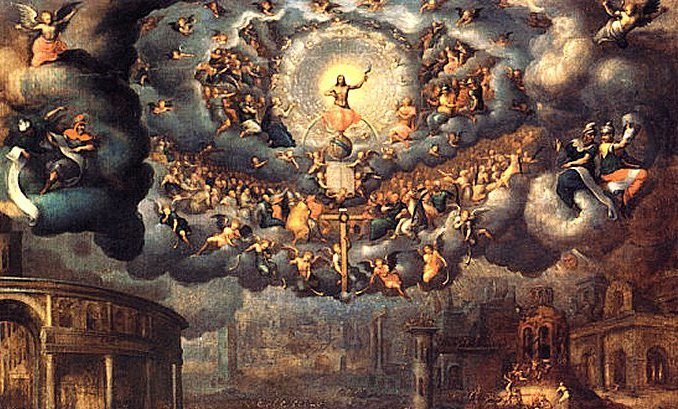
There is good news and bad news. The good news: a biblical angel said, “’Do not be afraid. I bring you good news that will cause great joy for all the people. Today in the town of David a Savior has been born to you; he is the Messiah, the Lord. . . . Glory to God in the highest, and on earth peace, good will toward men!’” (Luke 2: 10, 11, 14) The bad news is that no “Messiah” is going to come and save us. The “Messiah” came, and, like numerous other historical liberation prophets, he was crucified—in his case, by the occupying Romans, for seeking to set his Jewish people free. But he did leave a sacrificial model, embodied in The Golden Rule and in The Beatitudes like, “Blessed are the peacemakers.” But that model involves much risk-taking. So, basically, his later followers, and their descendants, institutionalized him, turning him into a Christian and his model into a monument—with rites emphasized over rights, and doctrine over doing—and they became chaplains of the status quo.
The transformation of Jesus from liberator into evangelizer is instructive. When early Christianity finally became the religion of the state and attained authority and power under Roman Emperor Constantine in the Fourth Century, the “good news” went mainstream—moving from liberation to domination. What began as a grassroots movement to empower and set people free became an imperialistic crusade to evangelize and gain power over them. Armed with state power and with the exceptionalistic belief in the resurrection as proof that Jesus was “the only Son of God,” the now legitimized “Christians” joined the state in seeking to conquer the world.
The Christians’ mission of world domination was wrapped in the imperialistic words of their risen “Lord.” They put wings on his feet and words in his mouth: an assumed resurrected Jesus supposedly appeared to them and said, “All authority in heaven and on earth has been given to me. Go therefore and make disciples of all nations, baptizing them in the name of the Father and of the Son and of the Holy Spirit, and teaching them to obey everything that I have commanded you.” (Matthew 28: 16-20) Never mind that the Doctrine of the Trinity does not appear elsewhere in The Bible, and was not formulated until centuries after Jesus’ death. ( See, “The Doctrine of the Trinity,” www.religiousfacts.com)
Such New Testament beliefs in Christian exceptionalism turns non-Christians into The Other, making them fair game for conversion, or for obliviousness—and oblivion. A 21st Century example is former, “Christ . . . changed my heart,” president George W. Bush, who launched an illegal, falsely based, preemptive war against the Iraqi people—on prayerful bended knee. His planned aggression against defenseless, non-threatening Iraq was supported by “the war sermons . . influential evangelical ministers during the lead up to Iraq war.” According to evangelical Christian and University of Virginia professor of religion Charles Marsh, “The war sermons rallied the evangelical congregations behind the invasion of Iraq,” with “an astounding 87 percent of all white evangelical Christians in the United States supporting the president’s decision in April 2003—and almost three years later “68 percent of white evangelicals continue[d] to support the war,” (“Wayward Christian Soldiers,” The NewYork Times, Jan. 20, 2006) The, one true, “Prince of peace” provided symbolic inspiration for imperialistic war and conquest.
Counterpunch for more
The Messiah awaits our coming…to the realization that no Messiah is coming to save us (part II)
by AMY EVA ALBERT WARREN & Rev. WILLIAM ALBERTS
The Messiah awaits our coming to the realization that no Messiah is coming to save us. The Messiah is already here. Rather, they are already here. In fact countless Messiahs are everywhere, in every country. They are our children.
But in the Christian world, one child, alone, is deemed special. In fact, he was recorded as being born of a virgin, impregnated by the Holy Spirit. Born of holiness, not humanness, which is about as special as you can get. As his supernatural birth story goes, an angel of the Lord appeared to frightened shepherds, telling them. “Fear not, for behold I bring you good news of great joy that will be for all the people. For unto you is born this day . . . a “Saviour, who is Christ the Lord.” And a chorus of angels appeared praising God and saying, Glory to God in the highest heaven. And on earth peace among those with whom he is pleased.” (Luke 2)
Wise men also hallow further Jesus’ birth story: they followed a star that led them to a lowly manger where Jesus was born and presented him with gifts of gold, frankincense, and myrrh. Then warned in a dream not to tell Rome’s occupying ruler Herod the location of Jesus’ birth, they avoided him on their return home. A “infuriated” Herod saw the birth of Jesus as so special: as a threat to his power and rule. So he determined the region in which Jesus was born, and ordered the massacre of all the male Jewish children in and around Bethlehem who were two years old or under.” Then these prophetic words: “Rachel weeping for her children: she refused to be consoled, because they are no more.” (Matthew 2) Tragically, Rachel and her children merely serve as props for the special Christ Child.
Sadly, in evangelical Christianity especially, for Jesus to be special, all other human beings are believed to be the very opposite. This is the “interbeing” of Jesus’ speciality. For Jesus to be special, all others are assumed to possess an inherently sinful nature, inherited from Adam and Eve, the assumed first two human beings created by God. As the Genesis story goes: God put them in the Garden of Eden, which was filled with trees bearing delicious fruits, all of which they could eat, except for the fruit from the tree of the knowledge of good and evil, which is forbidden. A disobedient Adam and Eve ate from the tree, which “was to be desired to make one wise.” They were enticed by a serpent who said, ”God knows that when you eat of it your eyes will be opened, and you will be like God, knowing good and evil. They took a bite and saw the moral light. “God reacted: ‘See, the man has become like one of us, knowing good and evil.’” (Evidently, “the gods” are not immune to sibling rivalry.) Adam and Eve were driven from the Garden, with Adam’s punishment: Working “by the sweat of [his] face.” And Eve’s punishment: “Your desire shall be for your husband and he shall rule over you.” (Genesis 3 & 4) Shades of patriarchy and anti-rational and anti-moral thinking.
Evangelical Christianity especially believes that every human being has inherited Adam and Eve’s disobedient, and thus, inherently sinful nature. All are lost and face eternal damnation. They have no merit. So, out of his great mercy, God sent his only perfect, son, Jesus Christ, into the world to sacrifice himself on the cross for everyone’s redemption. Only those who confess their sins and accept Jesus as their savior will receive eternal life. Everyone else faces eternal damnation.
Counterpunch for more