
by DALILA FERNANDES de NEGREIROS
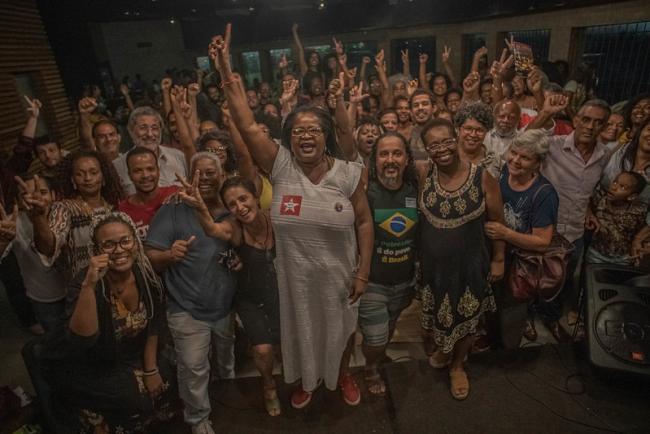
In November 15 elections, Black women are running for office to continue the legacy of the murdered councilwoman and address historical underrepresentation in politics.
Black women have been historically underrepresented in elected positions in Brazil. Since Brazil’s re-democratization in 1989, the Black population, which makes up more than 50 percent of the total Brazilian population, is not equivalently represented among elected representatives. A 2016 study by the Centro Feminista de Estudos e Assessoria (Cfemea) they found that while Black women make up 26 percent of the population, they only hold 5 percent or less of the seats in Brazil’s legislative councils.
This underrepresentation impacts public policies. The Black population was disregarded in measures including the pension reform, which disregarded the life expectancy of the Black population. In addition to underrepresentation, there are reasons for concern when Black women are elected. In 2018, Marielle Franco, the only Black councilwoman from the city of Rio de Janeiro, was killed. Her murder, still unsolved, challenged the limits of Brazil’s democracy.
While Marielle’s murder could have had a chilling effect upon Black candidates, it instead inspired a wave of Black candidacies. Marielle Franco’s trajectory was a continuity of predecessors such as Benedita da Silva and Olivia Santana. In the 2020 election, the political seeds of Marielle, both her inspiring trajectory and tragic death, flourish in in Brazil’s embattled democracy.
When Brazilians vote in municipal elections on November 15, numerous Black women candidates, including mayoral contenders in Salvador and Rio de Janeiro, will be on the ballot. In the 2018 election this trend was already evident. However, the number of candidates is still not proportionate to the overall population of Black women in Brazil. Marielle Franco’s life is the driving force behind a movement, but also a reflection of an ancestral trajectory of Black women in politics. Despite these gains, Black women still face institutional barriers to run for office and as elected politicians.
Historical Underrepresentation of Black Women
Brazil’s Proclamation of the Republic was in 1889, yet the right to vote was only universalized in 1985, when people considered “illiterate” gained their rights. Before that, there were restrictions based on income, sex, and during undemocratic periods in the country.