
by EDWARD WATTS
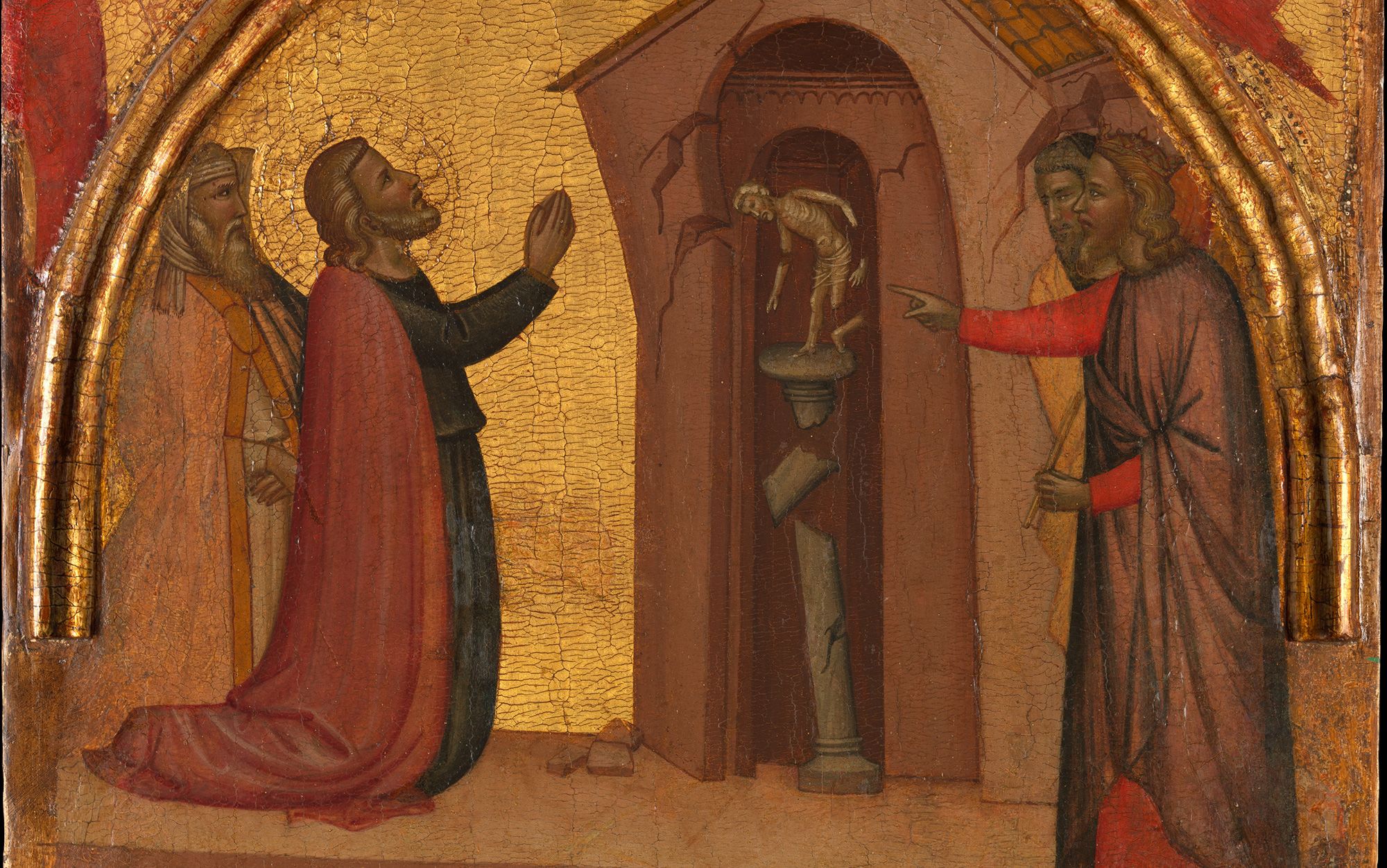
Late in 386 CE, Libanius, a 72-year-old teacher of rhetoric from the Syrian metropolis of Antioch, penned an oration addressed to the Roman emperor Theodosius I. It offered one of the most powerful criticisms of the process by which Rome became a Christian empire. Libanius described Cynegius – the Roman prefect who governed a vast swath of the eastern Mediterranean – leading troops of soldiers and Christian monks on a rampage through the Syrian, Lebanese, Palestinian and Egyptian countrysides.
‘This black robed tribe,’ Libanius wrote of the monks, ‘eats more than elephants.’ They ravage fields, destroy temples and attack fellow citizens. ‘Utter desolation follows’ in their path as they ‘strip off roofs, demolish walls, tear down statues, and overthrow altars.’ This is ‘nothing less than war in peace time, waged against the peasantry’. What is the purpose of your army, Libanius asked the emperor, if ‘while you keep external enemies away, one group of your subjects attacks another?’
The emperor didn’t answer. Nor did Libanius really expect him to; he knew that Theodosius must have approved of Cynegius’s march of terror. It represented merely the latest phase in a revolution that transformed the Roman empire from a state that persecuted its small Christian minority into a Christian-majority state that used violence against pagans. Libanius had lived through the entire process.
Libanius was born into a very different Roman empire from the one he described in 386. It was a world of perhaps 60 million people, probably 90 per cent of whom were pagans. Not that the term meant anything to them. ‘Paganism’ was a concept invented by Christians to describe everyone who was neither a Christian nor a Jew. These 54 million Roman ‘pagans’ didn’t think that their religious practices had much in common with one another.
There was no reason they would. Roman pagans had no unified or organised church structure. They shared no sacred books or rituals. They didn’t even agree on which gods were real. Many pagans worshipped gods they imagined took the form of men; others depicted their gods in the shape of animals; and some, such as the disgraced 3rd-century emperor Elagabalus, saw their gods embodied in giant rocks. Pagans also regularly mocked the religious ideas of other pagans. The 2nd-century satirist Lucian, for example, wrote about a fictionalised congress of the gods in which the Olympian gods and other well-recognised deities debated whether they could expel some of the empire’s newer and more exotic divinities, ‘supposed gods who filled heaven’ although ‘they were in no way worthy’ of the honour.
Aeon for more