
by DIVYALI MEHROTRA
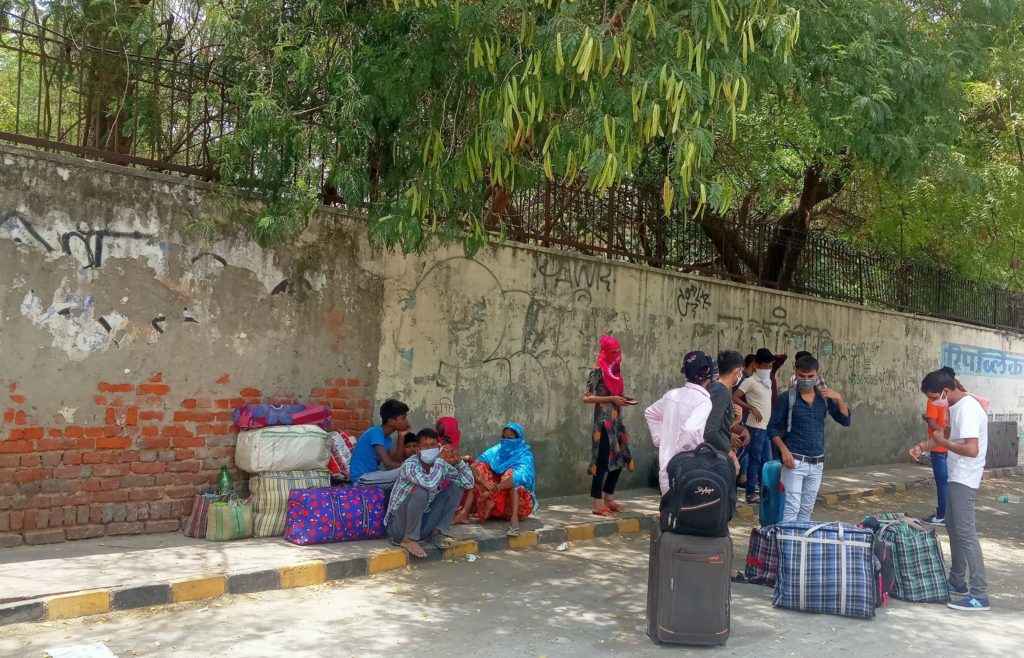
As the novel coronavirus spread around the world in the early months of 2020, news outlets and social media warned the public about its effects and advised safety measures such as regular hand washing and physical distancing. On March 23rd, India imposed a harsh nation-wide lockdown, suspending all kinds of activities and services, except those deemed “essential.” But the notion of “social distancing” has a pernicious meaning in India, as opposed to what was intended by the World Health Organization.
In many parts of South Asia, social distancing has been an established practice for centuries, practised by higher castes who distance themselves from lower castes, and not to mitigate the effects of infectious disease. Public health measures during this pandemic have inadvertently reaffirmed this cruel and antiquated system. According to India’s 2011 Census, 65 million people lived in informal housing, most of them are of lower castes. These housing areas often lack clean drinking water, bathing areas and sewage systems, and have little space and ventilation.
How do Indians have a conversation about safety measures let alone implement them in such a social context? In addition to this, these outdated practices of social distancing imply that, during this pandemic, the needs of the poorest in India can be largely ignored by wealthier and higher caste people, especially when they need it the most due to these dire situations.
Caste system
India’s caste system divides Hindus into hierarchies based on karma (work) and dharma (duty) based on four categories – Brahmins (priests), Kshatriyas (warriors), Vaishyas (traders), and Shudras (peasants). Outside of the caste system were people who were considered untouchables, and are today referred to as Dalits. Under British rule, the caste system was reinforced in an attempt to further divide the population so as to maintain colonial control. As a result, the caste system became even more rigid and pervasive. While the system was banned under constitutional law in 1950, it still permeates everyday life.
Toward Freedom for more