
by ROBERT FISK
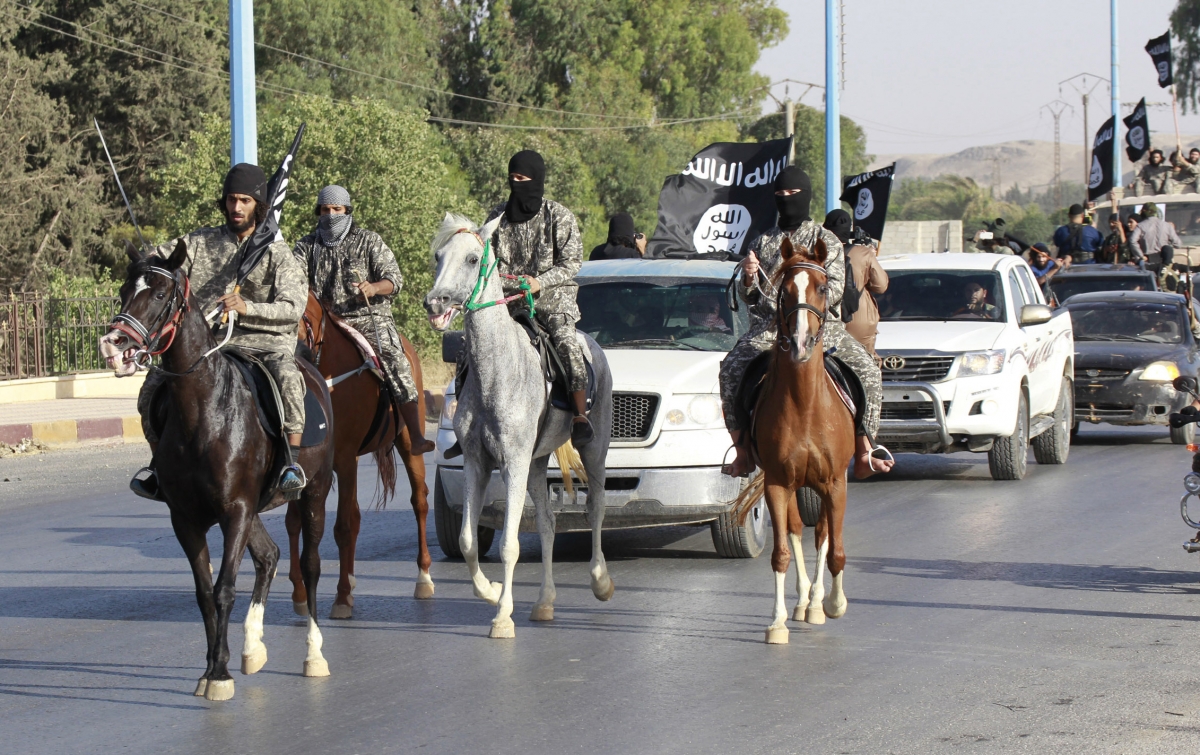 Militant Islamist fighters ride horses as they take part in a military parade along the streets of Syria’s northern Raqqa province PHOTO/Reuters/International Business Times
It details all of Isis’s cruelty, but places it in the context of a very bloody history
Before Obama’s few dozen brave Spartans put their little bootees on the soil of the tiny bit of Syria that the Kurds hold, not far from Qamishli, they should learn a bit about Isis from the work of a Syrian historian. They would find that Abu Bakr al-Baghdadi, the Isis “caliph” is not only a keen football fan but in his youth created a soccer team for mosque regulars and even joked that he was Iraq’s Maradona.
They would discover that he communicates with his officials through mobiles, WhatsApp and Skype SMS, speaks English and demands that all paper intelligence reports be printed on a single piece of A4 – which is pretty much what Churchill demanded of his bureaucrats in the Second Word War – and also demands that citizens work a six-day week. There’s an Isis postal system in his Syrian capital of Raqqa and if you want to write to Baghdadi (original family name Ibrahim Awad Ibrahim al-Badri) you have only to address a letter to: al-Calipha Ibrahim, Raqqa. “Be assured it will arrive safely,” the writer of Under the Black Flag was informed.
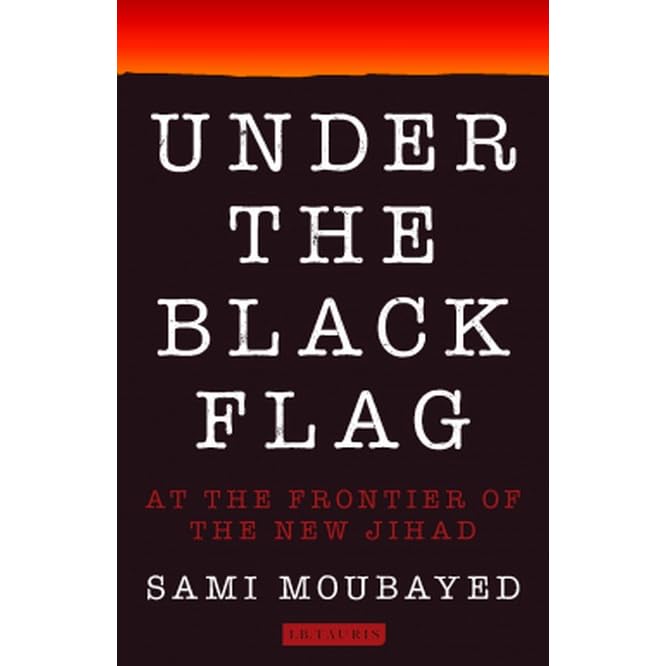 IMAGE/Good Reads
He is Sami Moubayed, a historian and former scholar at the Carnegie Center in Beirut and he lives in Damascus. He is a brave man, and knows it.
…
In the 14th century, Ibn Taymiyyah, a Muslim theologian, sought a return to the purity of Islam from moral corruption, calling for a holy jihad to create an Islamic state. In the 18th century, Mohamed Abdul-Wahab and Muhammad ibn Saud – whose family now rules Saudi Arabia – went on head-chopping expeditions to extend their purest rule over Arab lands. Al-Saud’s historian, Uthman bin Bashir al-Najadi, wrote after 5,000 Shia Muslims were butchered in 1801: “We took Karbala and we slaughtered… With the permission of Allah, we will not apologise for what we have done and we tell all kafir [unbelievers] ‘You will receive similar treatment’.”
…
But Moubayed has also studied Isis’s favourite Islamic texts and shows how while the Prophet is quoted as saying “when you kill, kill well, and when you slaughter, slaughter well” – in Arabic, darb al-rekab, hitting the neck – “Isis seemingly forgets that the Prophet adds ‘Let each of you sharpen your blade and let him spare the suffering of the animal he slaughters’. In other words [the Prophet] was talking about sheep and cattle – not human beings.”
Quite a dissection of Isis for US Special Forces to ponder before they tip-toe over the Syrian border. But they might also remember that the Prophet ordered the execution of prisoners captured in the battle of Badr in 624, a precedent followed by later Muslim leaders; the Ottomans beheaded King Ladislaus of Hungary and King Stephen of Bosnia and his sons after they surrendered.
Independent for more