
by JESMIN PAPRI
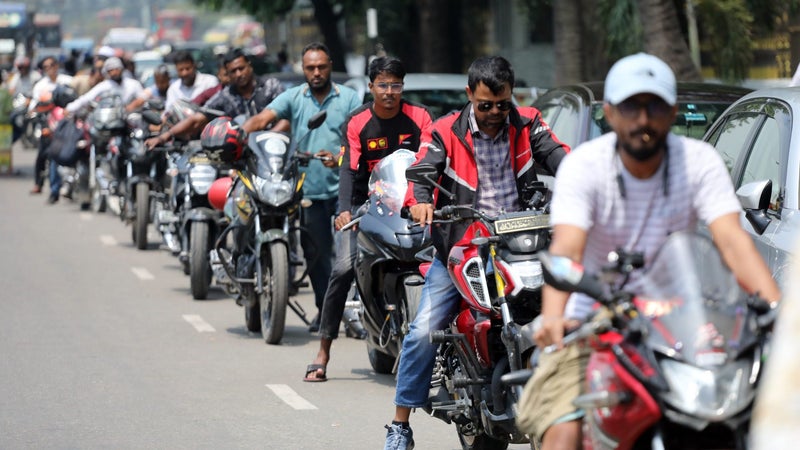
The country gets 95% of its fuel from abroad.
On a recent Saturday evening, a line of motorcycles stretched from a gas station in Dhaka. The queue snaked along the road for kilometers, its end out of sight. In the late afternoon heat, delivery and ride-hailing drivers leaned against their bikes, wiping sweat from their faces. Some scrolled through their phones; others waited in silence for fuel that might or might not arrive.
Among them was 25-year-old Rubel Malita. He had been standing in line since 1 p.m. Five hours later, he finally reached the pump. He was only allowed to buy 500 taka ($4) worth of diesel.
“It’s not just less income; it’s lost time and energy. We spend hours in line instead of earning,” he said.
Malita has worked full time in ride-sharing for the past two years, earning around 30,000 taka ($243) a month driving for Uber and Pathao.
Like many gig workers, he relies on daily trips for income, and without a fixed salary or benefits, any disruption quickly cuts into his earnings.
The current fuel shortage, sparked by Israel and the U.S.’ war with Iran, has upended his income, exposing the lack of safety nets in platform-based work. Drivers say that during such disruptions, ride-sharing companies continue to take the same commission rates while offering no financial support when trips dry up. Last month, his income fell by almost half to 17,000 taka ($138), pushing him into financial strain.
Like many gig workers in Dhaka, Rubel now spends hours every day searching for fuel — time that could otherwise be spent earning. Across Bangladesh, the shortage reflects a wider disruption in the country’s fuel supply chain, which depends heavily on imports for nearly 95% of its petroleum needs.
Rest of World for more