
by THOM HARTMANN
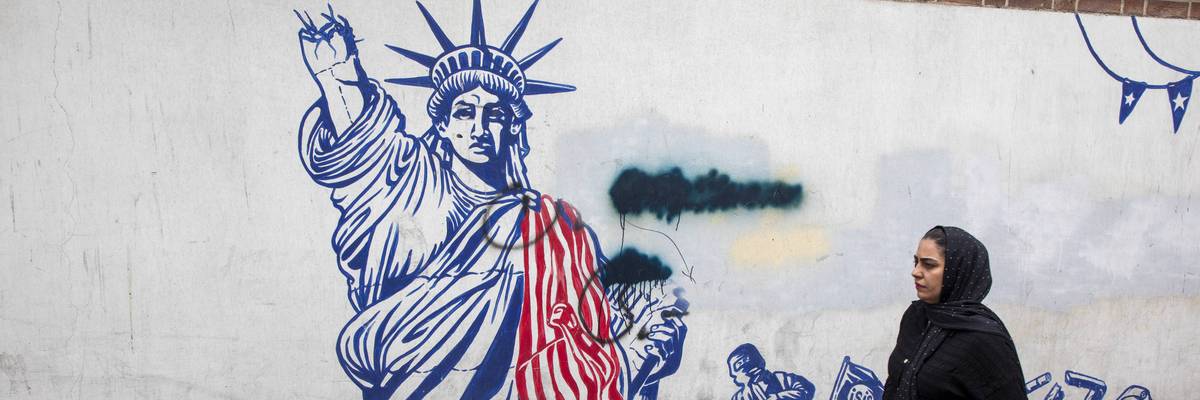
IMAGE/ Majid Saeedi/Getty Images
The most important lesson of the First World War is that leaders who think they can manage escalation usually can’t.
Saturday’s back-to-back headlines on The Washington Post were: “’They Have Chosen Not To Accept Our Terms,’ Vance Says” and “U.S. Intelligence Shows China Taking A More Active Role In Iran War.” They echo headlines from a century ago that reported on the early days of what quickly became World War I.
In 2021, China and Iran became military allies, signing a “broad strategic partnership encompassing economic, diplomatic, and security dimensions.” Russia signed a similar comprehensive military/security agreement with Iran in January of last year. The three countries are now military allies and formally assisting each other. Hold that thought.
Then, on Sunday morning, America’s resident madman Donald Trump announced on his Nazi-infested social media site that the United States Navy will illegally blockade the Strait of Hormuz—the narrow chokepoint through which twenty percent of the world’s oil used to flow every day—threatening to intercept “every vessel in International Waters” that’s paid a toll to Iran.
The US blockade of the Strait begins the hour that this article was published: 10 AM ET on Monday, April 13th.
What happens when a US destroyer orders a Chinese-flagged tanker to heave to in the Strait of Hormuz and a Chinese warship sails between them?
That means all the shipping of oil for China and drones for Russia will be intercepted by the US. We’re now blocking the war and energy supplies of nations that have nuclear weapons and whose military assets are already in the region. And it came just hours after the peace talks in Islamabad—led by three American grifters with absolutely no diplomatic experience—had predictably collapsed.
What happens next will depend entirely on whether anyone in this administration has ever seriously studied what happened the last time a similar cascade of great-power commitments, cornered leaders, and military miscalculations all converged at once.
A hundred and twelve years ago this summer, a young Bosnian Serb named Gavrilo Princip fired two shots in Sarajevo, killing Archduke Franz Ferdinand of Austria-Hungary.
What followed was a deadly catastrophe, because every major European power had spent the previous forty years putting together mutual defense treaties with other major European powers.
(In the 1908 Bosnian Crisis Austria-Hungary had annexed Bosnia, land that Serbia claimed; the Serbs were humiliated and furious. The Balkan Wars of 1912-13 left Serbia stronger and more willing to reach out to the Slavic people still living under Austria-Hungarian rule, particularly those in Bosnia, further enraging the Austria-Hungarians.)
Everybody was armed to the teeth and, frankly, paranoid about everybody else. So, when Franz Ferdinand’s assassination gave Austria-Hungary an excuse to punish it’s longtime enemy Serbia, those treaties clicked into place like the tumblers of a massive combination lock and the doors of hell swung open onto the most catastrophic war the world had, at that time, ever seen.
Common Dreams for more