
by AMY ELIZABETH
Welcome to The Poetry Parlour, a space where poetry takes center stage. Here, we gather to celebrate the voices of poets—both rising and renowned—whose words move, inspire, and linger. Each post invites you into this intimate literary space, where verses are savored like fine tea, and the art of poetry is cherished in all its forms. Settle in, find a quiet moment, and enjoy the poetry waiting for you here.
Introducing the poet:
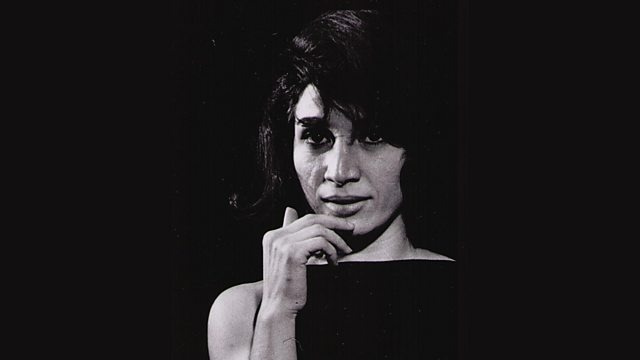
“I sinned, a sin full of pleasure / In an embrace which was warm and fiery.”
—Forugh Farrokhzad, Sin
Forugh Farrokhzad (1934–1967) was an Iranian poet, filmmaker, and cultural icon who reshaped modern Persian poetry with an intimate, unflinching voice. Born in Tehran, she began publishing in her early twenties, writing poems that explored desire, alienation, and the interior life of women in a society where such expressions were often considered taboo.
Her early collections—The Captive, The Wall, Rebellion—sparked controversy for their emotional honesty and sensuality. But her later work, especially Another Birth, revealed a poet fully in command of her craft—lyrical and spiritually restless.
Farrokhzad wasn’t only a poet—she was a documentarian, a mother by choice, and a woman who lived against the current. Her film The House is Black, set in a leper colony, is still considered one of Iran’s most important cinematic works. While filming it, she adopted a boy from the colony, embodying the same radical empathy that marked her writing.
I discovered Farrokhzad from Jack Edwards’ Youtube channel in May of 2024. I took her collection, Let Us Believe in the Beginning of the Cold Season: Selected Poems, with me on a birthday trip to Youngstown, New York. Reading her work felt like putting my palm up to the fabric of time—oceans and lands and decades away—and touching hers. I saw myself in the writings of this young woman. And hauntingly, I learned she died in a car accident at age 32—the same age I was reading her work for the first time.
I wondered what she would think of a fellow 32-year-old poet like me, sitting here in America, reading her poetry, all these years later. What she would think of herself, of how poetry has evolved, of Tehran, and of Iranian women’s state of living today.
Here is the Poetry Foundation’s summary of the years after her death:
Following the 1979 revolution that overthrew Iran’s secular monarchy, Farrokhzad’s work was banned and then heavily censored for nearly a decade. Her untimely death in a car crash at the age of 32 was seen as a national tragedy and made the front pages of Tehran’s newspapers. In the afterword to Asir, Farrokhzad presciently wrote, “Perhaps because no woman before me took steps toward breaking the shackles binding women’s hands and feet, and because I am the first to do so, they have made such a controversy out of me.” She is seen as a symbol of artistic, personal, and sexual freedom because of her unprecedented work in articulating the inner emotional and physical intimacies of women in her culture.
Today, her poems still burn with longing and rebellion. They speak to the ache of being alive, the beauty in breaking form, and the quiet, persistent truth of the self.
Sin
I sinned a sin full of pleasure
in an embrace that was warm and fiery
I sinned in arms that were hot
and vindictive and made of iron

In that dark and silent sanctuary
I looked into his eyes full of secrets
My restless heart trembled in my chest
at the demands of his hungry eyes

In that dark and silent sanctuary
I sat agitated at his side
His lips poured violent desire across my lips
I was freed from my mad heart’s grief

I whispered words of love into his ear:
I want you, O my love
I want you, O life-giving embrace
You, O my mad lover

The passion in his eyes lit a flame
Red wine danced in the cup
In the soft bed my euphoric body
trembled on his chest

I sinned a sin full of pleasure
beside a dazed and trembling body
O Lord, what do I know about what I did
in that dark and silent sanctuary
From Let Us Believe in the Beginning of the Cold Season: Selected Poems by Forugh Farrokhzad, translated by Elizabeth T. Gray, Jr. (New Directions, 2022).
Once Upon A Writing for more