
by MYSHA MANAAL TAJ
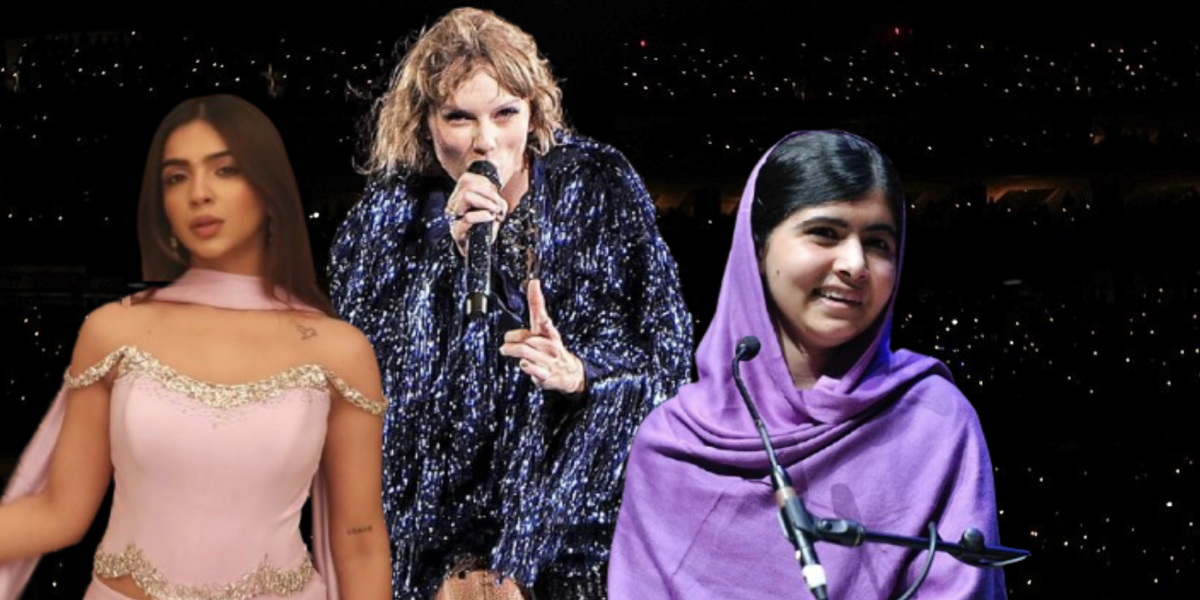
In early 2025, Taylor Swift released The Life of a Showgirl, a glittering chronicle of fame and reclamation. But just months before that, another headline clung stubbornly to her name: her private jet had emitted over 8,000 tons of CO? in a single year – more than a thousand times the average person’s footprint. When called out, her team replied that she “purchases carbon offsets,” effectively buying permission to pollute.
The irony was almost cinematic. A woman who had become the world’s most celebrated feminist icon was now the poster child for luxury’s ecological excess. It captured our cultural moment perfectly, resistance that sparkles, guilt that is offset, and feminism that is beautiful but bloodless. Swift performs empowerment that feels lyrical but rarely radical. Her carbon trail, much like her feminism, remains insulated by devotion and devoid of consequence.
Showgirl, pop feminism and the myth of safe power
In the 21st century, empowerment is a brand category. Feminism, stripped of its politics, now functions as an aesthetic of self-celebration, palatable and algorithmically friendly. Swift, arguably the most scrutinised woman in pop culture, is the clearest example of this transformation.
Her storytelling has always revolved around heartbreak and girlhood nostalgia, a loop of emotional survival that feels empowering but ultimately keeps her politics sentimental, not structural. Her insistence on eternal adolescence makes her feminism comforting rather than challenging. Power, here, is a feeling and not a demand.
The Eras Tour took this logic global. Resilience became spectacle, and fandom became moral validation. Any critique of her wealth or silence on politics was reframed as misogyny, sanctifying her brand as untouchable. Swift has turned feminism into a luxury good, that’s comforting, and perfectly owned.
India’s own ‘branded rebellion’
India mirrors this pattern with remarkable precision. Influencers like Apoorva Mukhija, alias Rebel Kid, and self-help icons like Wizard Liz preach confidence, self-love and detachment from the male gaze, all in neatly packaged reels. Their rebellion is algorithm-approved: it unsettles no one and sells effortlessly, and also ends where corporate sponsorship begins.
The Wire for more