
by VIOLETA RUIZ
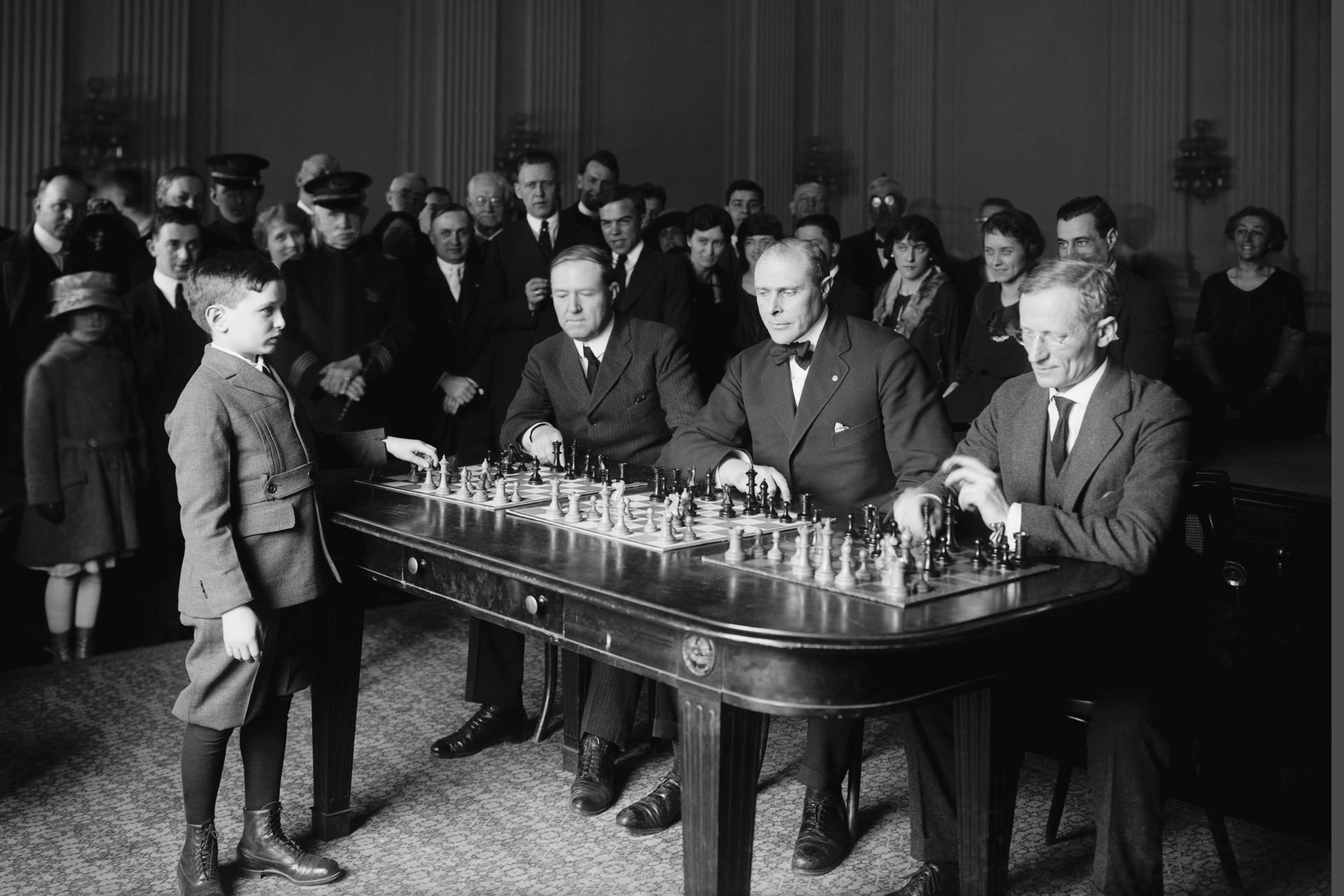
The convergence of singular talent and profound disability confounded scientists eager to place humans into neat categories
On 25 November 1915, the American newspaper The Review published the extraordinary case of an 11-year-old boy with prodigious mathematical abilities. Perched on a hill close to a set of railroad tracks, he could memorise all the numbers of the train carriages that sped by at 30 mph, add them up, and provide the correct total sum. What was remarkable about the case was not just his ability to calculate large numbers (and read them on a moving vehicle), but the fact that he could barely eat unassisted or recognise the faces of people he met. The juxtaposition between his supposed arrested development and his numerical facility made his mathematical feats even more impressive. ‘How can you account for it?’ asked the article’s author. The answer took the form of a medical label: the boy was what 19th-century medicine termed an ‘idiot savant’. He possessed an exceptional talent, despite a profound impairment of the mental faculties that affected both his motor and social skills.
A century after The Review relayed the prodigious child’s mathematical abilities, trying to understand ‘how they do it’ still drives psychological research into savantism or ‘savant syndrome’ to this day. The SSM Health Treffert Centre in Wisconsin – named after Darold Treffert (1933-2020), one of the leading experts in the field – defines the savant phenomenon as ‘a rare condition in which persons with various developmental disorders, including autistic disorder, have an amazing ability and talent’. Today, savantism is largely comprehended through the lens of neurodivergence, since the association between savantism and autism is strong: roughly one in 10 people with autism exhibit some savant skills, while savantism in the absence of autism is much rarer.
Psychological studies by Simon Baron-Cohen and Michael Lombardo, for example, have focused on the neurological basis of ‘systemising’, where exceptional mathematical or musical skills exist among people diagnosed with autism: such people are ‘hypersystemisers’, that is, they are especially good at identifying ‘laws, rules, and/or regularities’. It is believed that their brain’s systemising mechanisms are ‘tuned to very high levels’, making them acutely sensitive to sensory input and also capable of intense attentional focus and rule-learning.
But in the past (autism became a diagnostic category only in 1943), the ‘idiot savant’ was a paradox, who confounded categorisation because there was no unified way of comprehending how such exceptional musical and numerical skills might co-exist alongside their polar opposite: profound disability. To use the language of the 19th century, how could a person be at once both a ‘genius’ and an ‘idiot’? The savant challenged conventional understandings of how talent was manifested, and who could manifest it, and at the same time upset notions of who might be classed as an ‘idiot’. In the scheme of how intelligence was understood then, the savant was at best otherworldly and at worst a monstrosity.
The historian Patrick McDonagh points out that ‘idiocy’ was a highly ambiguous medical term that was nonetheless widely accepted. Perhaps, in part, because it was a boundaried category that fulfilled an important social-symbolic function: namely, it offered a contrast against which modern individuals could define themselves as rational and intelligent, reinforcing their claims to respect and social authority. It also meant that people like that 11-year-old boy who was fascinated with numbers but was nonetheless considered an ‘idiot’ – in the medical parlance of the day – created a contradiction that continues to have implications today.
Aeon for more