
by MARK BOSLOUGH
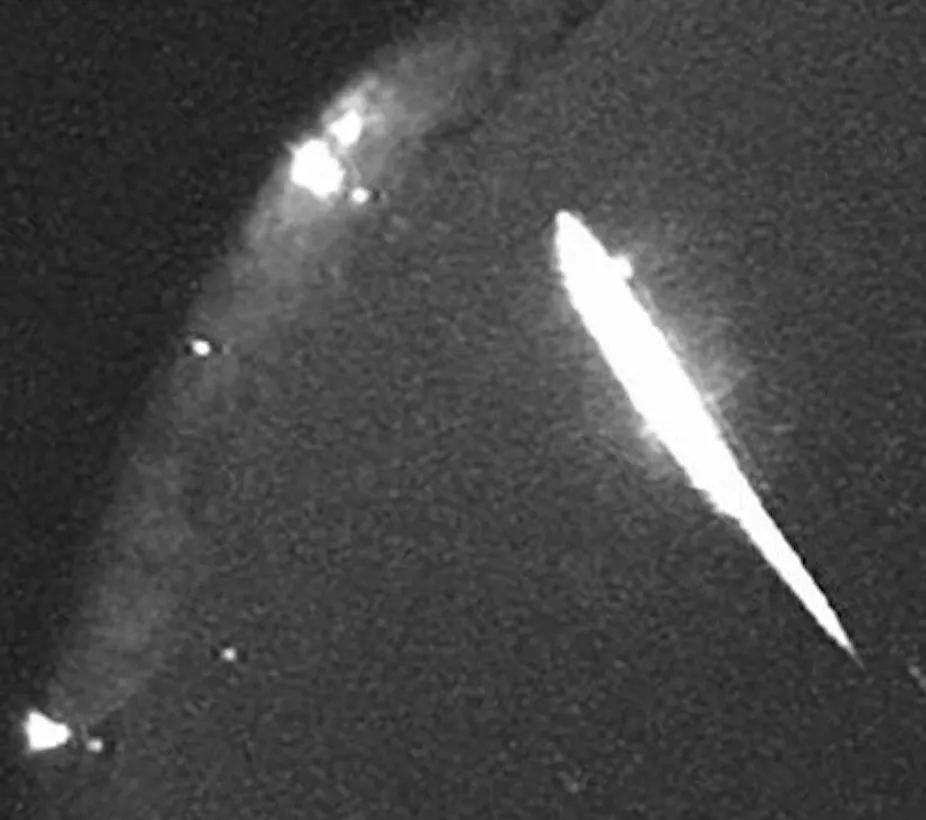
With the Taurid meteor shower now hitting the night skies worldwide, look for what could be a celestial treat – you might see shooting stars, and maybe even fireballs, the biggest and brightest meteors.
As the full moon begins to wane after Nov. 15, the sky will be darker, due to diminishing moonlight, so finding the meteors will get easier. That said, the best visibility for the meteors through the rest of the month will come just before moonrise each night.
Beyond the light show, there is something else that scientists as well as onlookers have long wondered about: the possibility that bigger chunks are in the Taurid meteor streams, chunks the size of boulders, buildings or even mountains.
And if that’s true, could one of those monster-sized Taurid objects collide with Earth? Could they wipe out a city, or worse? Is it possible that’s already happened, sometime in our planet’s past?
As a physicist who researches the risk that comets and asteroids pose to the Earth, I’m aware that this is a subject where pseudoscience often competes with actual science. So let’s try to find the line between fact and fiction.
Pig Pen, glowing tails and shooting stars
Comet Encke is the so-called parent comet of the Taurid meteors. It’s relatively small, just over 3 miles (almost 5 kilometers) in diameter, and crosses inside Earth’s orbit and back out every 3.3 years.
As Encke moves, it sheds dust wherever it goes, like the Peanuts character Pig Pen. A meteor shower occurs when that dust and debris light up while entering Earth’s atmosphere at high speeds. Ultimately, they vanish into an incandescent puff of vapor with a glowing tail, creating the illusion of a “shooting star.”
But dust isn’t all that breaks off the comet. So do bigger chunks, the size of pebbles and stones. When they collide with the air, they create the much brighter fireballs, which sometimes explode.
The Conversation for more