
by MOHAMAD HASAN SWEIDAN
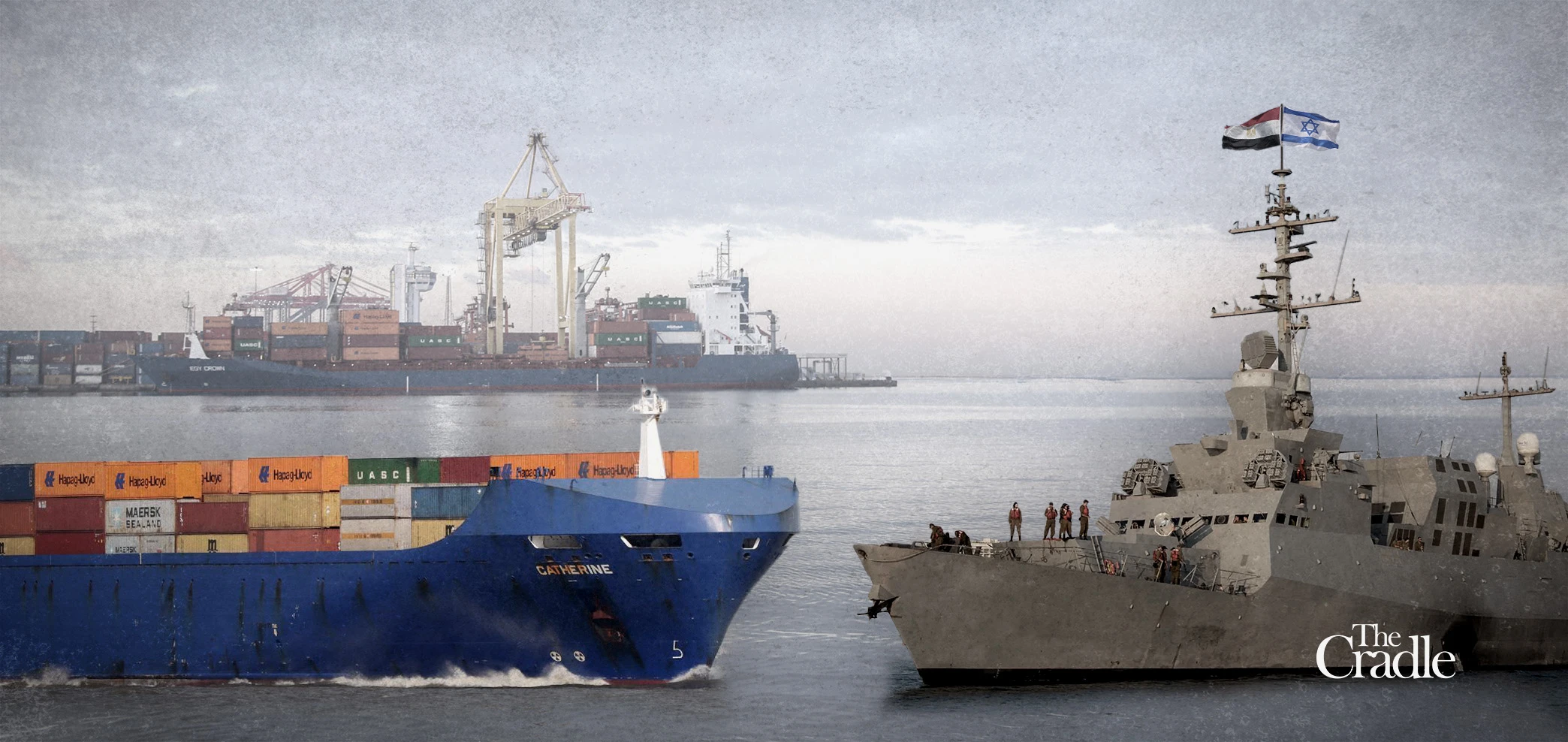
A series of recent incidents have brought into focus two of Israel’s most rock-solid allies: Egypt, the first Arab ‘normalizer’ and now Tel Aviv’s most reliable regional trading partner, and Germany, the nation that defined ‘genocide’ for the 20th century.
In 1973, the Egyptian and Syrian armed forces launched a surprise attack on Israel, which would become known as the “October War.” In a speech delivered by former Egyptian President Gamal Abdel Nasser to Arab trade unionists On 26 May 1967, Abdel Nasser said: “The battle with Israel will be general, and our primary goal will be to destroy Israel.”
More than five decades after Egypt launched its war and pledged to destroy the occupation state, reports have emerged that Cairo is now providing economic and logistical support to Israel during its war on Lebanon and Gaza.
Egyptian ports: a logistics platform serving Israel
According to the ship tracking website Marine Traffic and the financial data company LSEG Data & Analytics, the German ship MV Kathrin docked in Alexandria Port on 28 October. Open source naval data and human rights groups claim the vessel reportedly bore explosive materials destined for the Israeli military and was unloaded at an Egyptian military dock after being denied docking rights by several countries.
The Alexandria Port website, which monitors ship movement and maritime navigation reports that the Egyptian Maritime Consultative Office (EMCO), took charge of receiving the ship and “unloading” its “military” cargo. Further information then emerged that the goods were transported on the same day from the port of Alexandria to Israel’s Mediterranean port of Ashdod.
The MV Katherine vessel reportedly carries eight shipping containers containing 150,000 kilograms of RDX explosives for Israeli Military Industries, which is the ammunition production arm of Elbit Systems, Israel’s largest military manufacturer. In September, Portugal’s Foreign Minister Paulo Rangel said he received information from the shipowner that half of the cargo was dual-use items destined for an Israeli arms company.
What is interesting is that the vessel had been prevented from docking in Namibia, Slovenia, Malta, and Montenegro due to these countries’ concern that Tel Aviv would utilize the explosive materials to commit further massacres against civilians.
Egypt then stepped in to solve MV Kathrin’s dilemma by offering a place to dock and unload its cargo. In a lengthy report published on Amnesty International‘s official website, the human rights group writes:
“The Egyptian government allowed the German-flagged ship ‘MV Kathrin’, which is believed to be carrying explosives bound for Israel, to dock and unload in the port of Alexandria despite the risk that this shipment may contribute to the commission of war crimes in Gaza.”
It must be noted here that Alexandria’s reception of the ship came after a statement by Amnesty’s Slovenia Chief Natasha Bussell: “The deadly cargo believed to have been on board the ship MV Kathrin must not reach Israel, because there is a clear risk that such a cargo could contribute to the commission of war crimes against Palestinian civilians.”
To these charges, Egypt’s military spokesman responded in a statement published on his Facebook page:
“The Egyptian Armed Forces categorically denies what has been circulated on social media and suspicious accounts and what is being promoted regarding assistance to Israel in its military operations in general and in detail… and stresses that there is no form of cooperation with Israel.”
Despite the denial, there is plenty of evidence that Alexandria received the ship, from tracking shipping locations and global data companies to reports from several parties and governments. It must be noted that, during Tel Aviv’s 13 months of brutal military assault on Gaza, five Egyptian ports were transformed into key crossing hubs for Israeli exports and imports. Allowing the MV Kathrin to dock at one of these Egyptian ports is simply a continuation of the role assumed by Cairo to serve Israel’s war interests.
The Cradle for more