
by CAROLINE OLIVEIRA
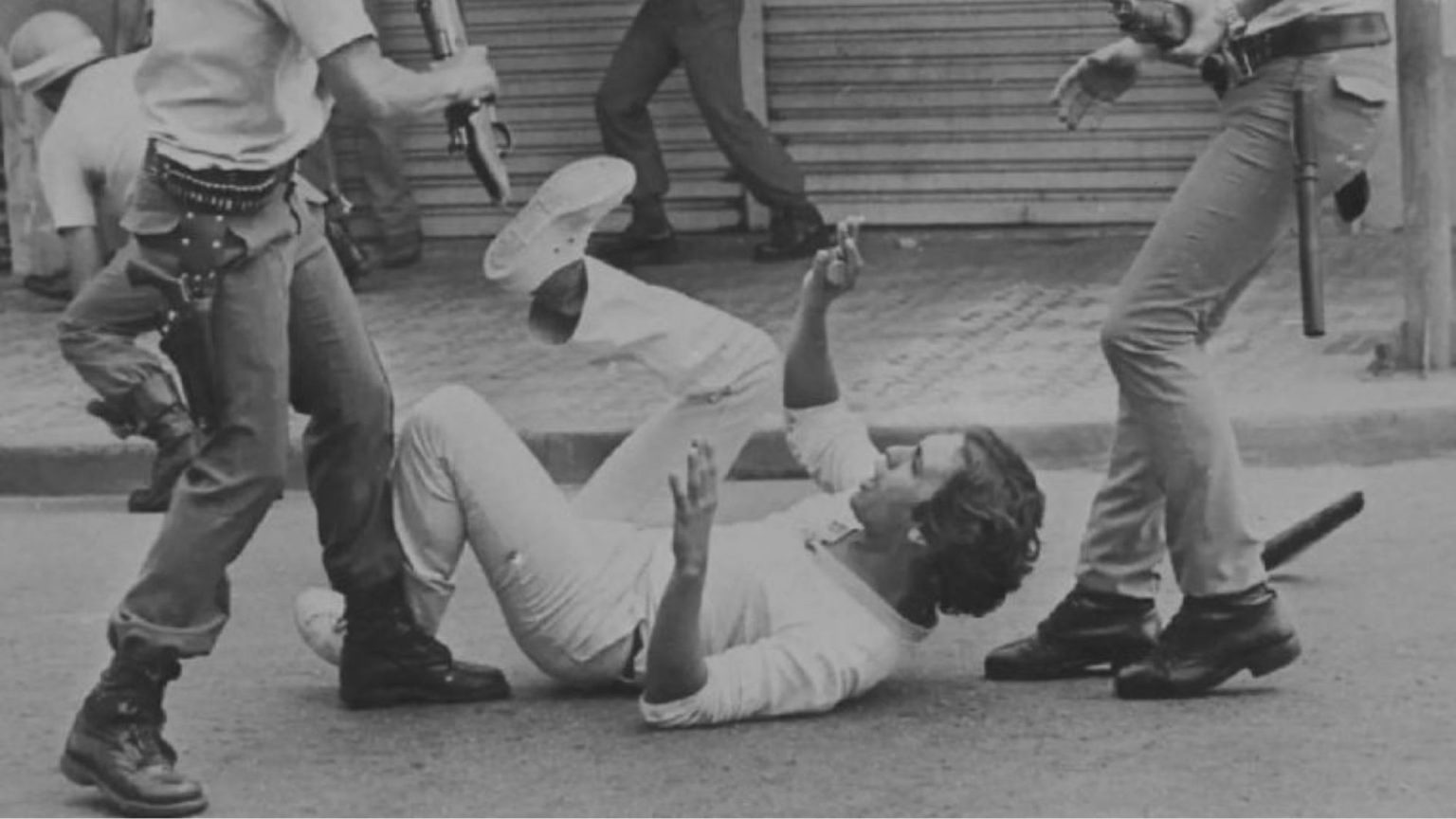
The Brazilian transition from the civil-military dictatorship to the New Republic in the 1990s could have been a period to revise the authoritarianism embedded in the country’s society since its formation. However, the authoritarian traits – boosted during the dictatorship – are legacies Brazil has to this day.
Behind these traits, there is a society and successive governments that refuse to come to terms with the past. President Luiz Inácio Lula da Silva (Workers’ Party) has recently said he cannot “always dwell” on the dictatorial past. The comment was in response to being asked about the cancellation of the ceremony to mark the 60th anniversary of the 1964 coup, planned for April 1st this year.
“What I cannot do is not move forward with [Brazil’s] history. I cannot always dwell on it, that is, it’s a part of Brazil’s history about what we still lack information about since there are still missing people, things to be investigated. But, honestly, I will not dwell on it. I’ll try to move this country forward,” said Lula in an interview with the Brazilian TV show É Notícia.
Ivo Lebauspin, who was arrested and tortured during the dictatorship, says “It’s an error not to elaborate on the dictatorship period. There is a narrative saying it’s better to reconcile with the past and forget what happened. That’s impossible to achieve without knowing what really happened.”
“Some people think that, in order to move forward with a political plan, it’s necessary to sweep [the dictatorship] under the carpet, put all this behind us, look ahead and make agreements. It was already done. It has been done for years. The dictatorship hasn’t been analyzed since its end [1985]. No trials, nothing,” he explained.
Lebauspin associates the military presence in the coup attempt to keep Jair Bolsonaro (Liberal Party) in the presidency as a remnant of the military intervention. “It has everything to do with not remembering the dictatorship and not bringing it to justice. In Germany, there is a monumental effort to constantly remember what happened. There are Holocaust museums in various places, and people know what happened. There was a trial, facts were analyzed and judged. There was no such thing here.”
Similarly, Daniel Aarão Reis Filho, a professor in the History Department at Fluminense Federal University (UFF, in Portuguese), says that he remembers “leaders of progressive parties, like Tancredo Neves in 1985, calling on people not to look in the rear-view mirror, but to look ahead and not dwell on the wounds.” That shows that Brazil “paid little attention to reflecting on the state structure set up during the dictatorship and its policies.”
Armed Forces
As a result, authoritarian traits are still present in Brazilian society, not only from the military dictatorship period but also from other governments, such as Getúlio Vargas’ Estado Novo and the slavery period. Among these legacies, the professor lists the autonomy of the Armed Forces.
“They are a true state within the state. They have their own educational structure and a specific justice system, allowing the Armed Forces to cultivate increasingly anachronistic ideologies, which are very much in force within the Armed Forces.”
Aarão Reis Filho explains that only Dilma Rousseff’s government (Workers’ Party) – but timidly – made efforts to revise the military structure, especially with the creation of the National Truth Commission (CNV, in Portuguese) on November 18, 2011. Even so, the history professor says “There was a kind of pact: we don’t mess with you, you don’t mess with us. This pact was based on the illusory hope that, over time, wounds would heal.”
A year after the end of the commission’s activities, in 2014, researcher and CNV member Lucas Figueiredo stated that the 4,328-page final report was “a weak one”.
“[Late Brazilian President] Tancredo Neves is the kid’s father, since he didn’t talk openly about investigating [military activities during the dictatorship]. [Former President José] Sarney was a sellout politician because he was too weak, and therefore had to rely on the military.
After him, [former Presidents Fernando] Collor and Itamar [Franco] used the state to prevent documents from becoming public, which is a more serious stance. And there was Dilma, who was absolutely passive because the Armed Forces lied to her during the commission – and she did nothing,” said Figueiredo to the BBC when the report was released.
This passiveness on the part of Brazilian governments after the dictatorship was compounded by the articulation of the far right within military headquarters, which gained ground mainly during the military dictatorship. Professor Daniel Aarão Reis Filho says the far-right preferences among the military “is very strong”. “Nothing indicates this tendency has been neutralized.”
“There has been a general effort to transform the Brazilian Armed Forces, which used to be plural, into monoliths. The military schools continue to intoxicate [soldiers] with Cold War theories, which are anti-communist and continue to feed the idea that the military is the master of civility, the savior of peace, the guardian of the Republic. They set up an extremely centralized, monolithic educational system, without pluralism or a cult of legality. This is one of the dictatorship’s legacies that is extremely harmful to democracy,” says the UFF professor.
Capitalism
Another legacy professor Aarão Reis Filho mentions is social and regional inequalities. “The dictatorship propelled Brazilian capitalism to a higher level. Unlike the Argentinean dictatorship, which pushed Argentinean capitalism downwards, here in Brazil, capitalism leapt forward, but at the cost of social inequalities.”
Throughout the dictatorship, there was a rapprochement between the industrial and agrarian bourgeoisie, coupled with the participation of foreign capital in the economy, followed by economic dependence on hegemonic countries. In this scenario, the state worked to guarantee the demands and profits of the elites to the detriment of the rights of the working class, increasing economic inequality in Brazil.
Brazzil for more