
by MIKE ALLEYNE
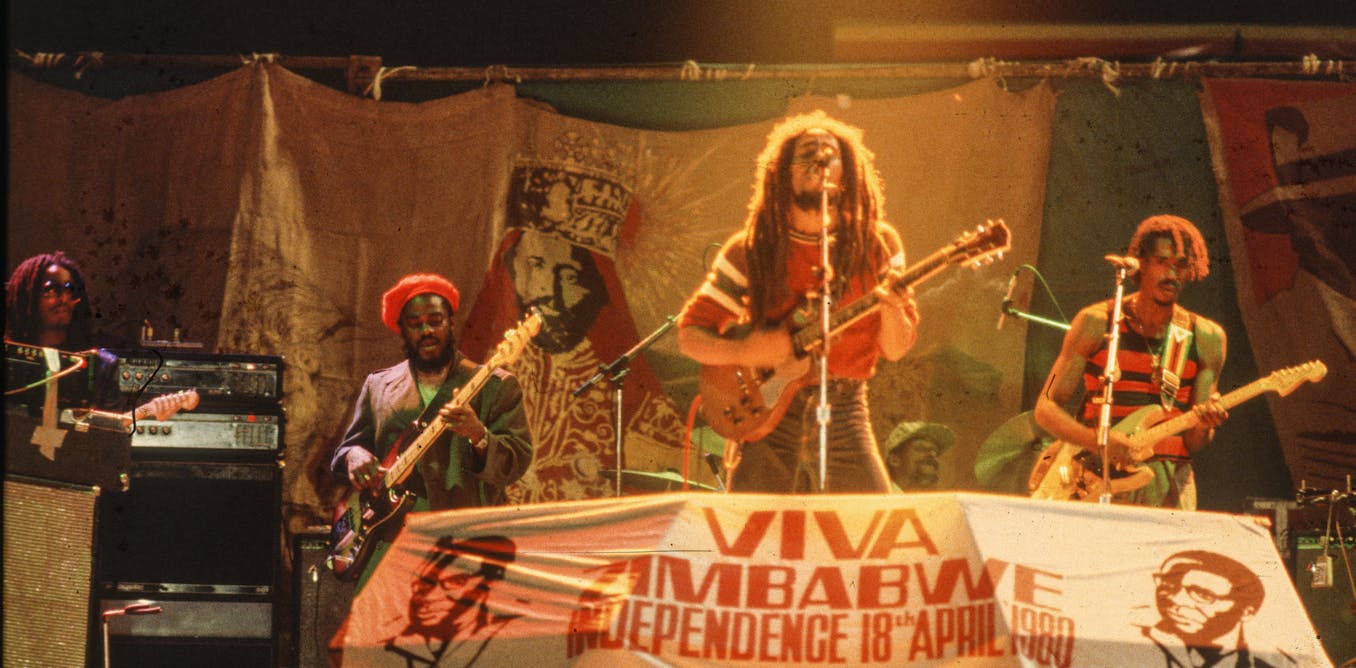
The long-awaited Bob Marley biopic “One Love” will highlight important moments in the musician’s life – his adolescence in Trench Town, his spiritual growth, the attempt on his life. But as a music industry scholar, I wonder if the film is yet another extension of the Marley marketing machine.
Marley died in 1981 at the age of 36. He’d achieved a level of mainstream success unrivaled by other reggae acts, and he did so while challenging global capitalism and speaking to the oppressed.
This image, however, is fundamentally at odds with what has happened to Marley’s name and likeness since his death.
Now you can buy Bob Marley backpacks, Bob Marley jigsaw puzzles – even Bob Marley flip-flops. The trailer for ‘One Love.’
The accusation of “selling out” could once seriously threaten an artist’s credibility; the insult wields far less power in an era when an artist’s survival often depends on sponsorship and licensing deals. Meanwhile, a deceased artist’s ongoing earnings are left in the hands of others.
Nonetheless, when a musician as revered as Marley – and whose songs were suffused with messages of liberation, anti-imperialism and anti-capitalism – becomes so commercialized, it’s worth wondering how this happened and whether it threatens his artistic legacy.
On and off the record
In its 2023 list of highest-paid dead celebrities, Forbes placed Marley in the ninth slot, right behind former Beatles front man John Lennon. According to the publication, Marley earned US$16 million – or rather, his estate did.
The Conversation for more