
by MALALAI JOYA & DICK NICHOLS
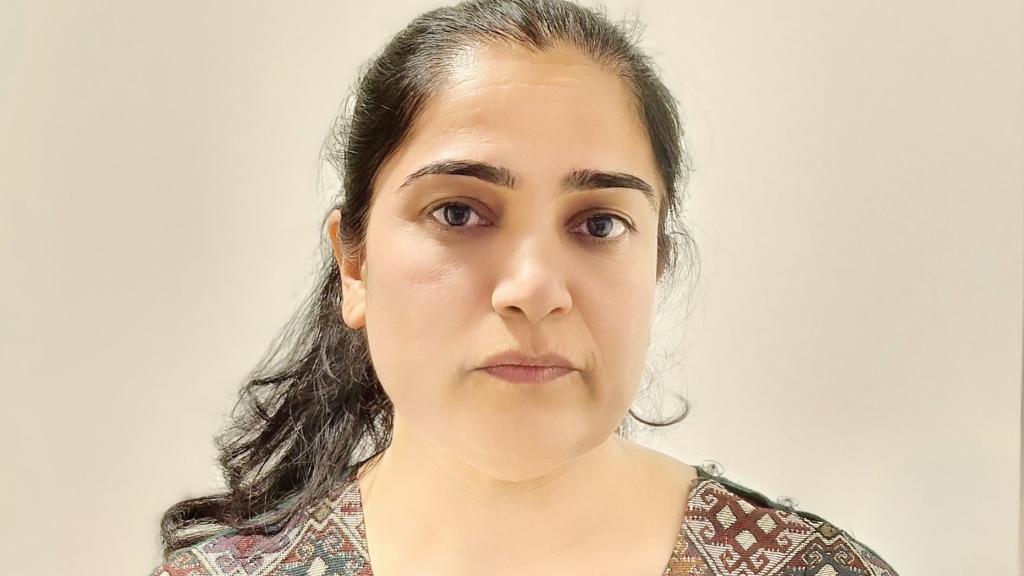
Malalai Joya achieved international recognition in December 2003 when she bravely denounced the presence of warlords in the meeting of Afghanistan’s Loya Jirga that had been elected to develop a new constitution for the war-torn country. In her autobiography, Raising My Voice, she describes the following years of her life as one of being on permanent guard against all forms of intimidation, including death threats.
In 2021, Malalai Joya, under threat from the re-imposed Taliban regime, was forced to leave Afghanistan and live in exile. Below Joya discusses the background to the return of the Taliban in Afghanistan and the shape of resistance today with Dick Nichols for LINKS International Journal of Socialist Renewal.
Background to today’s Afghanistan
In Ghosts of Afghanistan—The Haunted Battleground, Guardian journalist Jonathan Steele describes the country’s tragedy as that of a civil war between traditionalists and modernisers into which outsiders (first Russia, then the United States) intervened to take sides in pursuit of their own interests. Is that accurate?
I want to say that I don’t agree with this way of posing the issue, as if the primary responsibility lay with the divisions in Afghan society and not with the ambitions of these great powers. Under the banners of noble causes both these countries, both these imperialist governments, occupied our country for their own dirty agendas.
For example, Russia occupied Afghanistan in the name of socialism, under the nice banners of decent clothing and housing for the people and providing them with good food and social services etc. The US as a superpower occupied Afghanistan in the name of “democracy”, “human rights”, and the “war on terror”.
I used to say, on behalf of my people and I repeat it here, that it would have been better if they had changed those banners to that of “War on the Innocent Afghan People!” What resulted was not democracy but a mockery that betrayed all democratic values.
Both countries occupied Afghanistan for their own strategic, regional, economic and political interests, and the people of Afghanistan were the victims. Both powers supported their own puppets, brought them to power, and imposed them on the Afghan people. Both needed an unsafe Afghanistan for their own interests, for their own evil plans: they didn’t care about the wishes of ordinary Afghan people, just as they didn’t even care about the lives of their own people or their own soldiers.
For example, if we talk about the US government over the past 20 years, what the US did was to have a troop surge in Afghanistan, sending them there with the message that “you are going there to fight against Taliban backwardness, extremism and for women’s rights.”
But their intervention brought the Taliban back into power. This was not a last-minute decision in the face of Taliban advances, but a possible outcome that had been entertained for some time. In 2014, for example, the Obama administration released five Taliban leaders who were being held in Guantánamo without charge as part of the “war on terror”, and took them off the black list. This was the Taliban condition for opening negotiations with the US over a withdrawal of US forces from Afghanistan, which then ended with the February 2020 US-Taliban agreement.
In fact, they betrayed the blood of their own soldiers as well as the money of their own taxpayers. They betrayed the Afghan people, the American people, and effectively they just replaced one of their puppets by bringing back another puppet.
So, it seems that the US supported the Taliban, or at the very least accepted at some point that they could not be stopped from eventually taking power in Afghanistan — even as it pretended to be fighting them on behalf of the “democratic” and “independent” Karzai government. But what was the alternative to the US-led expulsion of the Taliban in late 2001 and the creation of the Karzai regime, leading only in early 2021 to the eventual withdrawal of all US-led forces? What should have happened?
Before answering that question, let me review, briefly, the history of the past four decades of Afghanistan, four decades of the war.
During the Cold War, the US nourished the extremist fundamentalist warlords, and after the Soviet Union ended, these warlords came to power, from 1992 to 1996. They killed our people — more than 65,000 innocent people in Kabul alone — and they destroyed our country and our national unity. And that after all the people of Afghanistan had come together to fight against the Russian occupation.
LINKS for more