
by JORGE HEINE
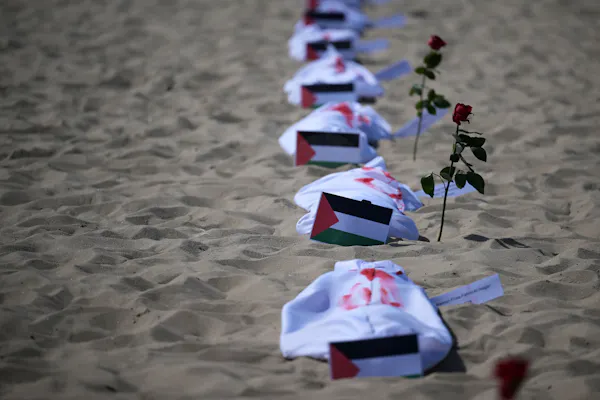
The lopsidedness was stark: 120 countries voted in favor of a resolution before the United Nations on Oct. 26, 2023, calling for a “humanitarian truce” in the war in Gaza. A mere 14 countries voted against it.
But the numbers tell only half the story; equally significant was the way the votes fell. Those voting against the resolution included the United States and four members of the European Union. Meanwhile, about 45 members abstained – including 15 members of the EU, plus the United Kingdom, Canada, Australia and Japan.
Seldom has the isolation of the West been so apparent.
As a scholar who has written on the rise of the Global South – countries mainly, but not exclusively, in the Southern Hemisphere that are sometimes described as “developing,” “less developed” or “underdeveloped” – what strikes me is the degree to which this major fault line between the political North and South has risen again to the fore. It reflects long-in-the-making forces in world affairs.
While the leaders of countries like the U.S., the U.K. and Germany have been among the most strident supporters of Israel during the crisis, the same is not true for non-Western nations.
Key rising powers from the Global South have been among the most adamant nations outside the Arab world in their criticism of this unwavering Western support of Israel.
Indonesia and Turkey – both with large Muslim populations – have both been heavily critical of Israel’s bombing campaign in Gaza, a response to 1,400 Israelis being killed by Hamas militants on Oct. 7.
But they have been joined by the leaders of Brazil, South Africa and other Global South nations in taking a firm stand. President Luiz Inácio Lula da Silva of Brazil went as far as to label the campaign in Gaza a “genocide” – a comment echoed by South Africa’s government when, on Nov. 6, 2023, it recalled its ambassador to Israel in protest. While the U.S. has used the word genocide in relation to Russia’s action in Ukraine, the Biden administration has pointedly said the term doesn’t apply to current events in Gaza.
The Global South’s coming of age
The international reaction to the war in Gaza reflects a deeper, long-standing trend in world politics that has seen the fracturing of the established U.S.-dominated, rules-based order. The growing influence of China and the fallout of the war in Ukraine – in which many Global South countries have remained neutral – has upended international relations.
Many analysts point to an emerging multipolar world in which members of the Global South have, as I have written, forged a new active nonaligment path.
And 2023 has been the year that has seen the coming of age of this more assertive Global South.
The Conversation for more