
by PROMISE LI
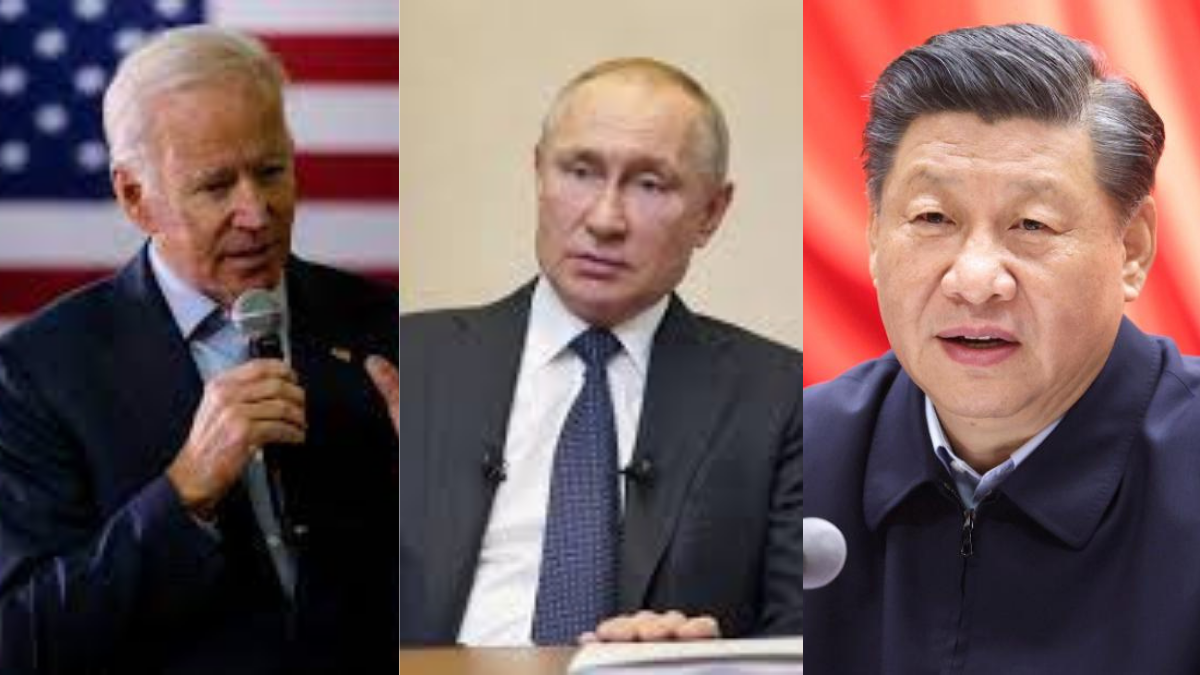
As the late Samir Amin wrote in 2006, “the challenges with which the construction of a real multipolar world is confronted are more serious than many ‘alterglobalists’ think.” Sixteen years later, Amin’s call for nations to “delink” from the Western-led economic order appears more ignored by state elites in the global South now than ever before. Earlier this year in a speech at Davos, Xi Jinping reaffirmed that “China will continue to let the market play a decisive role in resource allocation,” while “uphold[ing] the multilateral trading system with the World Trade Organization at its center.” And Russia’s assaults on Syria and Ukraine, financially supported by its plunders in regions like Sudan, serve as a reminder that the rise of national powers supposedly challenging US hegemony provides no guarantee that conditions will be more favorable to the international left. Thus, as Aziz Rana recently noted, the left needs an internationalist framework that “universally and effectively joins anti-imperial and anti-authoritarian ethics,” and refuses both “an old, broken Pax Americana” and “a new multipolar order dictated by competing capitalist authoritarianisms.”
But praxis can only emerge from a precise theoretical understanding of the objective conditions of imperialism today. What characterizes this new multipolar order and the nature of inter-capitalist competition? As a whole, this emerging multipolar world of bourgeois states does not create better conditions to challenge global imperialism, but merely preserves and even heightens these capitalist dynamics. Martín Arboleda cautions against “fetishizing” the role of the state in facilitating imperialism today at the expense of accounting for the role of international actors, and so conversely, we must also not overstate the capacity of the state—even developmentalist ones—in resisting imperialism.(1) The decline of US imperial power and the rise of multiple “poles” on the global stage only reshuffles which states are mediating the existing global relations of production, without reorganizing the latter differently, and without fundamentally empowering independent movements in each region. Identifying the most effective strategy for the global left to build power requires understanding how this new expression of imperialism works. Rather than seeing multipolarity as opening up space for revolutionary struggles against imperialism, I contend that contemporary multipolarity functions as a new stage of the global imperialist system, a departure from unipolar US hegemony without neatly falling back into the traditional mode of inter-imperialist rivalry as described by Vladimir Lenin and Nikolai Bukharin commenting on the last century.
Today’s multipolar imperialism represents an intensification of the world-system sketched out by Bukharin, which sees the internationalization of finance capital and the development of national capitalist groups as two aspects of the same process. While national economic blocs have been increasingly sidelined in favor of multinational institutions by neoliberal globalization, nonetheless we see the strengthening of the power of nation-states to help facilitate financial capital in further containing the working class. A Marxist theory of imperialism today must thus not overstate the dynamic of inter-imperialist rivalry without endorsing a perspective that capitalist states are now entering a stage of peaceful co-existence enabled by financial interdependence, or what Karl Kautsky called “ultra-imperialism.” This deeper intertwining of state and capital enables new and more complex dynamics between ruling elites. Even as value transfer from peripheries to core remains intact, we can now witness multiple geographies of inter-imperial relations, with different cycles and layers of collaboration and competition between different sectors of the ruling class. Now joined by an often invisible class of institutional investors, state elites draw from more sophisticated technologies of repression and control across geopolitical blocs, leading to an uneven development of global authoritarianisms to counter independent and popular movements. This widespread erosion of political democracy, as it takes diverse forms, is thus a central policy of imperialism today.
All this would not be surprising to Amin and other left-wing advocates of multipolarity. But we need conceptions of world revolution that creatively expand on what Amin calls “national, popular, democratic front[s].”(2) This entails leaving behind a conception of geopolitics that sees multipolarity as it exists as a necessary prerequisite for global decolonization and democratization. A genuinely democratic alternative to imperialism requires building new relationships among various anti-authoritarian movements that may not be readily seen as commensurable, from Indigenous struggles against transnational corporations to the left-wing of pro-democracy movements. Struggles from below must work toward institutionalization and international cooperation in some form, but we must also understand how a new “Bandung” of the 21st century must move beyond the limits of national liberation. Revolutionary socialist democracy can emerge from an organized plurality of different anti-authoritarian forces across regions that promotes democratic assembly and governance to force the global imperialist system to its limits—be it a unipolar or multipolar world of imperial states.
State capitalist multipolarity
Left-wing defense of multipolarity has become the implicit political framework for most Western anti-war organizations. Most are under no illusion that multipolarity in itself would produce the right conditions for global socialism. Rather, they believe that multipolarity would open up more space for independent struggles for sovereignty and self-determination. As Ignatz Maria describes it, “multipolarity has allowed for an intensified responsiveness to local conditions on the ground,” with multipolarity treated as a kind of “positive neutrality” allowing space for popular movements to blossom. This perspective tends to cite postwar decolonization movements as historical precedents for such a logic.
Against the Current for more