
by Wuyan Sheng
This highly readable account encourages us to see the Ottoman empire as an inseparable part of the history of Europe
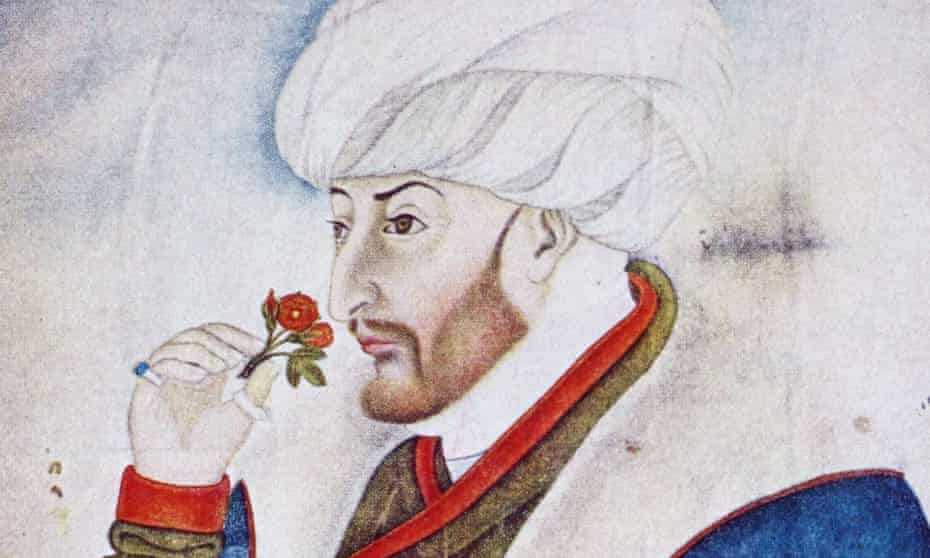
In May 1453, Ottoman military forces under Sultan Mehmed II captured the once great Byzantine capital of Constantinople, now Istanbul. It was a landmark moment. What was viewed as one of the greatest cities of Christendom, and described by the sultan as “the second Rome”, had fallen to Muslim conquerors. The sultan even called himself “caesar”.
After a lengthy siege, Mehmed rode his white horse to Hagia Sophia, the sixth-century Greek Orthodox Church of Divine Wisdom, at the time the largest building in the world. He ordered a single minaret to be added, turning it into a mosque, but refrained from remaking Constantinople as a purely Muslim city. Instead, he promoted the Sunni-dominated tolerance and diversity the Ottomans had been practising for more than a century in south-eastern Europe – long before European Christian societies tolerated their religious minorities. The new Ottoman ruling class was composed mostly of converted Christians.Advertisement
Marc David Baer’s core argument in this highly readable book is that more than 600 years of the Ottoman empire should be seen as an inseparable part of the history of Europe, and not as something detached from it, as with false narratives that paint the east and west, and Christianity and Islam, as antithetical.
Traditional European accounts of Ottoman rule tend to emphasise religion rather than secular matters in line with the significance attached to the Renaissance, the Reformation and the Enlightenment. But, as the author contends, “their story is the unacknowledged part of the story the West tells about itself.” At the peak of its power, this global empire governed nearly a quarter of Europe’s land area – modern Serbia, Bosnia, Hungary and Greece – and took in large chunks of the Middle East, including the Muslim holy places of Mecca, Medina, and Jerusalem, to north Africa.
The tale begins in the late 13th century with Osman, the eponymous founder of the Ottoman dynasty – a Muslim Turkic nomad who migrated, with herds of horses, oxen, goats and sheep, to Christian-majority Anatolia, then mainly Armenian or Greek. Osman’s son, Orhan, organised the first military units from prisoners captured in Christian-ruled areas. Conversion to Islam became a central feature of Ottoman life, as did the practice of fratricide – sultans killing their brothers to ensure a smooth succession – along with rebellions by “deviant dervishes”: radical Sufi Muslims.
Baer, professor of international history at the London School of Economics, defines the “Ottomans’ tripartite heritage” as “Byzantine-Roman, Turco-Mongol and Muslim” – and a “Eurasian amalgam”. The Ottomans became the biggest trading partner of western Europe in the Renaissance era. King Henry VIII of England enjoyed dressing in their fashionable styles. Suleiman I (who ruled 1520-1566), the first sultan to call himself “caliph”, fought the Persian Safavids in the east and the Habsburgs in the west.
This book is impressively well-structured. Chronological chapters focused on successive rulers are followed by thematic ones addressing cultural issues, messianic depictions of the sultan, the rise of the Ottomans as a maritime power and attitudes to women, Jews and eunuchs in dynastic politics.
Wuyan Sheng for more