
by OLIVIA GIOVETTI
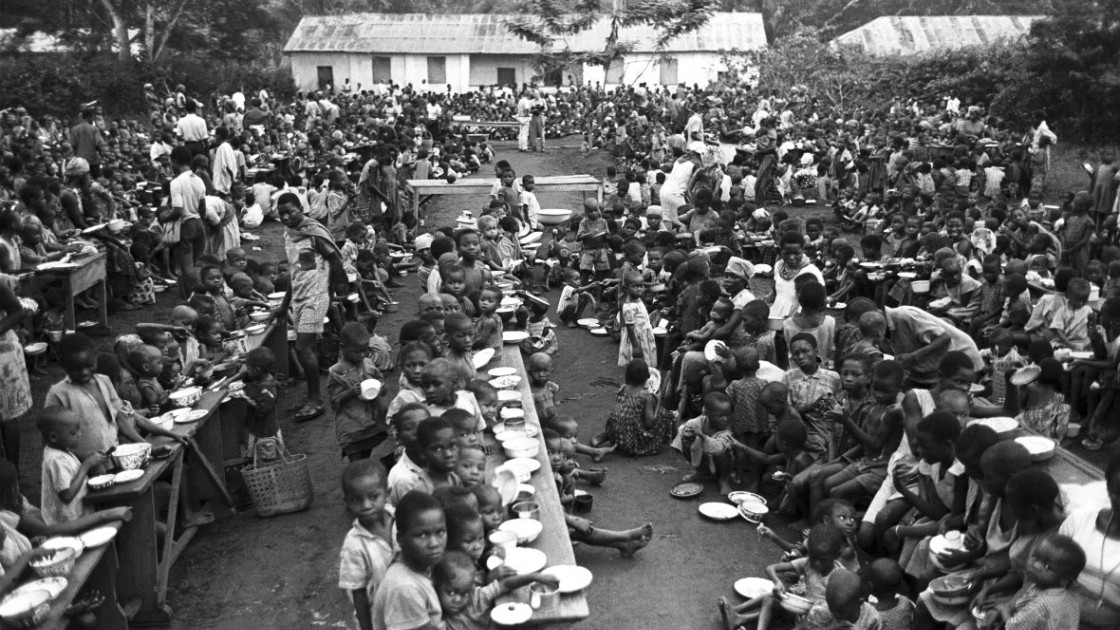
One of the main causes of hunger is conflict which, especially when drawn out over years or decades, can lead to significant consequences for civilians trapped in combat zones.
Sometimes this is collateral damage, with hunger and even famine resulting from collapsed infrastructures, forced displacement, and regional closures. Sometimes, forces have more deliberately used hunger as a weapon of war. Historically, we’ve seen both examples at Concern, beginning with our emergency response to the Biafran Famine.
Since that initial response over 50 years ago, we’ve seen how prolonged conflicts and systematic military strategies both create the conditions necessary to declare a famine: At least one in five households face an extreme lack of food, more than 30% of children under the age of 5 suffer from acute malnutrition, and deaths exceed two out of every 10,000 people per day. Here’s how those conditions have played out over five decades and in 13 famines.
1967-1970: The Biafran Famine
Nigeria gained sovereignty from the United Kingdom in 1960. On 30 May 1967, the country’s eastern territory of Biafra declared its own independence. Since Biafra’s oil reserves were key to the economy, Nigerian authorities opposed the secession. By June, Nigerian troops advanced, put roadblocks in place, and declared starvation as a legitimate weapon of war.
Food was cut off from the 13 million inhabitants of Biafra. Hunger first took hold in the region in September of 1967, and for three years Biafrans were deliberately starved to death. At the height of the war, an estimated 10,000 people (including 6,000 children) died from starvation every day. In three years, an estimated 2 million civilians, or 15% of Biafra’s population, died.
Concern for more