
by FABIAN VAN ONZEN
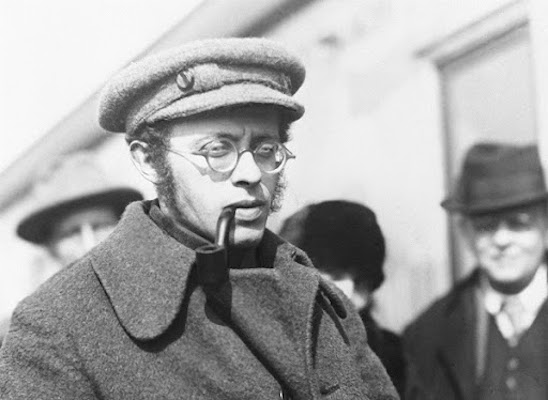
Sometimes, the greatest theoretical works come to us in the form of lectures rather than systemic books. This is the case with Karl Radek, whose lectures on the Chinese Revolution have recently been published by the Historical Materialism book series. Stenographic copies of Radek’s lectures given at the Communist University of the Toilers were discovered by Alexander Pantsov in the Soviet archives, which had been kept secret for over ninety years because of Radek’s involvement with the left-opposition. Along with other recent books such as Mao Zedong Thought by Wang Fanxi, Karl Radek on China provides us with important documents on how the left-opposition approached the Chinese Revolution.
The book has a helpful introduction by its editor Alexander Pantsov, a scholar who is well known for his book The Bolsheviks and the Chinese Revolution. In 1925, Radek was appointed head of Sun Yat-Sen University of the Toiler of China, which was a school set up to provide Chinese communists with Marxist political education. The book contains Radek’s lecture course from 1925-1926 in which he tries to teach his students how to apply Marxist theory to China’s history in order to identify its primary class contradictions. Throughout his lectures, Radek reminds us that he does not know Chinese and that his goal is to identify general trends in Chinese history in order to equip Chinese revolutionaries with the theoretical tools to produce a clear political strategy.
One of the primary questions that Radek addresses in his lectures is why capitalism failed to develop in China, and whether it was still a feudal social formation in the 1920s. A number of prominent Marxists held an orientalist view of China, which Radek tries to disprove because it mystifies social relations. Eugene Varga, for example, thought that the Chinese state had a non-repressive role and arose ‘from the necessity of regulating water supply, defence from floods and guaranteeing the irrigation of land’ (210). He then concludes that the absence of a repressive state prevented the Chinese ruling class from establishing capitalism and kept them stuck in a feudal mode of production. This mistaken view was held even in the Comintern, which sometimes claimed that the revolutionary movement was directed against antiquated feudal relations in order to carry through the Chinese bourgeois revolution.
Monthly Review Online for more