Empire through submission: Characterising Trump’s foreign policy

by MALFRED GERIG

Global hegemony in the interstate system refers to the capacity of a leading state to exercise leadership and governance within the anarchy of supposedly sovereign states, which are constantly seeking wealth, power, prestige or security. Giovanni Arrighi aptly noted that global hegemony is not the same as pure and simple domination, as the hegemonic state must be capable of steering the interstate system toward a kind of general interest, at least that of the owning classes and those in power.1 The capitalist world-economy is not a global empire; therefore, becoming its hegemonic power has always required a certain mix of coercion and consent. Coercion alone is not enough to dominate the world. The United States’ historical global hegemony over the modern world-system is no exception. However, given the rugged path embarked upon by the Trump 2.0 administration, it seems increasingly evident that US hegemonic power, in its crisis-dispute phase, is seeking to counter its loss of relative power in the field of consensus by doubling down on coercion, “mafia-style blackmail”, exploitative domination and the pursuit of submission.

The question then arises: what has changed in the US’s Grand Strategy under Trumpism, particularly during his second administration? The purpose of this essay is to explore this question in three parts. Part I will delve into homegrown traditions that shape the matrix of US foreign policy, to argue that Trumpism amalgamates reactionary forces within the interstate system. A forthcoming Part II will address the political economy of Trumpian neomercantilism and, concurrently, explore the hypothesis of a McCarthyist foreign policy toward Latin America. Finally, Part III will examine new imperialism, exploitative domination, and empire through submission as responses to the current hegemonic conflict in the capitalist world-economy, in light of Trump’s foreign policy toward Latin America during his second administration.

1. Trump 2.0: A Hamiltonian Jacksonianism?

How should we characterise Trump’s second term administration’s foreign policy? To answer this question, we need to turn, prima facie, to the typology developed by Walter Russell Mead in Special Providence. There, the author sets out to strip US foreign policy of the interpretive framework of European realpolitik, most associated with Henry Kissinger and Zbigniew Brzezinski, in favour of looking at more homegrown traditions.2 To Kissinger’s typology, composed of Wilsonian idealism and Rooseveltian realism, Mead counterposes four types. In the words of Perry Anderson, Mead believes:

the policies determining these ends were the product of a unique democratic synthesis: Hamiltonian pursuit of commercial advantage for American enterprise abroad; Wilsonian duty to extend the values of liberty across the world; Jeffersonian concern to preserve the virtues of the republic from foreign temptations; and Jacksonian valour in any challenge to the honour or security of the country.3

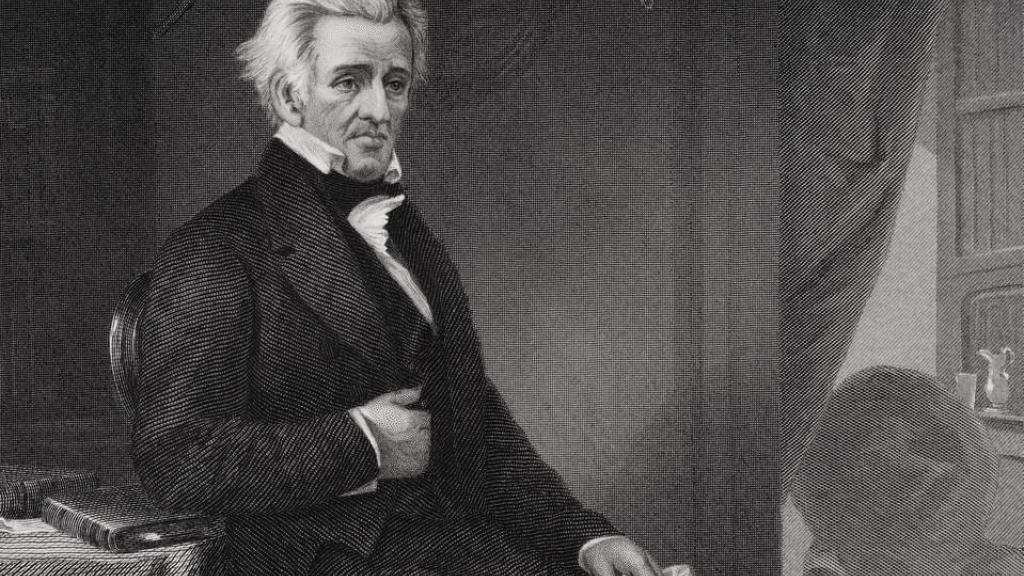
Characterising the first Trump administration (2017–21), Mead wrote in early 2017 that Trumpism represented a Jacksonian rebellion against the standard pillars of US foreign policy since World War II.4 According to Mead, Obama had been the president with the greatest contempt for the Jacksonian legacy, while Trump was its revenant.5 But what is the Jacksonian tradition? And, more importantly, to what extent can we take seriously the capacity of the Jacksonian tradition to shape the second Trump administration’s foreign policy? After reviewing, in comparative terms, the extensive history of the US’s capacity to kill people abroad, Mead writes in Special Providence:

Nevertheless, the American war record should make us think. An observer who thought of American foreign policy only in terms of the commercial realism of the Hamiltonians, the crusading moralism of Wilsonian transcendentalists and the supple pacifism of the principled but slippery Jeffersonians would be at a loss to account for American ruthlessness at war. One might well look at the American military record and ask William Blake’s question in “The Tyger”: “Did he who made the Lamb make thee?”.6

Links for more
How Mexico’s right wing used AI and influencers to create an anti-government movement

by TAMARA PEARSON

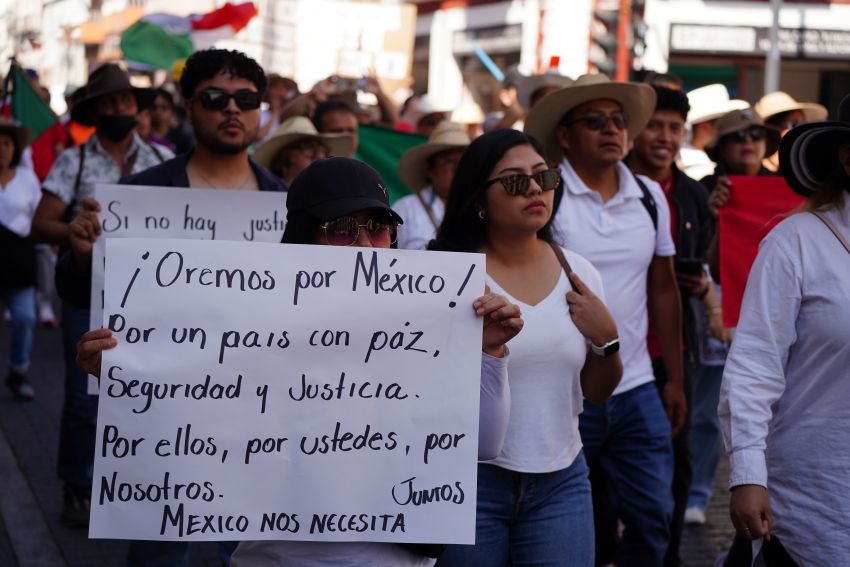
November 15 protest in Puebla. IMAGE/ Tamara Pearson

“Down with communism”, they chanted while also waving the One Piece pirate flag, meant to be a symbol of resistance to elitist excess, corruption and inequality. The right-wing march was meant to be a “Generation Z” protest, but most of the people I could see among the 1000 or so marching through the centre of Puebla, were of older generations; clearly the most loyal membership of Mexico’s right-wing parties, the Institutional Revolutionary Party and National Action Party.

Similar marches were held in various cities around the country on November 15. They were a bizarre attempt to copy-paste the recent uprisings and protests in Nepal, the Philippines and Indonesia, but they were built from the top down. Money was spent conjuring the protest from artificial intelligence (AI) campaigns, bots and influencers, rather than involving real social movements.

The main chants in the march were “Out Morena” (Mexico’s governing party) and “No more narco-state”. Meant to be organic, spontaneous anger at the government, crime and corruption, these marches’ vagueness and misuse of symbols left serious and experienced activists in the country amused, and a little annoyed.

As 51% of content is now AI-generated, it’s worth decoding how this protest was fabricated and the impact of its co-option of the symbols and phrases of more genuine causes. AI literacy and awareness of how videos and facts are manipulated for political and economic interests is becoming more important.

Social media 

The Instagram account @somosgeneracionzmx (We are Generation Z Mexico) was among the first to publicly call for the November 15 protest.

Although describing itself as “anti-party”, “the disinterested generation” and “enough of the same old shit”, there are dozens of signs the account was not created by movement activists. The account does not follow, tag or interact with other longstanding movements, collectives or grassroots organisations, such as unions or community or alternative media.

The only groups it follows are bot-like replicas of itself that have each posted perhaps four times in total.

The account’s first posts were created exactly a month before the November 15 protest and got hundreds of engagements (likes and comments) straight off the bat: a sign the account holder either has funds to pay for significant boosting or that the posts were supported by bots.

Almost all the account’s content, including videos, is AI-generated.

Likewise, its sister account on Facebook. There are few real humans to be seen. But in Mexico, while people often cover their faces in public videos denouncing crimes and injustice due to fear of persecution, it is always important to show at least the eyes, or the full group of farmers on the land being attacked or the indigenous people meeting, women standing together and so on, to demonstrate that these communities are organising and speaking out.

The Generation Z Mexico accounts don’t have such visuals because they don’t actually meet, discuss and decide based on voting or consensus, hold speak-outs to build larger protests and other staples of real movements.

“Generation Z Mexico” doesn’t have real visuals of activists — and especially not young ones — because it is not led by actual activists or young people. In Mexico, there are strong women’s movements, movements for the forcibly disappeared, for water rights and more, but there is no movement here to revoke the president, so there are no photos of that to be used.

Instead, this group has resorted to AI-generated photos of protests such as this one. After the November 15 march, they will have photos they can use, though even those are being digitally edited to make their crowds look bigger.

Green Left for more

Inside an unmute conversation: Reflections on media, civil society and my journey

by RAJIV SHAH

I usually avoid being interviewed. I have always believed that journalists, especially in India, are generalists who may suddenly be assigned a “beat” they know little—sometimes nothing—about. Still, when my friend Gagan Sethi, a well-known human rights activist, phoned a few weeks ago asking if I would join a podcast on civil society and the media, I agreed.

Out of ignorance, I assumed a podcast was simply a live audio broadcast. I didn’t bother dressing up. But when I reached the Centre for Social Justice (CSJ), Gagan’s office, I discovered it was going to be a full-fledged video discussion—Gagan on one side, top rights leader Minar Pimple on the other, and me in between. I had been given a questionnaire and had prepared my responses, but I did not realise the format would involve both of them posing thoughtful, probing questions.

The set-up was fully professional. My phone was kept outside, and the recording was handled by a team from Drishti, a video NGO associated with CSJ, using a high-end camera. Part of their UnMute series, the episode (click here to watch), I was told, would appear on YouTube in November. And there I was—poorly dressed and with my snow-white hair uncombed—responding in both English and Hindi. The intent seemed to be to understand how media professionals work, and how civil society can engage with them more effectively.

They asked me about my seven years in Moscow as the foreign correspondent of the Delhi-based semi-Left Patriot and Link, as also my long stint with The Times of India, Ahmedabad, from 1993 until my retirement as political editor in January 2013. But the real focus was on a question that continues to bother many activists: what must be done to increase the visibility of civil society in the mainstream media?

The conversation opened with my Counterview article, written during the Covid period, summarising an IIM-A study that said civil society felt completely unheard. The disconnect between the state and civil society during Covid, especially concerning the hardships faced by working people, was enormous. They asked, “How can this gap be bridged? What can the media do?”

I began by defining the media as it exists today. Mainstream media is corporate media. It always has been. Earlier, only newspapers were owned by big business houses; now TV channels are too. Journalists hired in these organisations are rarely specialists. Most do not understand civil society. In fact, junior reporters—precisely those least familiar with these issues—are often assigned to cover them. Unless they have worked with NGOs, they know little about laws like the FCRA or about grassroots realities.

Expecting such media to authentically represent civil society is unrealistic. Reporters will come to cover events; that’s true. But they need training—training to understand what is happening on the ground, how to read it, and how to report it responsibly.

Counterview for more

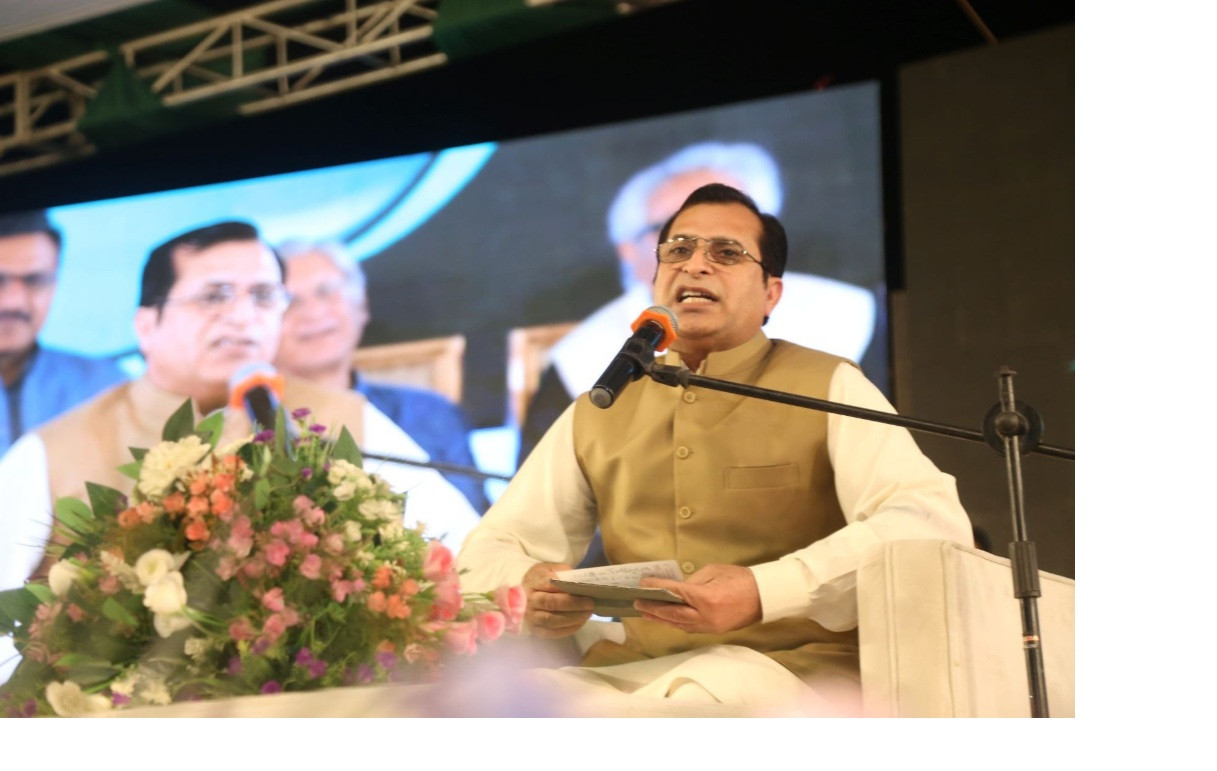
When poetry speaks

by DR. AFTAB HUSAIN

Urdu poetry has always lived through the human voice. Its power lies not just in what is said, but in how it sounds

For poets and listeners, the voice is not just sound; it marks the shift from silence to meaning. Writing can preserve words, but the voice brings them alive in the moment. When poetry moves from the page into the air, it turns into something more than language—it becomes performance, resonance, and revelation. The real force of poetry lies right at this crossing of sound and sense.

The Indo-Muslim tradition recognised this duality. Urdu, Persian, and Arabic poetry were first recited, then written. In Sufi gatherings, majalis, markets, and courts, poetry was shared orally. The mush??ira—Urdu’s poetic assembly—was more than a literary event: a theatre, ritual, dialogue, and sometimes a metaphysical experiment.

Here, the poet meets the audience through words—but also through voice. And voice is never neutral. It carries timbre, inflexion, memory, and an ethical charge. How a poem is voiced determines how it is received, what it means, and what it awakens.

The point is clear: Urdu poetry’s aesthetics are inseparable from vocal performance. Performance is not an optional embellishment; it is the means by which poetry becomes vital, open to interpretation, and emotionally deep.

Teht-ul-lafz and tarannum

From this performance culture come two central modalities: teht-ul-lafz (plain recitation) and tarannum (chanting). These are more than stylistic choices—teht-ul-lafz values meaning and clarity, while tarannum privileges melody and emotion.

Teht-ul-lafz emphasises loyalty to the text—semantic clarity, structure, diction. Here, the reciter fades back, letting the poem itself be the focus. The voice stays steady and unembellished, inviting contemplation, in contrast to tarannum’s emotional and musical style.

In contrast, tarannum wraps the poem in melody, prioritising emotional resonance and rhythmic flow. It creates a space between speech and song, intensifying emotion and musicality, separate from teht-ul-lafz’s reflective approach.

This division is more than technique. It vividly encapsulates an ongoing tension in the tradition: the pull between meaning and music, thought and sensation, clarity and feeling.

Critics of tarannum often feared that melody could obscure meaning. Poet Majid ul-Baqri once complained:

Is tarannum meñ to mafh?m nah?ñ hai ko’?

She?r kahte ho to pa?h ??lo, magar g?o nah?ñ!

[This chanting has no meaning whatsoever.

If you compose poetry, just read it—please don’t sing!]

This frustration is not with beauty itself, but with the danger of reducing poetry to sound. If the audience remembers the tune but not the verse, has poetry lost its essence?

And yet, the opposite danger lurks within teht-ul-lafz. When delivered too dryly, without modulation or feeling, a poem may lose its vitality. Faiz Ahmed Faiz, master of the written word, was often criticised for his monotonous recitation. Once told he wrote beautifully but read poorly, he replied with characteristic wit:

Sab k?m ham h? kareñ? Acch? likheñ bh? ham, acch? pa?heñ bh? ham. Kuch ?p bh? to kareñ!

(Should we do everything? Write well and also read well? Why don’t you contribute too?)

Express Tribune for more

Bhagwat: Hindu Nation and world teacher rhetoric

by B. R. GOWANI

VIDEO/ANI Bharat/Youtube

Hindu Rashtra (Nation)

RSS (Rashtriya Swayamsevak Sangh), is a Hindu paramilitary organization, celebrating it’s centenary (1925 – 2025) in year long celebratory events.

The current RSS Chief Mohan Bhagwat absurdly proclaimed India to be a “Hindu Nation” thus:

“The Sun rises in the east; we don’t know since when this has been happening. So, do we need constitutional approval for that too? Hindustan is a Hindu nation. Whoever considers India their motherland appreciates Indian culture. As long as there is even one person alive on the land of Hindustan who believes in and cherishes the glory of Indian ancestors, India is a Hindu nation. This is the ideology of the Sangh.”

Yes, the Sun rises in the east and has been doing so since 4.5 billion years.

The US National Aeronautics and Space Administration (NASA) says:

“The Sun, the Moon, the planets, and the stars all rise in the east and set in the west. And that’s because Earth spins — toward the east.”

No, the Sun doesn’t need any constitutional approval for its natural working because any verdict to permit or restrict its movement is neither going to be obeyed by the Sun nor do humans have any technology to control it. The Sun is not a human being, but is a natural phenom and unlike humans, it can’t be threatened to follow Bhagwat’s or Prime Minister Narendra Modi‘s dictates. Humans can be dictated to act in a certain manner — but not the Sun.

This nonsense of labeling people as Hindu, Christian, Jew, Buddhist, Shinto, Sikh, and so on, are created by humans. “Hindustan is a Hindu nation” is a creepy statement. No doubt, with force you can convert any person into any ideology you want, or assign any labels to anyone.

Poet Sahir Ludhianvi once wrote:

each one of the human beings, Lord created
out of that Hindu or Muslim, we created
nature had blessed us with just one land
but here India and there Iran, we created

This is the truth — all else is politics, to keep the followers within the Hindu fold while attempting to convert non-Hindus to Hinduism, and stopping Hindus from embracing another religion. Christians in India, like Muslims, are targeted often and the priests are arrested on false accusations of conversion.

Vishwaguru (universe or world teacher)

On December 28, 2025, Bhagwat churned out more rubbish:

“We will have to do the work of becoming a ‘Vishwaguru’ again. It is not our ambition to become a ‘Vishwaguru’. It is the need of the world that we become ‘Vishwaguru’. But it is not made like this. One has to work hard for that. This hard work is going on from many streams. One of them is also the Sangh.”

This is colonial/imperial language where the colonial or imperial power portrays itself as a benevolent parent who wants to take care of the children (or “half devil and half child“) by colonizing or imperializing. Europe and then, the US did the same thing. Poet/writer Rudyard Kipling wrote the infamous poem The White Man’s Burden urging the US to take over Philippines and start an empire. Many writers and poets countered Kipling with their versions: one such version was Black clergyman and editor H. T. Johnson’s “The Black Man’s Burden.”

Writer and civil rights activist Anand Teltumbde is on the mark when he writes:

The slogan “Vishwaguru” is even more distinctive. American exceptionalism invokes power; Chinese nationalism invokes rejuvenation; Russian nationalism invokes restoration; even religious states like Iran or Saudi Arabia define themselves by regional authority or theological guardianship. Only India frames itself as the world’s teacher, the bearer of knowledge the rest of humanity supposedly lacks. This is not the language of partnership or even leadership – it is hierarchical, didactic, and civilisationally patronising. It positions India as the enlightened instructor and the world as its classroom.

What lessons the self-proclaimed universal teacher want to impart to the world?

  1. The Indian caste system?

The Indian caste system consists of four castes:

in that order.

“Representation of the varna system hierarchy, depicting Brahmins (priests) at the highest level and Dalits (historically marginalized as untouchables, considered outside the varna system) at the lowest stratum.” IMAGE/Wikipedia

Then there are untouchables or outcasts whom Mohandas Karamchand Gandhi called “Harijans” or God’s Children. But untouchables didn’t like this patronizing term and call themselves Dalits which means “broken/scattered.”

(Factoid: Gandhi believed in the caste system and went on a hunger strike when Dalit leader Bhimrao Ramji Ambedkar demanded separate electorates for Dalits. India’s colonial rulers, the British, were willing to award separate electorates but Ambedkar had to bitterly retreat because Gandhi’s death would have unleashed uncontrollable wrath on untouchables.)

The Hindu extremist leaders never miss an opportunity to blame the minorities, especially Muslims. On the occasion of Ambedkar’s 125th birth anniversary, RSS joint general secretary Krishna Gopal blamed the beginning of untouchability on Muslims even though untouchability was introduced in India when Islam was not yet born!

The “Vishwaguru” doesn’t have to worry about teaching the world about caste system — it’s well and is functioning in many countries.

In February 2023, the city of Seattle in Washington state became the first to pass a law outside South Asia banning caste-based discrimination, thanks to the brave and bold then councilmember Kshama Sawant.

Yogesh Mane, a Seattle resident, originally from India with Dalit background had this to say:

“I’m emotional because this is the first time such an ordinance has been passed anywhere in the world outside of South Asia,” he said. “It’s a historic moment.”

2. Love jihad or Romeo jihad?

Hindu zealots target Muslim men charging them with seducing Hindu women whom they marry in order to convert them to Islam. Many official investigations were conducted, but none of them found anything substantial to report. Love jihad is pure Islamophobia which Bhagwat and company don’t need to teach to the world because it’s all over the globe, thanks to India, Israel, the US, the Western Europe, and their news media and social media.

3. Abysmal Development, Gender Equality, and Hunger?

  • United Nations Human Development Index rankings for 2023 lists India at 130 out of 193 countries.
  • On the Gender Inequality Index, India stands at 102nd position.
  • On the Global Hunger Index, it’ much worst: 102nd out of 127 countries.

4. Other Toxicities:

Bhagwat, Modi, and other Hindu nationalist leaders who are dreaming of dominating the world should instead concentrate on India with myriad of problems.

BBC outlines some pressing problems facing India in its report: “Toxic air, broken roads and unpicked rubbish – why India’s big cities are becoming unlivable.

Major problems exist in India, including the falling rupee. So, India should instead concentrate on making India livable for its citizens, rather than turning it into a Hindu theocracy. These leaders should try to feed, clothe, educate, and provide Indians a decent life rather than fantasizing about Hindu global domination because the world does not need atrocities listed above, to be imported from her, as it has been moving towards multipolarity.

B. R. Gowani can be reached at brgowani@hotmail.com

Guru Tegh Bahadur, Aurangzeb, and Modi

Rewriting a Martyr: The Hindutva Push to Recast Guru Tegh Bahadur’s Legacy in Today’s India

by J. D. EMMANUEL

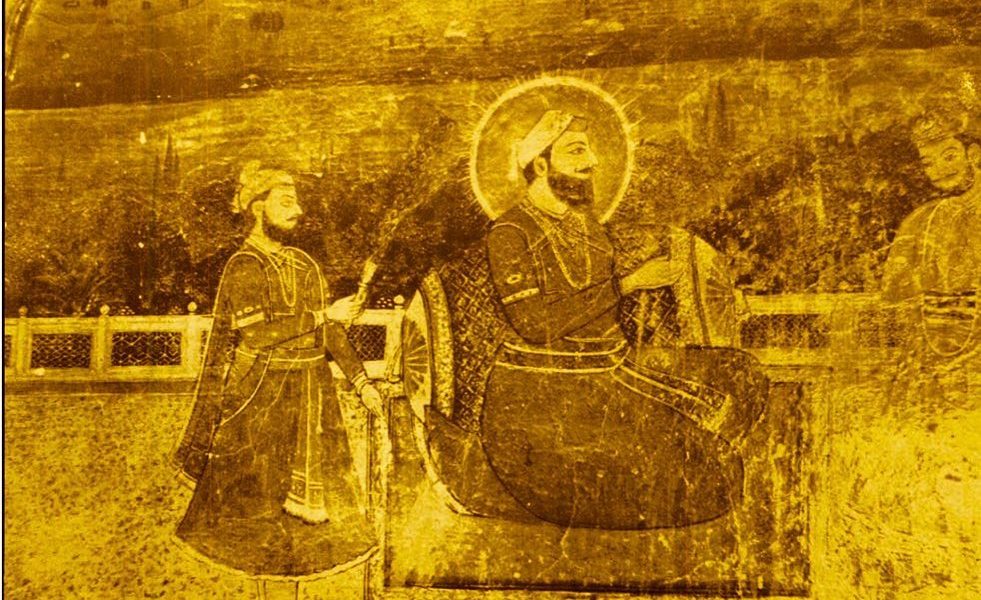
Guru Tegh Bahadur, fresco from Qila Mubarak, Patiala: 19th century. IMAGE/Public domain via Wikimedia Commons.

The rewriting of Sikh history has long been one of the Sangh Parivar’s key tools of assimilation, and Guru Tegh Bahadur’s shaheedi has become a focal point, with state-led commemorative politics serving as a major site of historical revisionism.

Guru Tegh Bahadur’s martyrdom in 1675 stands as one of the central moments in Sikh history and collective memory: a moral stand against coercion and a testament to freedom of conscience and pluralism. Over the centuries, his sacrifice has inspired generations of Sikhs to stand against injustice and oppression, from anti-colonial struggles to the recent farmers protest and ongoing mobilisation for minority rights.

Guru Tegh Bahadur’s martyrdom in 1675 stands as one of the central moments in Sikh history and collective memory: a moral stand against coercion and a testament to freedom of conscience and pluralism. Over the centuries, his sacrifice has inspired generations of Sikhs to stand against injustice and oppression, from anti-colonial struggles to the recent farmers protest and ongoing mobilisation for minority rights.

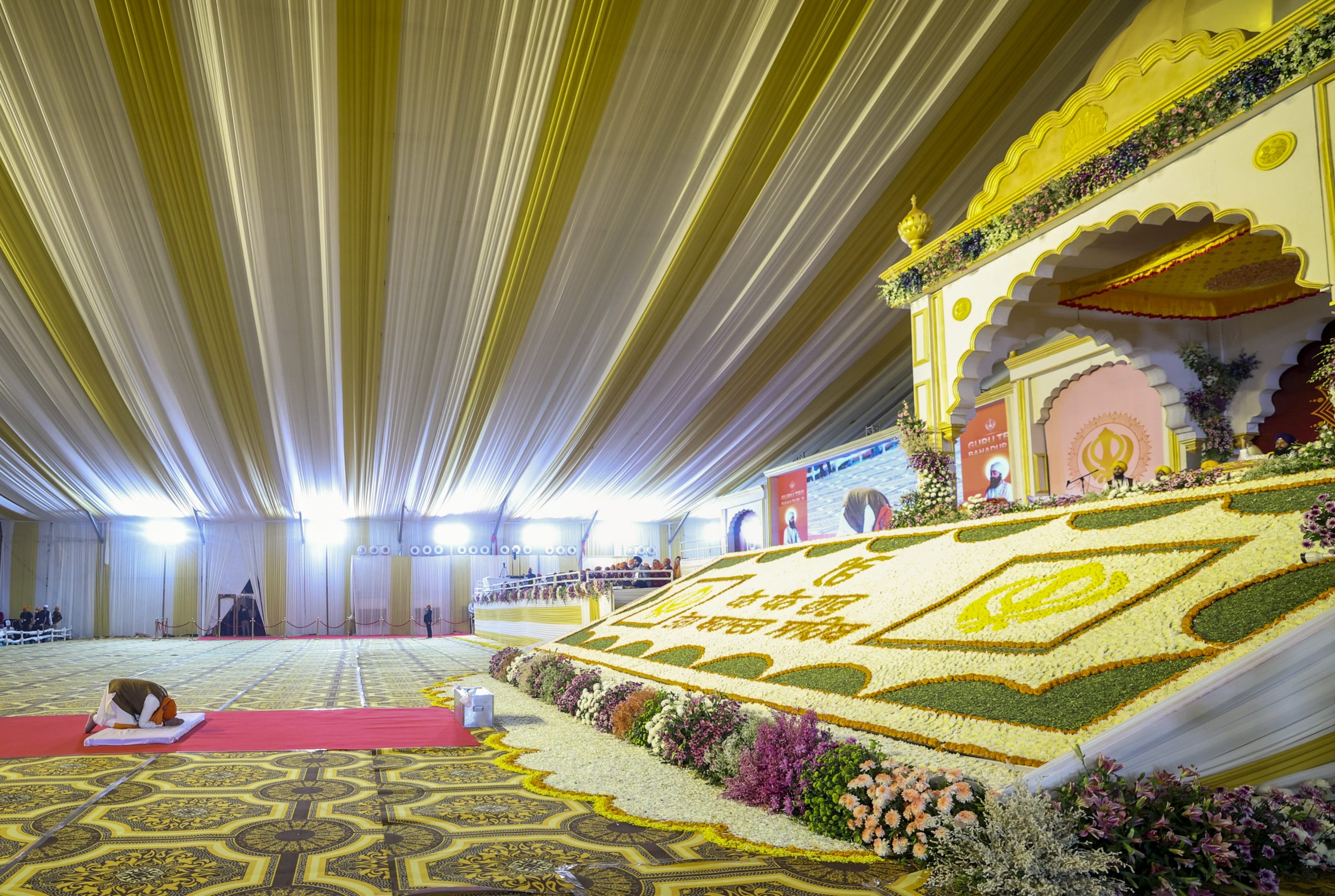
Narendra Modi bows down to show respect toGuru Tegh Bahadur in Kurukshetra to commemorate his 350th martyrdom anniversary.
Prime Minister Narendra Modi during a programme organised to mark the 350th martyrdom anniversary of Guru Tegh Bahadur in Kurukshetra district, Haryana. IMAGE/ PMO via PTI.

Prime Minister Narendra Modi during a programme organised to mark the 350th martyrdom anniversary of Guru Tegh Bahadur in Kurukshetra district, Haryana. Photo: PMO via PTI.

The month-long large-scale commemorations marking the 350th anniversary of his ultimate sacrifice have just ended with a three-day Gurmat Samagan, including a light and laser show, organised by the Bharatiya Janata Party-led (BJP-led) Delhi government in the Red Fort, near the site of his execution. Meanwhile, the BJP-led Haryana government has been holding its own grand celebration in Kurukshetra, with the prime minister attending an event on November 25.

The Wire for more

Why Guru Tegh Bahadur Is Not the Anti-Muslim Icon BJP-RSS Claims He Is

by KUSUM ARORA

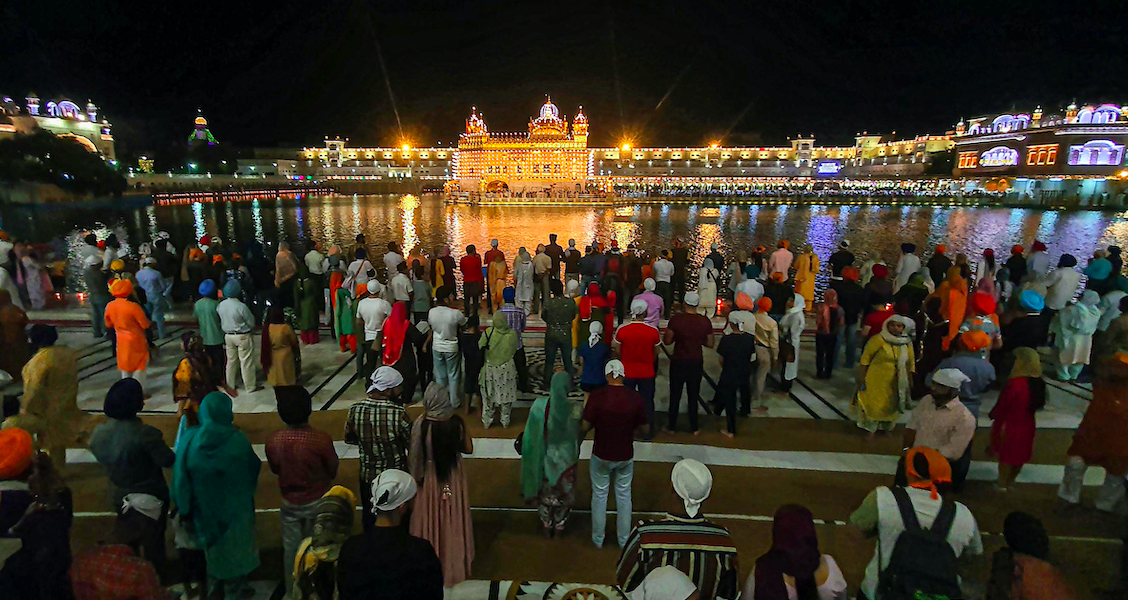
The Golden Temple illuminated on the occasion of the 400th birth anniversary of Guru Tegh Bahadur, in Amritsar, Thursday, April 21, 2022. IMAGE/ PTI

Sikh scholars have expressed misgivings with the BJP government’s efforts to portray the Sikh Guru as a symbol against Muslims, with several of them insisting he died protecting the ethos of religious freedom.

Jalandhar: Hours before Prime Minister Narendra Modi addressed the nation on the 400th birth anniversary of Sri Guru Tegh Bahadur, the ninth guru of the Sikhs on April 21, the Shiromani Gurdwara Parbandhak Committee issued a statement.

In it, the SGPC called for “everybody’s religious freedom” to be “established and protected” following the ideology of the freedom fighter, Guru Tegh Bahadur.

In his address from Red Fort on April 21, Modi said, “In front of Aurangzeb’s tyrannical thinking, Guru Tegh Bahadur became ‘Hindi di Chadar’ and stood like a rock. This Red Fort is a witness that even though Aurangzeb severed many heads, but could not shake our faith.”

A painting of Guru Tegh Bahadur when he visited Dhaka in mid-17 century. IMAGE/Wikipedia/Public domain

PM Modi also released a commemorative coin and a postage stamp dedicated to Guru Tegh Bahadur on this occasion.

Delhi’s Red Fort faces the historic Gurdwara Sis Ganj Sahib, where Guru Tegh Bahadur was beheaded on the orders of the Mughal emperor Aurangzeb in November 1675.

Though Akal Takth acting chief Giani Harpreet Singh and SGPC chief Harinder Singh Dhami thanked Modi for celebrating the occasion at the national level, the fact that they did not shy away from raising minorities’ rights is significant.

What the statement said

The SGPC had organised a large congregation at Gurdwara Manji Sahib Diwan Hall, Amritsar on the 401st Parkash Parv of Guru Teg Bahadur.

In its statement, the SGPC stated that everyone’s religious freedom should be established and protected as per the ideology of the ninth Guru – including Sikhs, who made great contributions in the freedom struggle of the country.

“If excesses are committed against anyone, then it would be understood that the government at Delhi is not sincere,” the statement read.

In his address, Akal Takth Jathedar Giani Harpreet Singh said, “The motive of martyrdom of Sri Guru Teg Bahadur was so that the right to practice faith and religion was given to everyone. But today in India, going against the ideology of the Guru Sahib, the religious beliefs of minorities are being suppressed.”

The Wire for more

A Portrait of Aurangzeb More Complex than Hindutva’s Political Project Will Admit

by HARBANS MUKHIA

A painting of Emperor Aurangzeb being carried on a palanquin. IMAGE/Wikimedia Commons

In ‘Aurangzeb: The Man and the Myth’, Audrey Truschke sifts popular imagination on the ruler’s personal and political life from historical realities.

“The Aurangzeb of popular memory bears only a faint resemblance to the historical emperor,” observes Audrey Truschke near the concluding section of Aurangzeb: The Man and the Myth. This indeed is her book’s central theme. In the slim volume, Truschke seeks to sift the man from the myth that has grown around him, especially in popular imagination, over the past couple of centuries.

Truschke burst onto the horizon of medieval Indian history studies just a year ago with her major work, Culture of Encounters: Sanskrit at the Mughal Court,in which she argues that the Mughal court generally, but especially between 1560 and 1660 (comprising the reigns of Akbar, Jahangir and Shah Jahan), greatly patronised not only the Sanskrit language but Sanskrit culture as part of their vision of governance. She bases her argument on an immense amount of in-depth research. The book is clearly meant for the professional medievalist.

The book under review here, on the other hand, is not only half the size of the first but is equally clearly meant for the lay reader, lighter to read with no footnotes and no complex arguments. As a historian, she is disturbed by the distance between professional knowledge and popular image of the man and the emperor, and intervenes to minimise that distance without being an apologist for either the man or the emperor. “The multifaceted king had a complex relationship with Islam, but even so he is not reducible to his religion. In fact, little is simple about Aurangzeb. Aurangzeb was an emperor devoted to power, his vision of justice, and expansion. He was an administrator with streaks of brilliance and scores of faults. He grew the Mughal Empire to its greatest extent and may also have positioned it to break apart. No single characteristic or action can encapsulate Aurangzeb Alamgir…”

The Wire for more

A Salute across the skies, from Air Commodore Pervez Akhtar Khan

IMAGE/NDTV

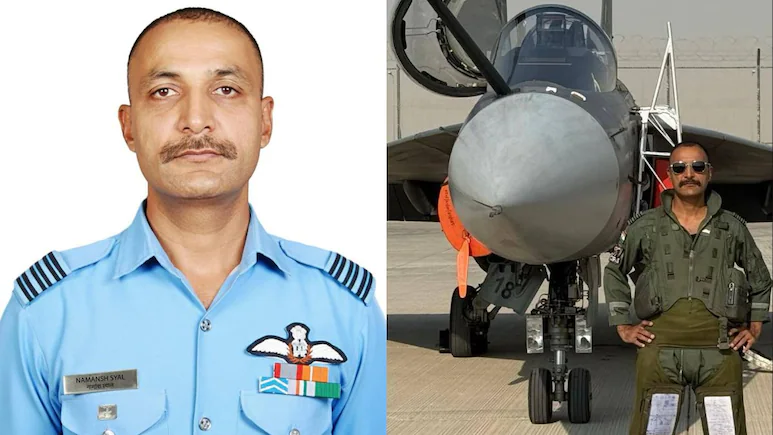
The tragic death of 37-year-old Indian Air Force (IAF) pilot, Wing Commander Namansh Syal, who lost his life on Friday, November 21 when a Tejas Light Combat Aircraft (LCA Mk-1) crashed during a demonstration at the Dubai air show, brought this moving response from Pakistani Air Commodore Pervez Akhtar Khan from across the border

When an Indian Air Force pilot, recently killed in a crash during an air show over Dubai, a Pakistani Air Commodore penned this poetic tribute. The original Urdu version is below the English one.

A Salute across the skies

The news of an Indian Air Force Tejas falling silent during an aerobatic display at the Dubai Air Show breaks something deeper than headlines can capture.

Aerobatics are poetry written in vapour trails at the far edge of physics—where skill becomes prayer, courage becomes offering, and precision exists in margins thinner than breath.

These are not performances for cameras; they are testimonies of human mastery, flown by souls who accept the unforgiving contract between gravity and grace in service of a flag they would die defending.

To the Indian Air Force, to the family now navigating an ocean of absence:

I offer what words can never carry—condolence wrapped in understanding that only those who’ve worn wings can truly know. A pilot has not merely fallen. A guardian of impossible altitudes has been summoned home. Somewhere tonight, a uniform hangs unworn. Somewhere, a child asks when father returns. Somewhere, the sky itself feels emptier.

But what wounds me beyond the crash, beyond the loss, is the poison of mockery seeping from voices on our side of a border that should never divide the brotherhood of those who fly.

This is not patriotism—it is the bankruptcy of the soul. One may question doctrines, challenge strategies, even condemn policies with righteous fury—but never, not in a universe governed by honour, does one mock the courage of a warrior doing his duty in the cathedral of sky.

He flew not for applause but for love of country, just as our finest do. That demands reverence, not ridicule wrapped in nationalist pride gone rancid.

Sabrang for more

Rashid Khalidi on Trump’s plan, Hamas, the PA & why Russia and China abstained at the UN

In this deep and wide-ranging conversation, historian Rashid Khalidi breaks down the political landscape of Palestine today — from the legacy of the Oslo Accords and the failures of the PA to the rise of Hamas, the nature of armed resistance, and the meaning of Oct 7 (Al-Aqsa Flood).

Khalidi explains how he understands Trump’s new plan, comparing aspects of it to the British Mandate era, where promises of statehood were made without any real intention of delivering them. He argues that the Israeli cabinet has no intention of allowing a Palestinian state, so Washington’s talk of “moving toward statehood” has no grounding in political reality.

We also explore the plan’s claims about reconstruction in Gaza. Khalidi questions whether Trump is serious about reconstruction at all — insisting that governance and security must be addressed first, otherwise reconstruction is impossible. The discussion examines:

  • Hamas as a form of resistance, and how Palestinians perceive different forms of resistance
  • Hamas governance, its community networks and its political evolution
  • How the PA relates to resistance, and why it has lost legitimacy • Why Arafat and the Tunis leadership misread the Oslo Accords
  • Why Russia and China abstained at the UN Security Council
  • The shift in U.S. public opinion on Israel–Gaza — and why political change will still be slow
  • The role of Arab states, their focus on regime stability, and their complicity in Israel’s actions
  • How Khalidi now assesses Oct 7, its causes, and its consequences

This is one of Khalidi’s most comprehensive analyses on Palestinian resistance, global geopolitics, and the future of statehood.

Youtube for more (Thanks to Razi Azmi)

How the left can come together to beat reform | Yanis Varoufakis | Zack Polanski

How we lost the argument on Britain’s relationship with the European Union forever? What is the point in our nuclear weapons if Donald Trump’s America has such power over whether we can use them or not? What has the left learned from the formation of Jeremy Corbyn and Zarah Sultana’s Your Party?

Zack Polanski speaks to Greek political party leader Yanis Varoufakis about playing a role in the formation of Corbyn and Sultana’s new party, how our nuclear weapons actually function and why we’re approaching artificial intelligence through completely the wrong lens.

Youtube for more