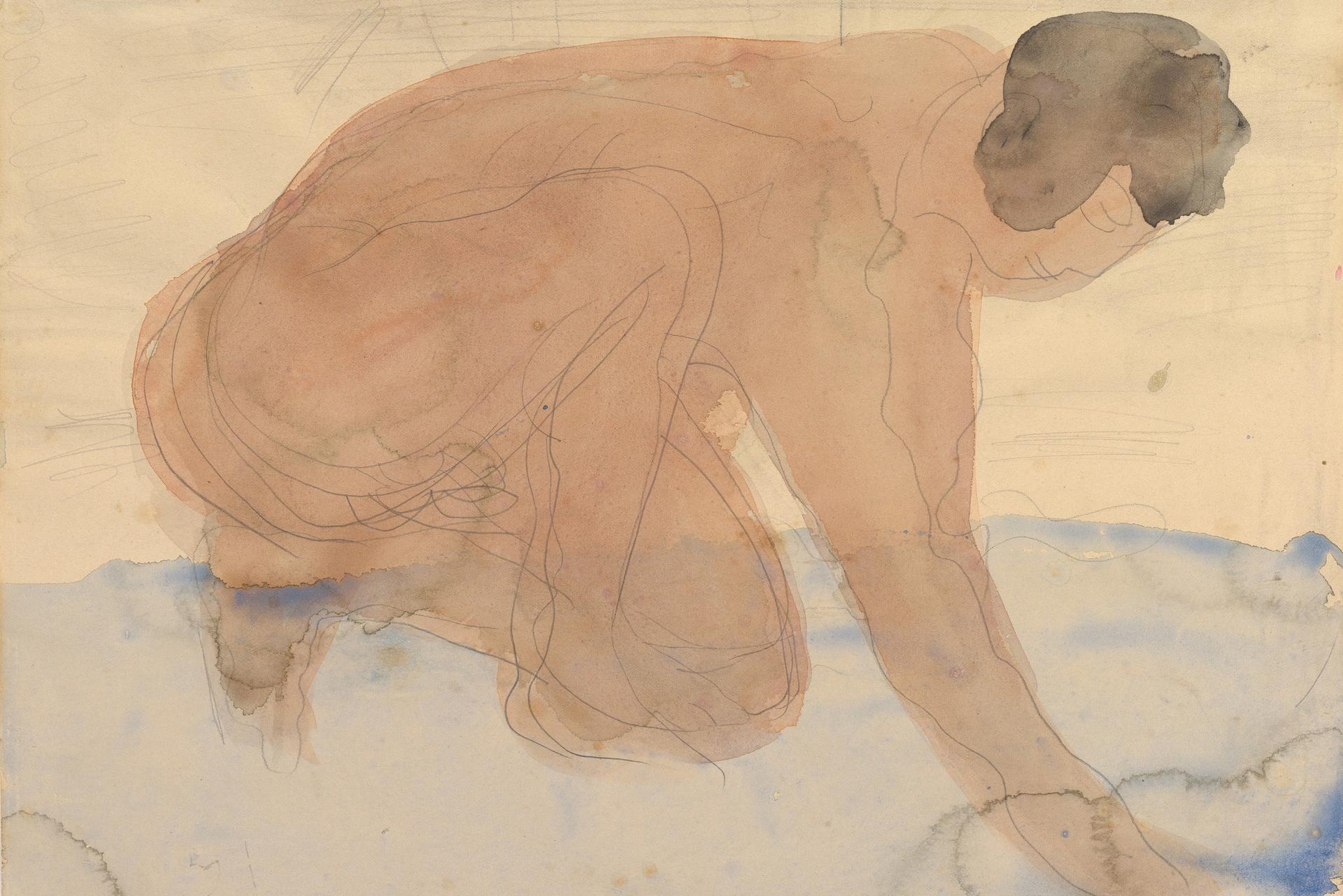
Nude Figure on Hands and Knees (Executioner) by Auguste Rodin, c1900-10. IMAGE/Courtesy the Met Museum, New York
Contemplating the world requires a body, and a body requires an immune system: the rungs of life create the stuff of thought
One can easily imagine Auguste Rodin’s The Thinker (1904)
tortured by deep philosophical questions such as ‘Who am I? What is the
meaning of all this, what is life? Why am I here, given that I haven’t
signed a consent form to be alive here and now, so what’s this all
about, really?’
I too was tortured by these deep questions as a young student in
philosophy, and used to ponder them standing in front of a cast of
Rodin’s statue in the grounds of the Hôtel Biron in Paris. I guess I was
looking for something, the meaning of all this. Since then, and after
drinking so much coffee that I could flood a city with it, I still
haven’t got an answer. And yet, one day, something happened: a
breakthrough, or perhaps an epiphany.
A couple of years ago, I went back to The Thinker as I had
so many times when younger: he was still there, still thinking, holding
his head as if all those deep, heavy thoughts had transformed his skull
to stone.
While searching for the right angle to take a selfie, a miracle
happened: I got hungry. Partly because of the heat, partly because I’d
had just one black coffee in the morning, the head of Rodin’s Thinker started tilting and melting, and the massive weight of his body
became visible to my mind. It was as if the statue was slowly
liquefying and transforming into a vegetal living thing, something like a
salad, or perhaps a cucumber? Something fresh anyway, something that I
could have eaten on the spot. And then some questions popped into my
head: did the Thinker like cucumber salad? Where did he grow up? Did he
prefer summer or winter? White wine or red? Where was he from?
And in that moment I realised I had got it all wrong. I was so
obsessed with his thinking brain that I had ignored his toes – not to
mention the rest of him.
A crucial strategy for transformation in the 21st century.
The concept of delinking has gained traction recently among some
political movements in the global South, including with an international
conference in Mexico on this topic that took place last month.
What is delinking, and how can it be achieved?
Delinking was best described by the Egyptian economist Samir Amin. He
started from the observation that the capitalist world economy is
characterised by a stark division of labour between the imperial core
(often glossed as the global North) and the periphery (the global
South).
In this system, the core states seek to monopolise the most
profitable forms of production and establish control over global
commodity chains, while preventing sovereign development in the
periphery to maintain it as a subordinate supplier of cheap labour.
Southern labour and resources are roped into producing things like
sweatshop goods and plantation commodities for the core, at compressed
market prices, rather than producing for local human needs and national
development.
Amin pointed out that this system is characterised by large core-periphery price disparities and therefore unequal exchangein
international trade. The South is made dependent on imports of
technologies and producer goods from the core at monopoly prices, and to
pay for this they have to export massive quantities of artificially
cheapened commodities and manufactured goods, thus generating a net-transfer of value from the periphery to the core. This enriches the core but drains the periphery of resources necessary for development.
This system produces and perpetuates poverty and underdevelopment in
the South. There is nothing inevitable about poverty; it is an effect of
imperialist dynamics in the world economy. The global South has
extraordinary productive capacities; massive labour power, land,
factories and resources. The problem is they do not have sovereign
control over production.
To address this problem, Amin called for a process of delinking, which for him contains two key elements:
1) Delink from exploitation by the imperial core.
Southern states should end dependence on imports from the core, and end
dependence on imperial capital and core currencies, in order to build
economic sovereignty and mitigate unequal exchange. Note that Amin was not calling
for autarky or isolation; on the contrary, he actively encouraged
South-South cooperation and trade as a tactic for overcoming imperial
dependencies.
2) Delink from the capitalist law of value. Under
capitalism, production is organised around whatever is most profitable
to capital (largely, foreign capital). In the South, capital prefers to
exploit cheap labour in global supply chains than to invest in
technological innovation and industrial upgrading. This inhibits
development. Southern governments must overcome this and align
production to a new law of value: human needs and national development.
How can delinking be achieved in the 21st century? Some basic principles include the following:
A first step is to reduce imports from the core. This can be achieved by reducing unnecessary imports (luxury goods, etc), while substituting necessary imports
where possible with domestic production, or through South-South trade,
ideally using swap lines to trade goods outside the US dollar or Euro.
Taking this step reduces pressure for exports to the core (and reduces
the need for core currencies), and therefore reduces exposure to unequal
exchange.
The far side of the Moon. IMAGE/NASA’s Scientific Visualization Studio)
Dust from the far side of the Moon has yielded an unexpected microscopic treasure we’ve never seen before.
A close examination of lunar material collected during the China National Space Administration’s Chang’e-6 mission revealed specks of dust from a kind of water-bearing meteorite so fragile it seldom survives the trip through Earth’s atmosphere.
It’s the first confirmed debris of a type of meteorite known as Ivuna-type carbonaceous chondrite – or CI chondrite
– ever to be found on the Moon, demonstrating that fragile,
water-bearing asteroids can leave microscopic traces embedded in the lunar regolith.
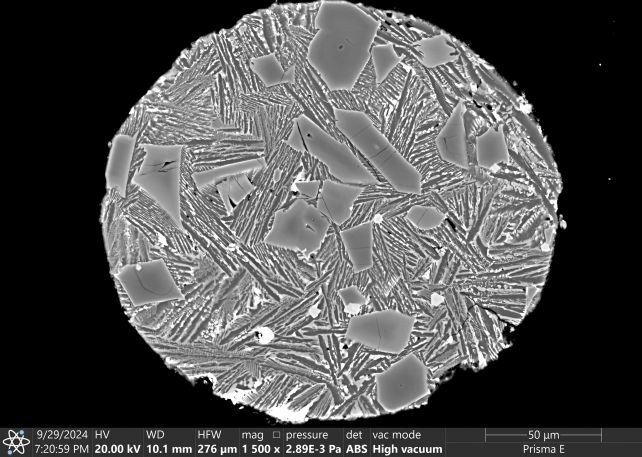
An olivine-bearing meteorite fragment collected by Chang’e-6 from the far side of the Moon. IMAGE/Yi-Gang Xu
CI chondrites are the most water- and volatile-rich of meteorites, with compositions similar to space rocks like Ryugu and Bennu. They are very porous and ‘wet’, with up to 20 percent of their weight bound up in water as hydrated minerals.
Because of this, they’re also unusually soft and crumbly
compared to other space rocks, which means they’re particularly
susceptible to destruction on atmospheric entry and impact. This means
that fewer than one percent of meteorites found on Earth are CI
chondrites. They are extremely rare.
They’re not expected to survive on the Moon, either; although the Moon doesn’t have an atmosphere
in which meteorites can burn and explode, the velocity with which
objects collide with the lunar surface is so high that material is
expected to either vaporize, melt, or be flung back into space.
Led by geochemists Jintuan Wang and Zhiming Chen of the
Chinese Academy of Sciences, a team of researchers sifted through more
than 5,000 fragments of Chang’e-6 material in the hope of finding impact
material, even if it had been altered.
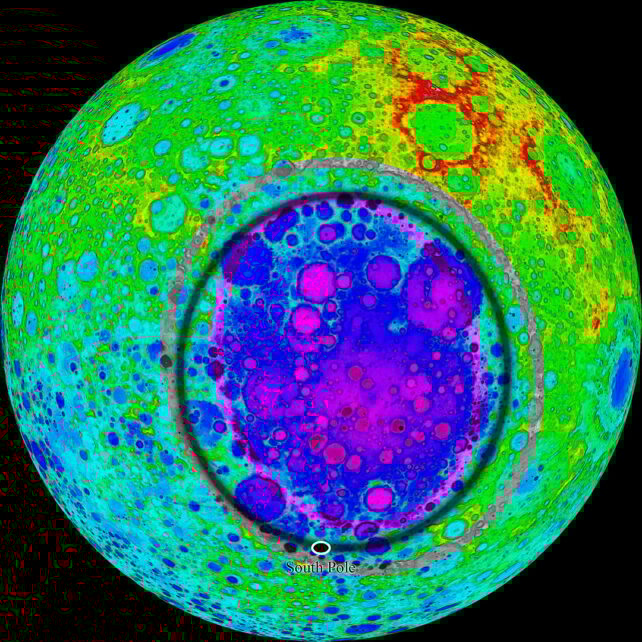
The sample was collected from a crater-within-a-crater – the Apollo Basin inside the vast South Pole-Aitken Basin, which covers nearly a quarter of the lunar surface. That made it a prime site for ancient impact debris.
The South Pole-Aitken Basin on the Moon. IMAGE/Ittiz/Wikimedia Commons/CC BY-SA 3.0
The researchers focused on olivine, a magnesium-iron silicate mineral commonly found in volcanic rock, impact melts, and meteorites.
They isolated several olivine-bearing fragments – or clasts – mounting
and polishing them to perform scanning electron microscopy, electron
probe microanalysis, and secondary ion mass spectrometry.
Members of the UN Security Council raise their hands to vote in favour of a draft resolution to authorise an international stabilisation force in Gaza, on November 17, 2025 at UN headquarters in New York City IMAGE/AFP/Al Jazeera
By
approving a U.S. “peace plan” that legitimizes genocide and ends the
right to resist, the United Nations Security Council has not just failed
Palestine—it has actively consolidated a new era of global fascism.
A Day That Will Live in Infamy
A few days into the massive revenge attack by Israel on the
Palestinian population in Gaza after the October 7th military action of
the Palestinian anti-colonial resistance, the Colombian President
Gustavo Petro warned that the Israeli-led and U.S.-supported genocidal
attack on Gaza represented the global rise of fascism. “Gaza,” he alerted, “is just the first experiment in considering us all disposable” and in bringing in a “might-makes-right era.”
Two years later, the morally obscene and legally dubious
vote by the United Nations Security Council (UNSC) on November 18
approved the Trump Administration’s pseudo-peace plan that effectively
transfers the administration and occupation responsibilities of
colonized and occupied Palestine to the U.S. and Israel, can only be
understood as a corruption of the United Nations Charter and the
concrete manifestation of the successful consolidation of U.S. led
fascist power internationally.
On a vote of thirteen in favor with two abstentions from
China and Russia, the UNSC continued the fiction that the so-called
Trump peace plan advanced by the U.S., a nation that at minimum is
guilty of complicity with genocide, represented a serious and credible
attempt to bring about a resolution of the Palestinian national
question.
In reality, however, the UNSC resolution firmly places the
UN on the side of the Israeli/U.S. colonial project, violating all
preceding resolutions, actions and legal interpretations that
delegitimized colonialism in general but also specifically supported the
legitimate right of Palestinians to resist colonization, including with
arms.
The right to engage in anti-colonial struggle and for
national self-determination are theoretically prescribed rights under
international law, and various United Nations resolutions from both the
General Assembly and the Security Council. Those rights are not
negotiable and cannot be redefined or surrendered as a result of a vote
by the UNSC. Yet, that is precisely what happened.
The plan requires that Palestinians in Gaza surrender their
right to resist colonial domination and self-determination.
Objectively, it amounts to a declaration of war on Palestinian
nationhood and a physical war against the Palestinian resistance. But
even more ominously for the peoples of the global South, the resolution
legitimizes and normalizes genocide as an acceptable response to
anti-colonial resistance.
According to this “peace plan,” two million Palestinians
are supposed to submit to living in concentration camps on less than
half the land mass they were originally confined to in Gaza before the
Israeli attack. Moreover, they are also supposed to submit to the
indignity of a foreign-imposed occupation force with the Orwellian
nomenclature of an “International Stabilization Force” under the joint
domination of the white supremacist U.S. and Israel settler-colonial
states.
Compounding the moral and legal outrageousness of this
“peace plan” is the fact that it was advanced by the U.S., which is
clearly complicit in the ongoing Israeli genocide in Gaza and the ethnic
cleansing of the West Bank. Despite the claim by the U.S. president
that his plan is supposed to bring peace and eventually a Palestinian
state, the reality is that the intercession of the UNSC resolution
legitimizing the UN’s alignment with the continuation of the oppression
and colonial occupation of Palestine and its people, only re-normalized
colonial genocidal practices. These same practices created all the white
supremacist settler states and the European colonial projects in
general.
The historical analogy of this vote would be if the UNSC
had come down on the side of the white colonialist Afrikaners in South
Africa, legitimized an interventionist force to suppress the Africans,
and conferred a colonial mandate to rule over the colonized African
indigenous majority.
So, is it really hyperbole
to argue that the US-Israeli plan has nullified the Genocide
Convention, the Apartheid Convention, the Geneva Conventions, opinions
of the International Court of Justice and all the UN resolutions on
Palestine? I don’t think so.
Prime Minister Mette Frederiksen’s Social Democrats saw significant losses in the recent Danish elections. IMAGE/Emil Nicolai Helms/Ritzau Scanpix/AFP/Denmark OUT via Getty Images
Around Europe, old labor parties have alienated their base by forming grand coalitions with center-right forces. In Denmark, Mette Frederiksen’s Social Democrats have pursued this same strategy with the same dismal results.
Copenhagen saw a historic shift last Tuesday night, following the
elections held in the Danish capital and across Denmark. After more than
a century of holding power in Copenhagen, the Social Democrats finally lost the mayoralty.
Sisse
Marie Welling, from the left-wing Socialist People’s Party (SF) instead
claimed the lord mayor’s post within a broad coalition dominated by
left-wingers. While the more moderate socialists in SF claimed the top
job, the radical left Red-Green Alliance under leader Line Barfod
emerged as the largest party
with 22.1 percent of the vote. Together, the two socialist parties,
supported by a smaller green party, almost secured an outright majority.
Following the election, these left-wing forces managed to create a
coalition that did without virtually every other party in city hall. The
Social Democrats were excluded even from a role in negotiations. This
also saw the once-dominant party stripped of powerful board posts in
important municipally led construction and public transport companies,
historically central to the development of the city’s infrastructure.
The defeat came after an extremely negative — by Danish standards —
campaign attacking the Red-Greens’ Barfod for her background in
communist youth politics and denouncing
the alliance’s Marxist foundations as a “corrosive, antidemocratic
ideology.” Such accusations were remarkable coming from the Social
Democrats, a party historically founded on Marxist principles.
This loss is both a substantial and symbolic shift. Copenhagen has been the center
of the Danish labor movement since its rise in the 1870s. While other
Scandinavian capitals like Oslo and Stockholm have moved rightward
politically, Copenhagen has remained a historic bastion of left-wing
politics.
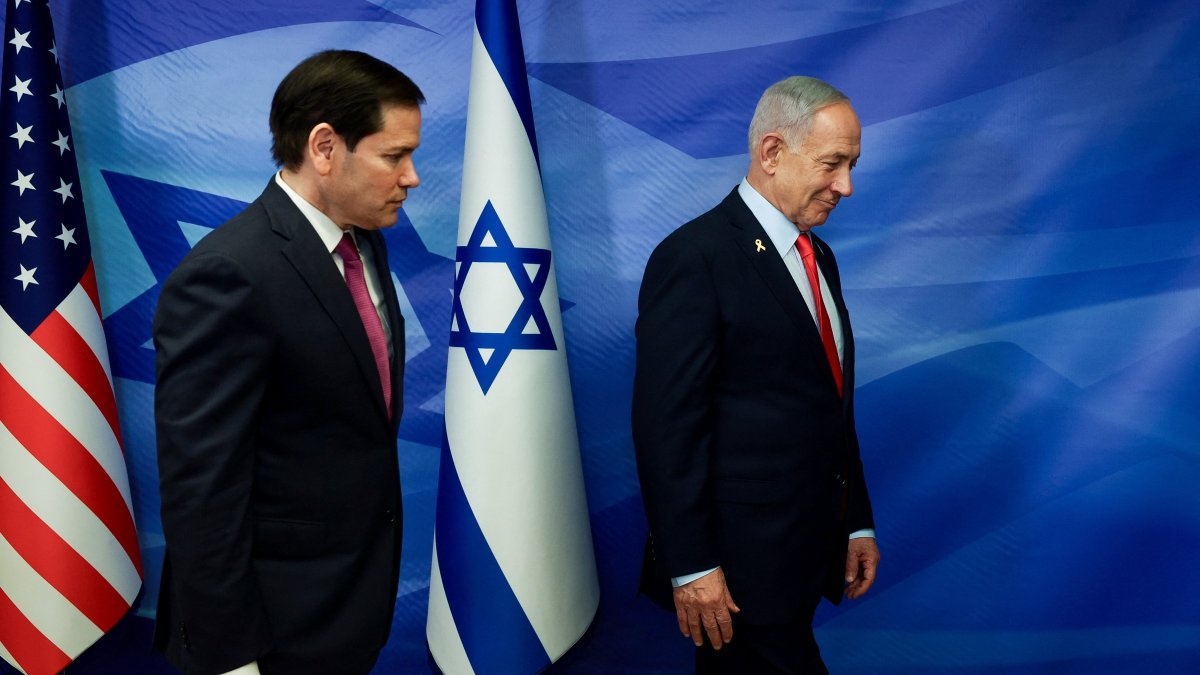
U.S. Secretary of State Marco Rubio (L) meets Israeli Prime Minister Benjamin Netanyahu, west Jerusalem, Israel, Oct. 23, 2025. IMAGE/Reuters
As the U.S. administration remains bound by Israel, Netanyahu drives the country into further extremism
The Atlantic magazine wonders if U.S. President Donald Trump could
contain Israel’s hard right because Israel’s extremists, who keep Prime
Minister Benjamin Netanyahu at the helm of Israel, seem not to be giving
up on their ethnic cleansing policy. The Foreign Policy magazine
asserts that only Trump could save Israel from its own government, but
its editors suspect that even Trump could not stop history from
repeating itself in Gaza because the Israeli army keeps planning for
many more months of conflict to come, to kill and displace many more
Palestinian civilians and to aggravate an already intolerable
humanitarian situation.
Trump already began talking smut and using foul language when asked
if Netanyahu violates his peace plan. While almost the entire foreign
policy and international security team at the White House was in Tel
Aviv, as if laughing in their faces, Netanyahu had the Knesset pass a
law enabling the government to annex the West Bank. Knesset members also
voiced the idea that Gaza City should be “West Shariazed” when the U.S.
team was trying to make sure that Trump’s peace plan would not be
violated.
Meaning of ‘West-Shariazed’
What is to be “West Shariazed” in the Zionists’ parlance? One of the
three major regions of the Arab Partition of Palestine was named the
“West Bank” (of the River Jordan or Nahr Al-Sharieat in Arabic) after
the Zionists colonized Palestine. Through the policy to occupy,
dispossess and settle in the Arab villages, towns, and even cities, or,
as Ilan Pappe, an Israeli historian and a leading scientist among
Israel’s new historians, calls it, the “urbicide of Palestine,” the
Zionist colonialism nearly emptied the Arab partitions of the Arab
population.
After the 1967 War, Israel annexed the northern-most Nazareth (Acre)
section and implemented a military occupation regime in the middle (West
Bank) and the south (Gaza City) sections. The Gaza Strip was under
Israeli Military Administration from 1967 to 1994. Israeli Prime
Minister Ariel Sharon disengaged the Israeli military from Gaza in 2004
and the actual unilateral dismantlement of the Zionist settlements
occurred in 2005. However, the decision to disengage from Gaza was
largely opposed by the Israeli hard right; they supported Netanyahu’s
government with a six-vote majority in the Knesset in exchange for the
promise to reoccupy Gaza and allow resettlement. Meanwhile, occupation,
settlements and occasional annexation continued in the West Bank.
Now, Netanyahu’s accomplices in war crimes and genocide in Gaza,
National Security Minister Itamar Ben-Gvir and Finance Minister Bezalel
Smotrich, pushed the annexation of the West Bank and called for the same
military regime to be implemented in Gaza after the dissolution of
Hamas: hence, “West-Shariazing Gaza.”
U.S. officials should wake up
Meanwhile, a “senior American official” said that if Netanyahu screws up the Gaza deal, Trump will screw him! However, using foul language is not going to work on Netanyahu, Ben-Gvir or Smotrich. Neither would issuing “stark warnings” to Netanyahu if he allows the cease-fire to collapse!
Hustlerfund, a mobile lending application in Kenya
advances a 20-year-old woman named Khamba to stock up her fruit stall in
Nakura. In another seven days, it has almost doubled. In a case where
she is a day and a day late in paying, the platform starts sending
messages to her entire contact list labelling her as a thief. Lagos, a
young man, is a ride-hailing driver who borrows a N15,000 loan to fix
his bike. He makes it back punctually over a period of months, but his
credit limit does not change much. Rather, his information is repackaged
on other portals, and he is profiled as owing more money.
These tales exist across the whole continent. They are the
symptoms of a system that becomes similar to financial extraction,
which is disguised by the language of inclusion. The African digital
lending boom is frequently celebrated as an innovation, but in reality
it may run just like a new colonial infrastructure, and it is not
carried out using force but rather through algorithms, information
capture, and pressure to repay debts.
From Taxation To Digital Dependence
Earlier colonialist governments would impose labour with a corrective
form of tax regime. The digital lenders do not usurp the land and
labour, they take away personal data, patterns of behaviour and future
income today. The instant credit, short repayment cycles and obscurant
pricing are helping to push borrowers toward a state of dependency. What
is a form of access soon turns into a trap.
Access to credit is not the adversary. Mobile lending is the sole
financial lifeline to millions of Africans, small entrepreneurs and gig
workers as well as continual traders. What is at question and the way
that access is organized. Thousands of platforms work within the cycles
of high frequency borrowing, undisclosed fees rather than the open
interest rates, and practical annual rates of up to 100 percent to half a
million. It can even cause automatic harassment to people other than
the borrower when default occurs, such as friends, employers and family.
These are not financial instruments. They are pressure systems.
A Pan-African Pattern
Powerful credit ecosystems were established on early products in
Kenya such as M-Shwari, Tala and Fuliza. They have gone viral and so has
their criticism as the increase in the debt pressure and digital
bullying incited the Central Bank to act.
In Nigeria, dozens of quick loan apps, most of which are offshore
related, were sanctioned by the Federal Competition and Consumer
Protection Commission, and delisted. However, many we re-named and
re-appeared. Unregulated fintech are increasing in Ghana, Uganda,
Tanzania and South Africa due to increasing trends of mobile money. The
trend is quite clear: technology at the cost of regulation, and profit
at ethics.
Regulation Helps – But It Is Not Enough
African administrations are on the alert. They now license digital
lending by the Central Bank of Kenya. Nigeria enforced stricter measures
on the protection of data and outlawed organised blackmail and
harassment for debt collection purposes. The South African government
regulates the cost through the National Credit Regulator.
These steps matter. However, they are reactive rather than proactive.
It takes the negative pain of heinous public crimes or scandals before
regulators take action. Because of this, it is devastatingly worse that
with some fragmentation of enforcement, companies arbitrarily have been
able to hop jurisdictions, moving between those with a stiffer movement
system and those with a less stiff one.
Africa should have standardised digital credit, preferably within the
field of the African Continental Free Trade Area (AfCFTA). A common
continental standard would be able to guarantee:
Complete transparency instead of masqueraded service fees.
Limit in data-use and audit trails on data-use.
Outlaw recovery methods based on harassment.
Introduce egional borrower dispute mechanisms.
Even so, financial sovereignty will not be ensured unless
regulation is upheld by banning coercive tactics used by lenders when
trying to recover borrowed money from borrowers.
Beyond Regulation – Towards Financial Sovereignty
Cooperative finance has a long history in Africa. These systems exist
on social trust, community reinvestment, accountability. The challenge
and opportunity lies in how to digitise these indigenous models rather
than bring in outside templates that aim at extracting profits.
Consider online lending cooperatives owned by users that have members
who are also shareholders. Consider communal credit fund depositories,
which are supported by open governance and split up. Consider having
open-source credit-scoring systems, whose operation is directed by
social organisations or co-operatives and not cartels and greedy private
investors.
Innovation would not be substituted by these models. Rather, with
local ownership and dignity these models would redefine it. Authentic
inclusion also needs to be participation in the governance, rather than
the dependency of imported applications.
A Financial Revolution -But Whose?
The digital finance revolution that Africa has been experiencing is
not imaginary, but a revolution is assessed in terms of results, not
press releases. Does instant credit simply lead to bond citizens
indebted to never ending cycles of micro-debt? Does it make the small
traders strong or are the old extractive hierarchies being reproduced in
a new form?
I haven’t given my diatribe on cheap drugs for a while, but
what the hell. It’s a huge deal and no one in a position of power gives a
damn (just like the housing bubble), but I’ll keep trying.
Just to remind everyone of where things stand, drugs are cheap.
The government makes them expensive with patent monopolies and other
forms of protection.
There are all sorts of self-imagined progressive types who see
their goal in life as getting the government to rein in the market to
end poverty and reduce inequality. In the case of prescription drugs,
the problem is the government, not the market.
Drugs are almost invariably cheap to manufacture and
distribute. They would sell for $10, $20, or $30 per prescription in a
free market. The reason people end up paying tens or even hundreds of
thousands of dollars for drugs they need for their health or life is
because the government prevents competition that would bring prices down
close to the drug’s cost.
We need to pay for the development of drugs, but we don’t need
patent monopolies for that. We used to spend over $50 billion a year for
biomedical research through the NIH and other government agencies. We
would need to spend perhaps three times that amount to replace the
research now supported through patent monopolies.
That additional $100 billion sounds like a lot of money, except
we would likely save on the order of $550 billion a year on what we
spend on drugs. We currently spend over $720 billion a year for drugs that would likely sell for around $150 billion in a free market.
The difference of more than $550 billion a year comes to more
than $4,000 per household. It’s more than the tax breaks in Trump’s big
bill. This is a huge amount of money that the government is transferring
every year from the rest of us to the people in a position to benefit
from patent monopolies. But somehow, we are all just supposed to accept
that this is the free market.
I was reminded of how corrupt and immoral this system is when I recorded a podcast with Joe Stiglitz, who has written
extensively on intellectual property, as well as many other areas. In
addition to making drugs expensive or altogether unaffordable for
hundreds of millions of people around the world, these monopolies hugely
hampered the response to the pandemic.
Rather than trying to get vaccines, tests, and treatments
produced and distributed as widely as possible, the international
community focused on setting up structures to ensure that the
pharmaceutical industry would be adequately compensated. Arguably the
structure already existed with the compulsory licensing terms that were
put in place in the Doha round of the WTO, but that is really beside the point.
The issue of distribution of vaccines and drugs is completely
separable from the question of appropriate compensation for the
pharmaceutical industry. Common sense would have dictated that the
countries with the necessary technology and expertise do everything
possible to maximize production of pandemic related vaccines and
treatments immediately.
The debate over appropriate compensation could have proceeded
on a separate track and taken as long as necessary. There was no
emergency in determining compensation for Pfizer or Moderna. If it took a
year or two to iron out a fair level of compensation, that would be no
big deal. Getting out the vaccines and treatments was an emergency
involving tens of millions of lives.
Some of us had vague hopes that Trump might actually do
something to rein in the pharmaceutical industry. In his campaign he
complained about high drug prices. Robert F. Kennedy, Jr., his Secretary
for Health and Human Services, has made a career complaining about
corruption in the industry, so there was some basis for thinking he
might look to fundamentally change the industry’s business model
In January 2022, Richard Bruce Cheney made a surprise appearance on
the floor of Congress. His return to Capitol Hill marked the anniversary
of the ruckus that briefly delayed certification of election results
the previous year. Cheney, accustomed to rough words from his opponents,
found himself in an improvised receiving line. ‘No Republicans showed
up’, the New York Timesrecounted,
But Democrats in the House, including the Speaker, Nancy Pelosi, were
effervescent. After 13 years in retirement and of all-but-unimaginable
changes in American life wrought by the rise and fall of President
Trump, Mr Cheney and Liz Cheney were engulfed by a parade of Democratic
well-wishers, many of whom had once called the former vice president a
war criminal. The Democrats shook Mr Cheney’s hand, and some embraced Ms
Cheney, who introduced him to her erstwhile colleagues, saying: ‘This
is my father. This is Dad.’ It was a stunning moment and an emblem of
how much had changed in the Trump era.
Pelosi praised his attendance, declaring that, whatever past
quarrels, they had never differed over their commitment to ‘honoring our
oath of office to support and defend the Constitution’; Steny Hoyer
saluted Liz Cheney ‘for having the courage to stand up for truth’; Adam
Schiff looked back misty-eyed to ‘a time when there were broad policy
differences, but there were no differences when it came to both parties’
devotion to the idea of democracy’. ‘It’s an important historical
event’, Cheney explained when asked what drew him to Washington to
commemorate the January 6th ‘insurrection’: ‘I was honoured
and proud . . . to recognize this anniversary, to commend the heroic
actions of law enforcement that day, and to reaffirm our dedication to
the Constitution’. Media accolades did not save his daughter’s seat in
Congress from a MAGA primary challenge, although the Resistance circuit
offered a lucrative fallback. When he endorsed Kamala Harris last
September, Cheney said of Trump ‘there has never been an individual who
is a greater threat to our republic’.
Twenty-five years ago, Cheney displayed a different attitude towards
the sacral rites of democratic transition. As lawyers contested George
W. Bush’s razor-thin Florida margin, his running mate took charge of a
privately funded transition operation based at his McLean residence,
preparing a presidential team before an official victor was declared.
Recounts stalled in Miami-Dade and the courts deliberated over ‘hanging
chads’; Cheney nonetheless pressed ahead, bringing in Ari Fleischer as
spokesman and vetting cabinet nominees all while the General Services
Administration refused to release federal resources. He declared
Florida’s certification to be conclusive, dismissed Gore’s legal
challenges as an exercise in denial and warned that any hesitation in
assembling a government would jeopardize national security. Meetings
with congressional leaders in Austin followed, signalling that the
administration-in-waiting intended to behave as though the matter were
settled. The haste was not improvised. In truth, the VP-elect had
devoted the better part of a long career to reflection on the relays of
power.
He wasn’t born to it. Raised in Wyoming by New Dealer parents, Cheney
won admission to Yale through connections of his future wife, Lynne,
only to flunk out twice. A period of drift and minor alcohol-related
scrapes back West ended when she insisted on a more disciplined course.
Five draft deferments later, by his mid-thirties he was serving in the
Office of Economic Opportunity as deputy to Donald Rumsfeld, whom he
followed into the Ford Administration and eventually replaced as chief
of staff to the president. A Watergate survivor, he learned the lesson
of Nixon’s collapse: ‘Don and I survived and prospered in that
environment because we didn’t leave a lot of paper lying around’, he observed.
At the White House he proved a virtuoso of bureaucratic manoeuvre. He
and Rumsfeld eased Rockefeller off the 1976 ticket, sidelined Kissinger
and conspired to extinguish détente. Quiet, relentless, Cheney rarely
took credit; he showed an appetite for minutiae and stamina for
unglamorous work, seeing to it that the West Wing plumbing got fixed and
cruets were replaced on the presidential table. Colleagues remembered a
discreet, preternaturally middle-aged man, his distinguishing features a
lawless smirk and ‘snake-cold eyes, like a Cheyenne gambler’s’, as
another Ford adviser recalled.
I’m both an adjunct assistant professor of medicine
and a practicing physician. As a family doctor, I see the common cold
every day. My patients are usually skeptical when I first recommend
nasal saline irrigation. However, they frequently return to tell me that
this practice has changed their life. Not only does it help with upper
respiratory viruses, but it also helps manage allergies, chronic congestion, postnasal drip and recurrent sinus infections.
What is nasal saline irrigation?
Nasal saline irrigation is a process by which the nasal cavity is
bathed in a saltwater solution. In some studies, this is accomplished
using a pump-action spray bottle.
This practice of nasal irrigation originated in the Ayurvedic tradition, which is a system of alternative medicine from India dating back more than 5,000 years.
Nasal saline has a few key benefits. First, it physically flushes
debris out of the nasal passage. This not only includes mucus and crust,
but also the virus itself, along with allergens and other environmental
contaminants.