
Rewriting a Martyr: The Hindutva Push to Recast Guru Tegh Bahadur’s Legacy in Today’s India
by J. D. EMMANUEL
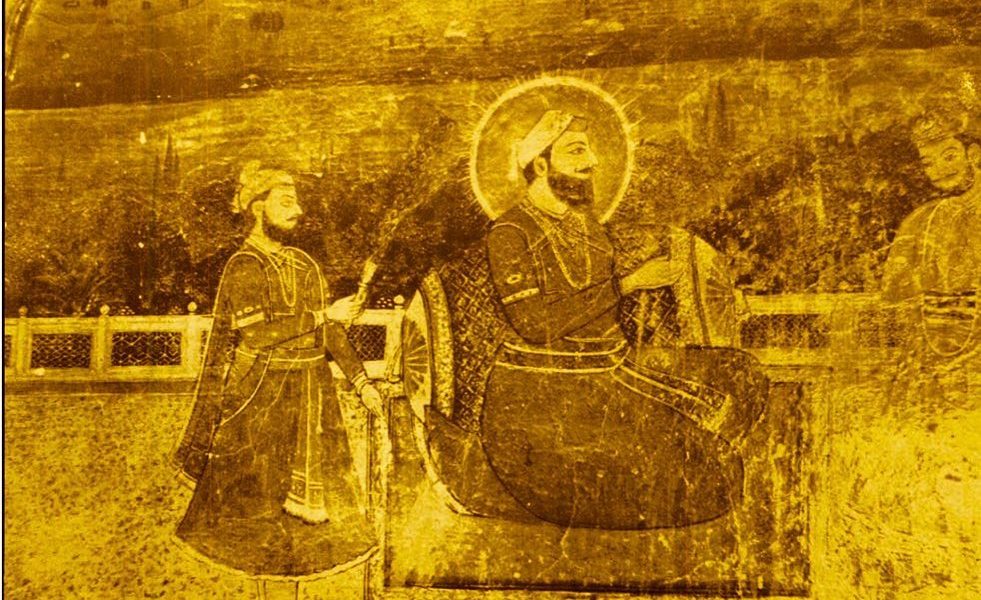
The rewriting of Sikh history has long been one of the Sangh Parivar’s key tools of assimilation, and Guru Tegh Bahadur’s shaheedi has become a focal point, with state-led commemorative politics serving as a major site of historical revisionism.
Guru Tegh Bahadur’s martyrdom in 1675 stands as one of the central moments in Sikh history and collective memory: a moral stand against coercion and a testament to freedom of conscience and pluralism. Over the centuries, his sacrifice has inspired generations of Sikhs to stand against injustice and oppression, from anti-colonial struggles to the recent farmers protest and ongoing mobilisation for minority rights.
Guru Tegh Bahadur’s martyrdom in 1675 stands as one of the central moments in Sikh history and collective memory: a moral stand against coercion and a testament to freedom of conscience and pluralism. Over the centuries, his sacrifice has inspired generations of Sikhs to stand against injustice and oppression, from anti-colonial struggles to the recent farmers protest and ongoing mobilisation for minority rights.
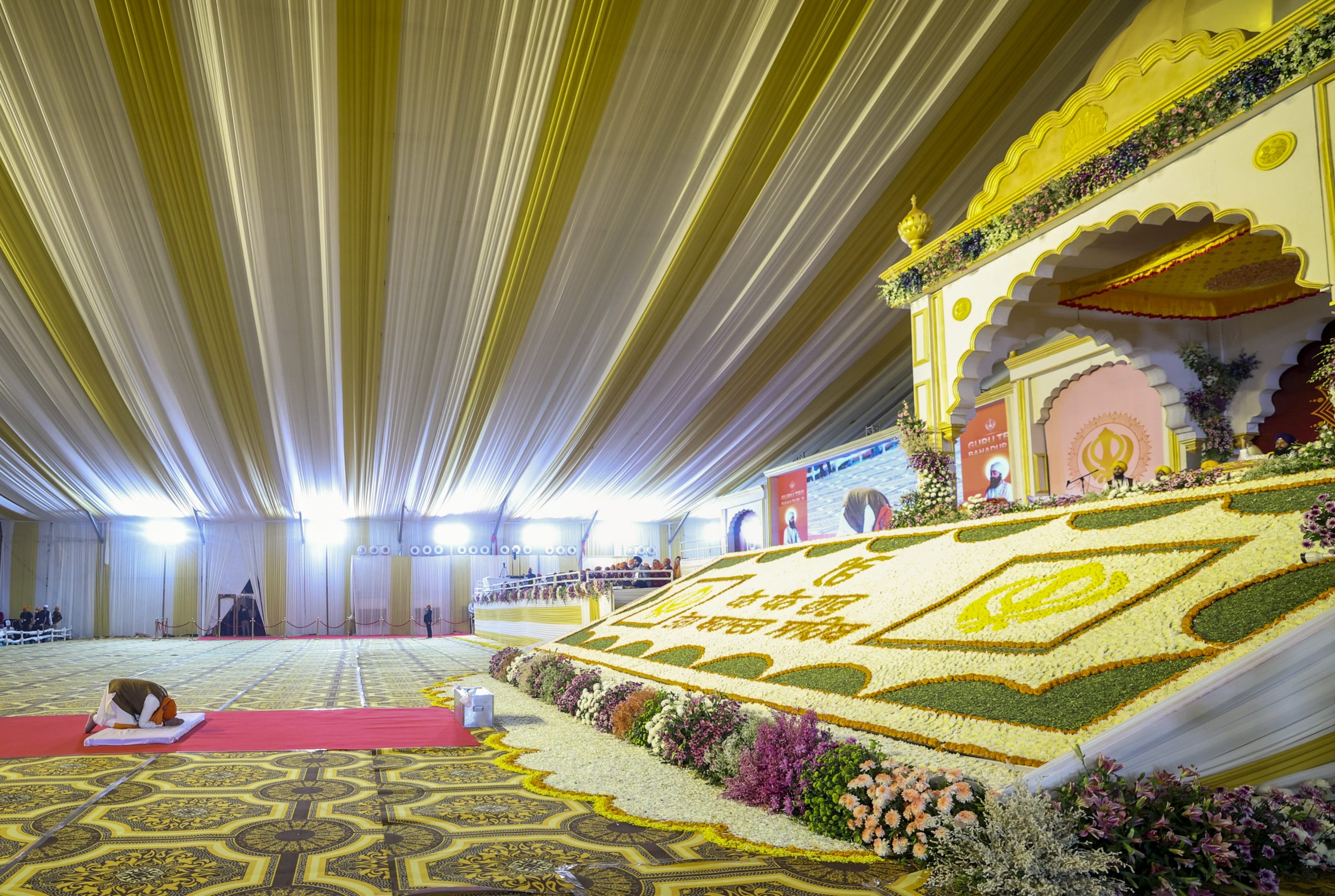
Prime Minister Narendra Modi during a programme organised to mark the 350th martyrdom anniversary of Guru Tegh Bahadur in Kurukshetra district, Haryana. Photo: PMO via PTI.
The month-long large-scale commemorations marking the 350th anniversary of his ultimate sacrifice have just ended with a three-day Gurmat Samagan, including a light and laser show, organised by the Bharatiya Janata Party-led (BJP-led) Delhi government in the Red Fort, near the site of his execution. Meanwhile, the BJP-led Haryana government has been holding its own grand celebration in Kurukshetra, with the prime minister attending an event on November 25.
The Wire for more
Why Guru Tegh Bahadur Is Not the Anti-Muslim Icon BJP-RSS Claims He Is
by KUSUM ARORA
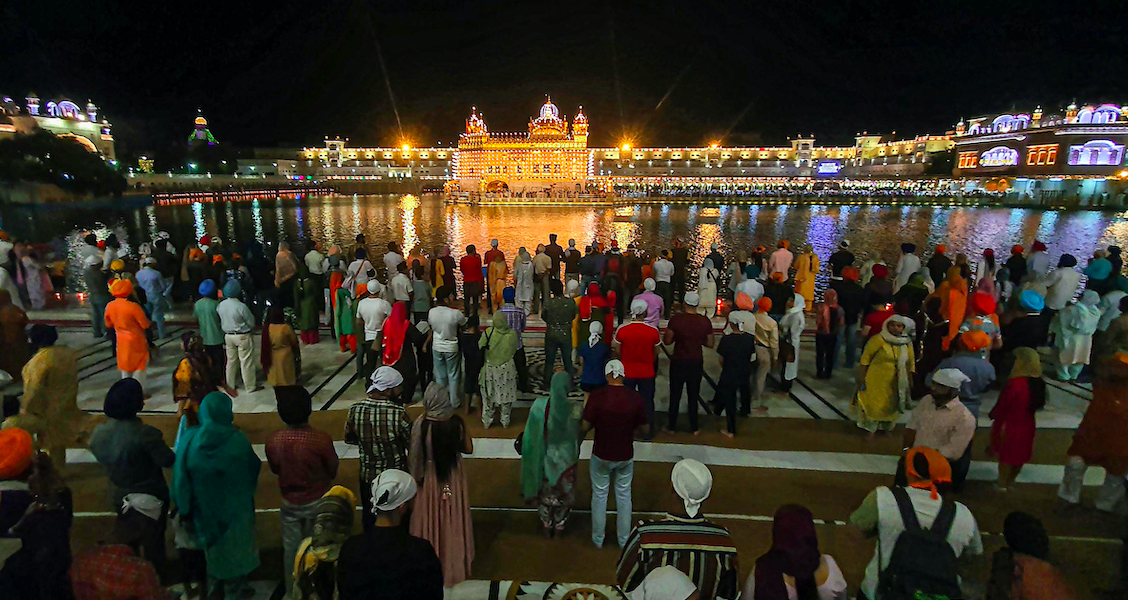
Sikh scholars have expressed misgivings with the BJP government’s efforts to portray the Sikh Guru as a symbol against Muslims, with several of them insisting he died protecting the ethos of religious freedom.
Jalandhar: Hours before Prime Minister Narendra Modi addressed the nation on the 400th birth anniversary of Sri Guru Tegh Bahadur, the ninth guru of the Sikhs on April 21, the Shiromani Gurdwara Parbandhak Committee issued a statement.
In it, the SGPC called for “everybody’s religious freedom” to be “established and protected” following the ideology of the freedom fighter, Guru Tegh Bahadur.
In his address from Red Fort on April 21, Modi said, “In front of Aurangzeb’s tyrannical thinking, Guru Tegh Bahadur became ‘Hindi di Chadar’ and stood like a rock. This Red Fort is a witness that even though Aurangzeb severed many heads, but could not shake our faith.”

PM Modi also released a commemorative coin and a postage stamp dedicated to Guru Tegh Bahadur on this occasion.
Delhi’s Red Fort faces the historic Gurdwara Sis Ganj Sahib, where Guru Tegh Bahadur was beheaded on the orders of the Mughal emperor Aurangzeb in November 1675.
Though Akal Takth acting chief Giani Harpreet Singh and SGPC chief Harinder Singh Dhami thanked Modi for celebrating the occasion at the national level, the fact that they did not shy away from raising minorities’ rights is significant.
What the statement said
The SGPC had organised a large congregation at Gurdwara Manji Sahib Diwan Hall, Amritsar on the 401st Parkash Parv of Guru Teg Bahadur.
In its statement, the SGPC stated that everyone’s religious freedom should be established and protected as per the ideology of the ninth Guru – including Sikhs, who made great contributions in the freedom struggle of the country.
“If excesses are committed against anyone, then it would be understood that the government at Delhi is not sincere,” the statement read.
In his address, Akal Takth Jathedar Giani Harpreet Singh said, “The motive of martyrdom of Sri Guru Teg Bahadur was so that the right to practice faith and religion was given to everyone. But today in India, going against the ideology of the Guru Sahib, the religious beliefs of minorities are being suppressed.”
The Wire for more
A Portrait of Aurangzeb More Complex than Hindutva’s Political Project Will Admit
by HARBANS MUKHIA

In ‘Aurangzeb: The Man and the Myth’, Audrey Truschke sifts popular imagination on the ruler’s personal and political life from historical realities.
“The Aurangzeb of popular memory bears only a faint resemblance to the historical emperor,” observes Audrey Truschke near the concluding section of Aurangzeb: The Man and the Myth. This indeed is her book’s central theme. In the slim volume, Truschke seeks to sift the man from the myth that has grown around him, especially in popular imagination, over the past couple of centuries.
Truschke burst onto the horizon of medieval Indian history studies just a year ago with her major work, Culture of Encounters: Sanskrit at the Mughal Court,in which she argues that the Mughal court generally, but especially between 1560 and 1660 (comprising the reigns of Akbar, Jahangir and Shah Jahan), greatly patronised not only the Sanskrit language but Sanskrit culture as part of their vision of governance. She bases her argument on an immense amount of in-depth research. The book is clearly meant for the professional medievalist.
The book under review here, on the other hand, is not only half the size of the first but is equally clearly meant for the lay reader, lighter to read with no footnotes and no complex arguments. As a historian, she is disturbed by the distance between professional knowledge and popular image of the man and the emperor, and intervenes to minimise that distance without being an apologist for either the man or the emperor. “The multifaceted king had a complex relationship with Islam, but even so he is not reducible to his religion. In fact, little is simple about Aurangzeb. Aurangzeb was an emperor devoted to power, his vision of justice, and expansion. He was an administrator with streaks of brilliance and scores of faults. He grew the Mughal Empire to its greatest extent and may also have positioned it to break apart. No single characteristic or action can encapsulate Aurangzeb Alamgir…”
The Wire for more