
by GERALD EARLY
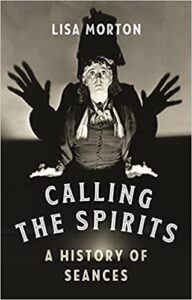
by Lisa Morton (2020, Reaktion Books) 351 pages including index, bibliography, notes, and photos
The hope, dread, and farce of communicating with the dead.
As Lisa Morton notes in Calling the Spirits: A History of Seances, there is not a shred of scientific evidence that proves the existence of spirits or any ability on our part or theirs, if they did exist, that we can communicate with them. (298) Despite this, there is hardly a culture or people on earth that has not or does not believe in a spiritual life of some sort after death and that does not have some sort of ritual conducted by a “specialist” to communicate with the dead. Human beings are convinced, and have been throughout history, that there is an afterlife, that death is not the end but simply a gateway to more life, and that this afterlife has some profound effect upon those still living this life. What this pervasive belief shows is:
• First, that we cannot imagine non-existence or fervently do not want to; for us, life only begets more life, good or gruesome, material or trans-material.
• Second, that there is an essential loneliness about human existence that makes us want to be surrounded by ghosts, spirits, gods, and the like who mean us either good or harm; to be alone frightens us more than evil spirits do.
• Third, that science has far less influence on our thinking than we might claim, that science has its limits in our understanding and shaping of the real and the unreal, that we believe we live in a world that requires propitiation as much as it does governance and stewardship, a world that remains as much supernatural as it is natural.
Calling the Spirits is a nifty survey of the western world’s supposed interactions with the spirits of the dead. Necromancy, the art of summoning the spirits, has long fascinated us, and it was common in the ancient world for those with special gifts of some sort to summon the dead or the gods (good, bad, and trickster) or demi-gods, the halfway house between mortal and immortal. I suppose that Jesus would not be considered a necromancer for calling out the evil spirits of the possessed, but he clearly could get spirits to obey his commands. Although Jesus raised the dead, he did not commune with the spirits of the dead or make a claim that they had an active influence on the living. In the ancient world, people summoned the dead to get predictions about the future; presumably the dead, not imprisoned by time, are able to see the past, the present, and the future simultaneously. And they, despite being dead, are still concerned with what goes on among the living.
Common Reader for more