
by IAN ANGUS
Capital versus Commons is a series of articles on early capitalism and agriculture in England. It was previously titled ‘Robbing the Soil.’
PART ONE discussed the central role of shared property and common rights to resources in pre-capitalist agriculture. In the 1400s that system began to break down, beginning the transition from feudalism to capitalism
PART TWO discussed the processes known as ‘enclosure.’ In the late 1400s, landlords began evicting small tenant farmers to increase profits, often by creating large sheep farms. In the 1530s that change was intensified when Henry VIII seized the church’s vast lands and sold them to investors who raised rents and imposed shorter leases. The twin transformations that Marx called primitive accumulation–stolen land becoming capital and landless producers becoming wage workers–were well underway when thousands of peasants rebelled against the changes in 1549.
PART THREE discusses the protestant reformers who opposed the growing drive for privatization of land in the mid-1500s.
I must needs threaten everlasting damnation unto them, whether they be gentlemen or whatsoever they be, which never cease to join house to house, and land to land, as though they alone ought to purchase and inhabit the earth.
—Thomas Cranmer, Archbishop of Canterbury, 15501Accumulate, accumulate! That is Moses and the prophets!
—Karl Marx, 18672
The privatization of land has been justly described as “perhaps the weirdest of all undertakings of our ancestors.”3
Enclosure–the transformation of common resources into private property–was a fundamental feature of the rise of capitalism in early modern England. It involved not only new ways of using the land, but also, as both cause and effect, new ways of thinking about it.
The idea that individuals could claim exclusive ownership of parts of nature on which all humans depend was very weird indeed. Contrary to the oft-expressed view that greed is inherent in human nature, the shift from commons-based to private-profit-based farming was not accepted easily–in fact, it was denounced and resisted as an assault of the laws of God and the needs of humanity.
+ + +
Henry VIII died in 1547, succeeded as king by Edward VI, then only nine years old. For the next six years, actual political power rested with a regency council, headed by the Duke of Somerset until 1549, and by the Duke of Northumberland from late 1549 until Edward’s death in 1553.
Somerset and Northumberland were strong protestants who wanted the English church to move farther from catholic doctrine and practices than Henry had allowed. To promote that, the law outlawing heresy was repealed and censorship was relaxed, beginning a period that has been called “the first great era in the history of English public discussion.”4
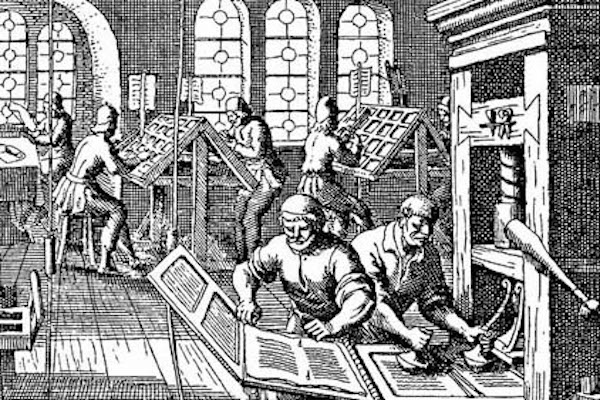
Liberal protestants took advantage of that opening to campaign vigorously, not just for religious reform, but against sin and corruption in society at large, particularly the erosion of traditional economic values. Their powerful condemnations of greedy landlords and merchants circulated both as books and sermons addressed to the wealthy, and as inexpensive pamphlets and broadsides that were sold in city streets.
They don’t seem to have acted as an organized group, but their speeches and writings clearly reveal the presence of a strong current of anti-capitalist opinion in England in the mid-1500s. Because they focused on the common weal–common good–historians have labelled them the commonwealth men.
Cormorants and greedy gulls
R.H. Tawney’s 1926 book Religion and the Rise of Capitalism remains the best account of the complex connections between social and religious criticism in Tudor England.
It was an age in which the popular hatred of the encloser and the engrosser found a natural ally in religious sentiment, schooled, as it was, in a tradition which had taught that the greed of gain was a deadly sin, and that the plea of economic self-interest did not mitigate the verdict, but aggravated the offence.
In England, as on the Continent, doctrinal radicalism marched hand in hand with social conservatism. The most scathing attack on social disorders came, not from the partisans of the old religion, but from divines on the left wing of the Protestant party, who saw in economic individualism but another expression of the laxity and licence which had degraded the purity of religion, and who understood by reformation a return to the moral austerity of the primitive Church, no less than to its government and doctrine.5
Monthly Review Online for more