
by WALDEN BELLO
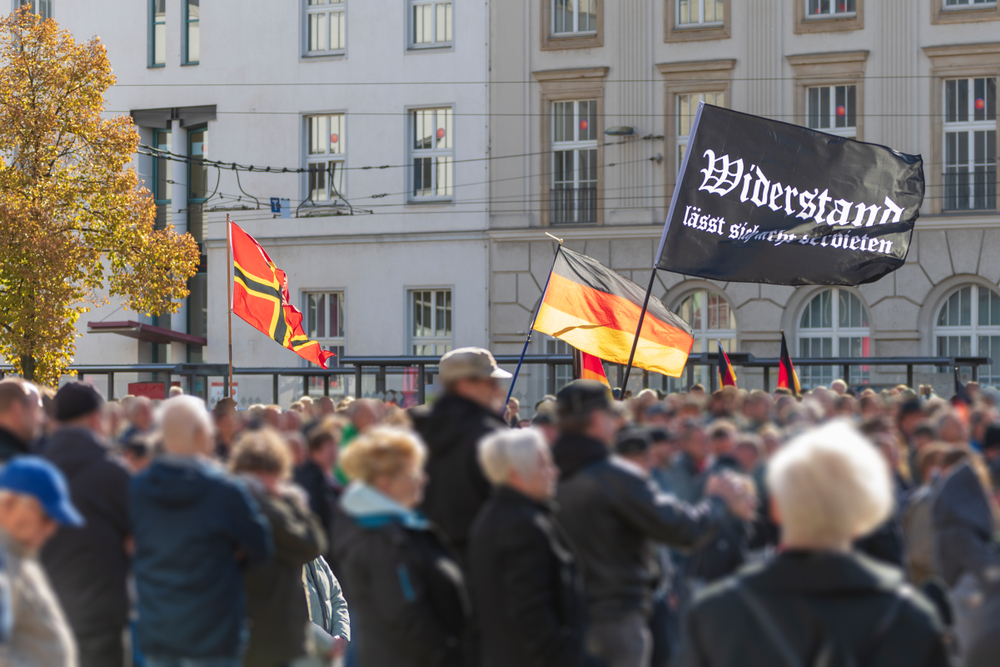
In the world’s largest democracies, far-right movements that embrace violence, reject democracy, and target the vulnerable are on the rise.
The global spread of fascism is real, as real as the spread of COVID-19, and you better believe it.
For purposes of academic analysis, it might be legitimate to distinguish between a “fascist-leaning” movement and a truly fascist one, or a far-right regime and fascist regime, or an authoritarian populist and a fascist. But I am a former member of the Philippine parliament and a street activist. While I have great respect for academics, those of us who operate in the realm of practical politics cannot afford to act as academics.
For me a movement or person must be regarded as fascist when they fuse the following five features: 1) they show a disdain or hatred for democratic principles and procedures; 2) they tolerate or promote violence; 3) they have a heated mass base that supports their anti-democratic thinking and behavior; 4) they scapegoat and support the persecution of certain social groups; and 5) they are led by a charismatic individual who exhibits and normalizes all of the above.
Belittling the Threat
When Mussolini and Hitler were still upstarts fighting to barge into the political mainstream in Italy and Germany, politicians of the left, center, and traditional right dismissed them as oddities who would either disappear or be absorbed into the parliamentary democratic system.
When Donald Trump got elected president of the United States in November 2016, opinion makers — with the exception of a handful, like the progressive filmmaker Michael Moore — were taken by surprise. But most predicted that the office would transform the unpredictable star of reality television into a proper president, one respectful of the customs and traditions of the world’s oldest democracy.
In the Philippines, after warning before our own 2016 elections that Rodrigo Duterte would be “another Marcos,” I wrote two months into Rodrigo Duterte’s presidency that he was a “fascist original.” I was criticized by many opinion-makers, academics, and even progressives for using the “f” word.
How wrong the pundits were in dismissing these personalities as flukes, as they were when it came to others, like Victor Orban in Hungary, Narendra Modi in India, and Jair Bolsonaro in Brazil.
Academics are scornful of what they put down as “loaded terms,” but the consequences of underestimating the threat posed to democracy by fascists are not academic. It would be superfluous to be reminded now of Trump’s almost successful effort to prevent a peaceful transfer of power in the United States by systematically spreading the lie that he lost the elections and instigating a violent insurrection.
But for those who have not followed the career of other persons of interest as closely, let me acquaint you with the highlights of their respective reigns: Five years and over 20,000 extra-judicial executions later, the “f” word is one of the milder terms used for Rodrigo Duterte, with many preferring “mass murderer” or “serial killer.” Modi has made the secular and diverse India of Gandhi and Nehru a thing of the past with his Hindu nationalist project. And Orban and his Fidesz Party have almost completed their neutering of democracy in Hungary.
Democracies in Peril
The United States, India, Brazil, and the Philippines were four of the seven biggest democracies in the world just nine years ago. Today, three of them are led by fascists who are determined to complete their transformation into non-liberal democratic systems. The other barely survived a fascist’s determined effort to hold on to power.
Foreign Policy In Focus for more