
EDITORS, BLACK AGENDA REVIEW
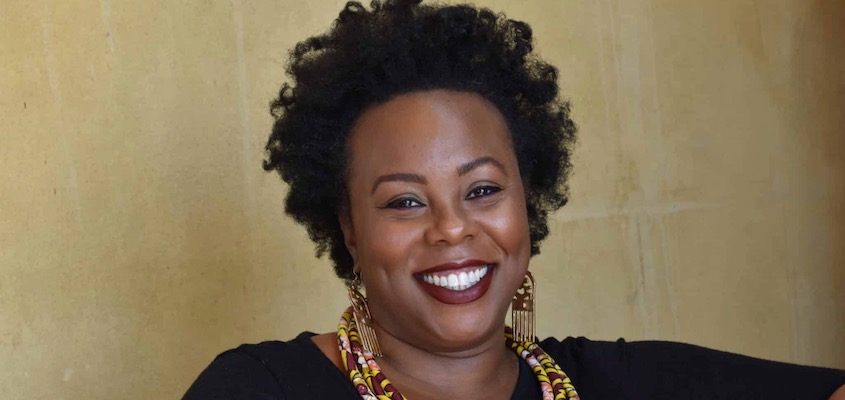
The Review interrogates the thought of academic and activist Layla Brown-Vincent, who says she was “reared and steeped in Pan-Africanist thought and organization” from birth.
For the second post in the Black Citizenship Forum we feature an interview with cultural anthropologist Dr. Layla Brown-Vincent. Brown-Vincent teaches Africana Studies at the University of Massachusetts, Boston. She is completing a manuscript titled Return to the Source: The Dialectics of 21st Century Pan-African Liberation that compares the political strategies of the Movement for Black Lives with those of La Red de Organizaciones Afrovenezolanas (the Afro-Venezuelan Network). For The Black Agenda Review, Brown-Vincent responded directly to the series of questions we sent to contributors for the Forum. Her responses focus on the possibilities of a return to the philosophy and political practice of Pan-Africanism as a model for resolving the limits of Black citizenship and she offers Venezuela as an example of an alternative vision of citizenship for people of African descent.
From your location, what do you see as the primary and most urgent issues concerning Black people’s relation to the nation-state? How does Black people’s relation to the nation-state shape the experience and conditions of Black citizenship?
As a Pan-Africanist, reared in the intellectual traditions of the All African People’s Revolutionary Party – GC , I follow the ideological teachings of Kwame Osagefayo Nkrumah, Sekou Toure, and Kwame Ture. They promote the fundamental political objective of a United States of Africa under Scientific Socialism . That Black/African people—whether located on the African continent or in the African diaspora—continue to seek belonging in a supra-national political community, however imagined, is a testament to the limiting and contentious relationship they have to their supposed national citizenship.
If I were to limit my answer to this question to Black/African people’s relationship with the U.S. nation-state, particularly in the wake of this past summer’s global uprisings and the most recent national elections, I would have to say that the masses of Black/African peoples continue to experience second-class citizenship—or 21st century slavery, as Malcolm X might characterize it. If we understand citizenship as full and equal membership in a given polity, we can clearly see that the Black/African masses do not exist on full and equal footing with the non-Black/African masses in this country. I find the US political system to be fundamentally undemocratic, corrupt, and morally bankrupt, and therefore do not personally view voting in the U.S. context as a worthwhile endeavor. However, if voting is a right supposedly guaranteed to U.S. citizens, the miseducation, voter intimidation, and voter suppression in this most recent election alone reveals the bankruptcy of Black/African citizenship in the United States.
“I find the US political system to be fundamentally undemocratic, corrupt, and morally bankrupt.”
I am also not sure that we, as Black/African peoples in the United States, can have a robust, imaginative, and ethical conversation about the state of our citizenship without being in dialogue with the Indigenous peoples of this land. I think that far too often we are seduced by ideas like the so-called “Black Belt Thesis ,” as well as those assertions of a fundamental claim or right to citizenship in the US. I would never deny the forced role we had in building this country, a role which certainly entitles us to the same rights as our white settler-colonial counterparts. However, we need to make a continuous and vigorous political commitment to having this conversation about Black citizenship in the US with our Indigenous siblings. If we do not, we risk becoming complicit in perpetuating the same ills upon Indigenous peoples that white settlers have perpetuated for nearly five hundred years.
Black Agenda Report for more