
by PRABHAT PATNAIK
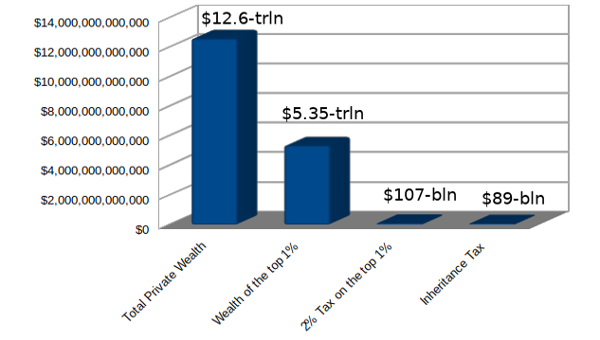
It is often believed that the ability to pass on property to one’s progeny is an essential element of capitalism, without which the capitalists’ incentives will dry up and the system will lose its dynamism. Nothing could be further from the truth; the acquisition of property through inheritance is, in fact, contrary to the bourgeois justification for acquiring the capitalist property.
This justification is built on the claim that the capitalists have some special quality that is rare, whose employment makes the nation prosperous and for which they must be rewarded. But there is no unanimity among the bourgeois on what exactly this special quality is.
This quality cannot consist of supervising the process of production, for such supervision is typically exercised by salaried personnel who are at best superior workers; they get a salary and not profits (unless they also happen to own some property in the form of shares). It is in recognition of this fact that economist and diplomat John Kenneth Galbraith had talked about firms being run not by the capitalists but by what he called the “technostructure,” in his book The New Industrial State.
This special quality also cannot be what economist John Maynard Keynes had called “animal spirits.” The strength of the “animal spirits” may determine, as Keynes had believed, the amount of investment, but it cannot explain the very existence of capitalists’ income, and, hence, property.
‘Risk-Takers’ and Rescuers
Even the other justifications for capitalists’ income and property lack credibility. One such justification refers to capitalists’ being ‘risk-takers’. However, the risks are taken not by the capitalists but by those whose funds are entrusted to them through the intermediation of banks for undertaking projects; if a venture collapses then it is the latter whose funds disappear.
Socialist Project for more