
by WILLIAM COSTA with photos by MAYELI VILLALBA
As the heat of another hot day of the unpredictable Paraguayan winter subsides, groups of women and girls in long, multicoloured skirts emerge into the open spaces of the Maká Indigenous community known as Nueva Colonia, in the city of Mariano Roque Alonso, just outside the Paraguayan capital Asunción.
The characteristically bright garments of Maká women have long been a commonplace sight in Asunción, as they sell a variety of intricate craftworks to passers-by on busy streets and at the city’s bus station. However, over recent months—like so much else—Maká women have been noticeably missing from the capital.
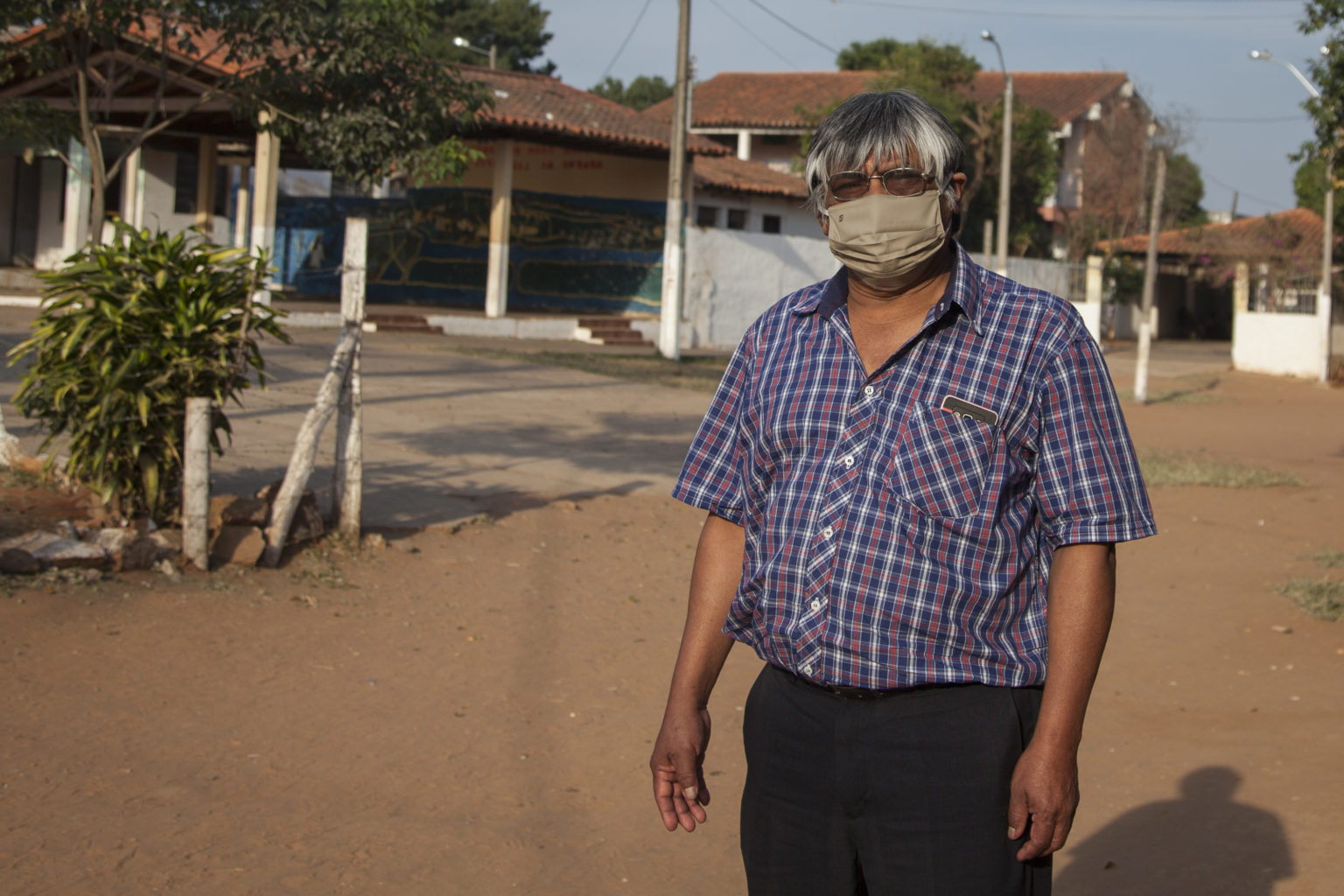
“It’s been very difficult—we Maká haven’t been able to go anywhere for six months,” said community leader Mateo Martínez, as he sat outside Nueva Colonia’s community centre, his silver hair framing glasses and a facemask. “Our only income comes from selling our crafts.”
Most of the Maká’s main area of land, located opposite Asunción on the western bank of the River Paraguay, is illegally occupied, according to Martínez. More than half of the country’s roughly Indigenous 500 communities face landlessness or land-claim issues after seeing their territories illegally appropriated by both public and private concerns.
In March, the Paraguayan government began to implement strict measures to combat COVID-19 transmission after just the second confirmed case of the illness in the country. Soon after, a total lockdown was called, confining citizens to their homes for over two months. While this rapid reaction achieved some of the lowest levels of infection in Latin America for a time, the socioeconomic fallout has been enormous.
In a country where 65 per cent of the population lives day-to-day through informal employment outside the tax system, restrictions on movement have not been accompanied by support packages capable of meeting the needs of those forced to stop working. With police violence recorded towards people found on the streets during lockdown, many, including the Maká, had no choice but joblessness and scarcity.
Easing of official restrictions over recent months has allowed for gradual reactivation of certain sectors of the economy. As elsewhere, this has also coincided with an ongoing steep rise in numbers of COVID-19 cases. In this context of deterioration, members of vulnerable groups find that, on top of a lack of work, food and basic services, they now have the very real worry of being met with a greatly underequipped health public system if they get sick.
Communal efforts to provide food have been notable throughout the pandemic: hundreds of emergency communal kitchens run through mutual-aid and donations have appeared across Paraguay. However, these initiatives have only been able to go so far in guaranteeing wellbeing and fulfilment of rights. The 117,000 people that self-identify as members of one of 20 Indigenous nations in Paraguay represent around two per cent of the total population of 7 million. They are perhaps the most vulnerable of all due to a multitude of long-standing injustices that continue to deny them access to land and basic rights.
Hunger in the communities
Martínez said that lockdown and subsequent measures have produced a sudden, community-wide disappearance of income from craft sales that has greatly affected possibilities of guaranteeing access to food. He said the Maká in Mariano Roque Alonso are relying on a mixture of communal efforts to pool food costs alongside donations received from individuals and social organizations. Help from the state—including the Paraguayan Indigenous Institute (INDI), the body responsible for supporting the interests of Indigenous people—has been conspicuously absent.
Toward Freedom for more