
by AAKAR PATEL
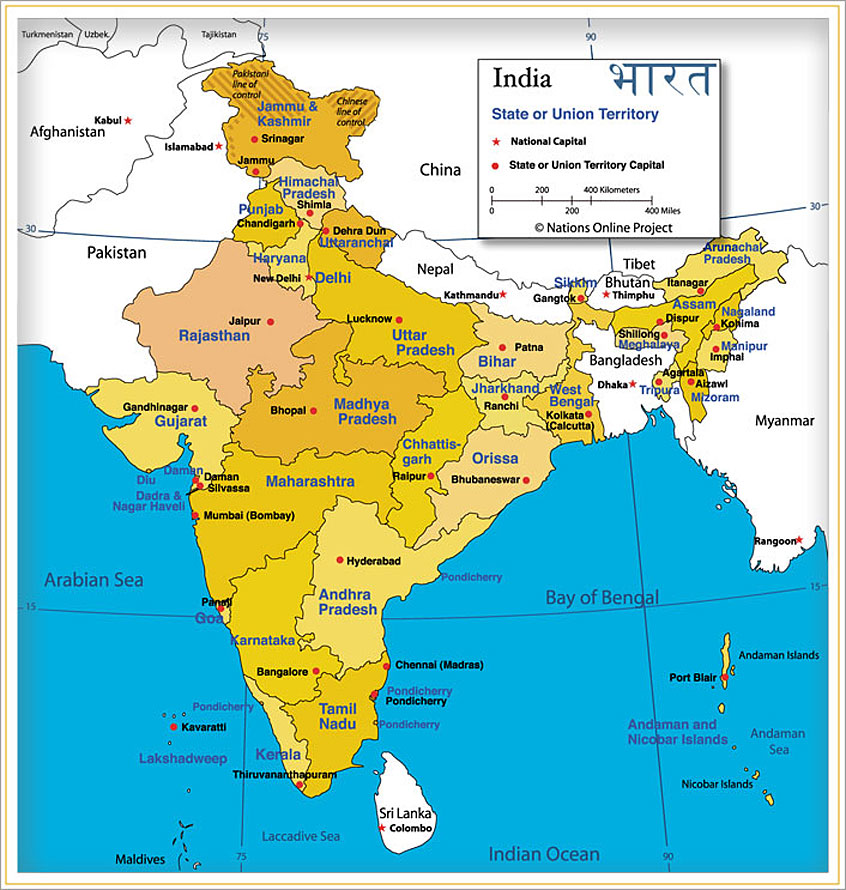 MAP/Nations Online
We are often told that India had a golden age economically. A time when the subcontinent had a large share of the world’s economy. Perhaps, as much as 20% or 25% of the share of the world’s GDP as opposed to the under 3% that we have today. Can we achieve this again? And if so what will it take?
Let’s have a look at what sort of countries have become great powers over the ages so that we understand what is needed for India. The first great power was Persia 2,500 years ago, and it had the capacity and the expertise to exert its influence globally. This is the definition of great power. The Parsi kings of Persia ruled an empire from Kandahar to Turkey. The historian Herodotus records that at the Battle of Plataea in 479 BC, the Parsi king Xerxes led an army to Greece which included Indian mercenaries, probably from Punjab.
The Persian king was always referred to as ‘Great’ (Megas) by the ancient Greeks in their literature. The second great power of the world was Alexander the Great. The Macedonian warrior is not called ‘Great’ because of his achievements. He is called that because he defeated Darius the Great and took the title from him.
The third power was the Roman empire, which expanded first to take all of Italy and then France, Spain and most of Europe and also as far east as Palestine. Julius Caesar took the Roman legions into Britain (and London is from that time) but Rome was not a naval power. The Muslims who were the fourth major global power were consisted of many nations. The Arabs conquered North Africa (which is why Egyptians speak Arabic) and some of Spain but the truly strong Muslim powers were Turks, Persians, the Central Asians and the Afghans.
The Muslim states were also not naval powers. In fact, the European powers had great influence even when Aurangzeb dominated all of north India. This was because the royals needed to sail to Mecca (Makkah) for Hajj and the Europeans controlled the waters.
The 15th century saw the rise of the colonial powers, Spain, Portugal, England, the Dutch and France. What is common to them? They are all on the Atlantic, which is a rough ocean. Sailing across it required strong and large ships, powered by sails made of high quality fabric. Only the nations on its coast developed this expertise. Because the ships were large, they were able to carry many powerful and heavy cannon. This is why these nations were able to sail across and colonise the Americas and why Germany, Russia, Italy and other major European nations, which are not on the Atlantic, did not become big colonial powers.
Express Tribune for more