
by THARANGA YAKUPITIYAGE
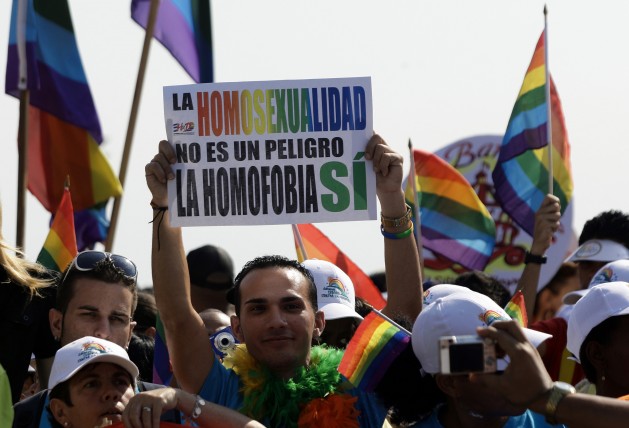 LGBT organisations have been excluded from an upcoming UN HIV meeting PHOTO/Jorge Luis Baños/IPS
Treatment for HIV and AIDS has increased, but key populations including lesbian, gay, bisexual and transgender (LGBT) communities continue to be left behind and even excluded altogether.
In a new report, published ahead of the upcoming High-Level Meeting on Ending AIDS, the Joint UN Programme on HIV/AIDS (UNAIDS) found immense gains in access to antiretroviral therapy (ART) across 160 countries.
However, UNAIDS noted that HIV reduction and prevention efforts must be scaled up since many so-called key groups such as LGBT communities are still not being reached.
In North America and central and western Europe, gay men and other men who have sex with men account for almost 50 percent of all new HIV infections. In Latin America and the Caribbean, the rate is approximately 30 percent.
HIV and AIDS also disproportionately affect transgender women. According to the International Reference Group on Transgender Women and HIV/AIDS (IRGT), 19 percent of all transgender women are living with HIV. Transgender women are also 49 times more likely to acquire HIV than non-transgender adults.
LGBT individuals also often face “violent stigma, discrimination and social exclusion” limiting their access to essential HIV services, Shannon Kowalski, the International Women’s Health Coalition’s (IWHC) Director of Advocacy and Policy told IPS.
The persistent exclusion of LGBT communities in HIV responses globally has recently resurfaced at the United Nations.
Russia along with the Organisation of Islamic Cooperation (OIC), a bloc of 57 states including Saudi Arabia and Egypt, banned 11 LGBT organisations from attending the High-Level Meeting on Ending AIDS which is set to take place in New York on 8-10 June.
“We were outraged about the exclusion of LGBT organisations and particularly the exclusion of trans organisations and our allies,” said Co-Director of Global Action for Trans* Equality (GATE) and IRGT Mauro Cabral to IPS.
He added that the exclusion of transgender participants is to “condemn us, to leave us in silence.”
GATE is among the organisations that were blocked from attending the meeting.
Kowalski echoed similar sentiments, saying that the action was “extremely disappointing.”
“It really seems like a brazen attempt to deny reality,” she continued.
Chief Executive Officer (CEO) of Pangaea, a non-profit HIV agency, Ben Plumley noted that their particular concern is with the General Assembly (GA) allowing themselves the right to exclude any civil society group from any country, anonymously and without giving reason.
“This was a tragic, retrograde step. And sets a disturbing precedent,” he told IPS.
IWHC and Pangaea is among a group of civil society organisations that sent a joint letter to the UN GA President Mogens Lykketoft which expressed their “profound outrage” at the move.
Inter Press Service for more