
by DOUGLAS ENAA GREENE
 IMAGE/Amazon
Rosa Luxemburg once said that Bolshevism is nothing more than the “mechanical transposition of the organizational principles of Blanquism into the mass movement of the socialist working class.”[2] Many leftists, both now and a century ago, share Luxemburg’s position that Leninism is elitist and/or Blanquism. Yet all of these judgments are far off the mark. For Lenin, Blanquism was something that the communist movement needed to overcome if they wanted to win a successful socialist revolution. Leninism is not simply Blanquism or Jacobinism adapted to Russian conditions, but the development of a Marxist mode of politics that draws clear revolutionary lessons from the defeat of the Paris Commune. The central operator of the Leninist mode of politics is a revolutionary vanguard party devoted to the emancipation of the oppressed workers and peasants. However, there remains a grain of truth in the accusation that Leninism is Blanquist, since “Blanquism” is a label used by social democrats and revisionists to condemn the revolutionary essence of Marxism
I. Blanquism
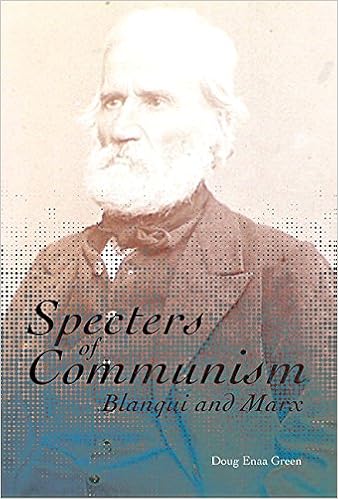
To begin, what exactly is Blanquism? The central figure of the movement was Louis-Auguste Blanqui (1805-1881) – the consummate professional revolutionary and man of action. He was one of the loudest and most uncompromising voices in nineteenth century France preaching class war and the violent overthrow of capitalism. And he meant it. From 1830 to 1870, he organized innumerable secret societies and participated in at least five revolutions to bring about the advent of communism. Yet the only method of action open to Blanqui was an elite and tight-knit conspiracy that would strike capital at the appointed hour to bring about communism. Each time he failed. And he paid the price for those failures by spending more than three decades in prison. Blanqui’s eagerness to rush into revolutionary battle caused him to act before the time was right. In 1848 and 1870, premature action had led him to be locked up right before the June Days and the Paris Commune (arguably two events where he could have provided the leadership necessary for victory).
Blanqui did not see the need for theory to grasp the inner dynamics of capitalism nor did he appreciate the possibilities open to mass independent political action by the working class to bring about revolutionary social change (most clearly manifested in the Paris Commune). It would be Marxism that would develop the necessary theory of capitalist dynamics and grasp the centrality of mass politics. Ultimately, Marxism would supplant Blanquism in the aftermath of the Paris Commune in new mass socialist parties.
II. The Paris Commune