
by RUSSELL NEWLOVE
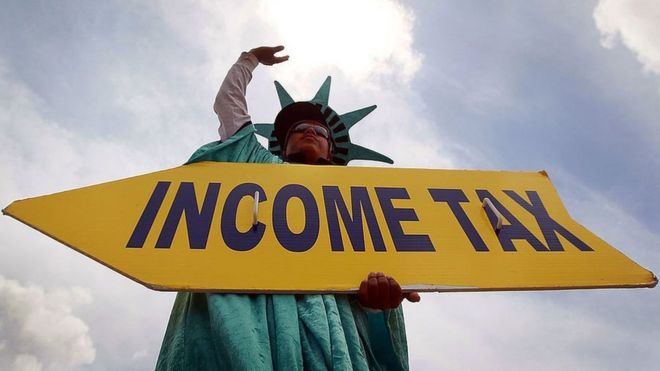 As an America citizen you must file a US tax return no matter where in the world you live
How does it feel to give up your nationality, to renounce the country you were born in, potentially forfeiting the chance to ever return?
“It’s not going to be easy at all. It’s the last thing I ever thought of doing,” Jane tells me when I meet her in a Paris cafe.
Her voice cracks and her eyes well up. She is in the process of relinquishing her American nationality. Soon she’ll visit the US embassy formally to renounce her citizenship, she says, under duress.
“I’m very proud of being an American. It’s what I am when I look in the mirror.
“If it weren’t for Fatca [the Foreign Account Tax Compliance Act] and the decision by the bank, I’d never be doing this. Never ever. It’s just breaking me in half.”
She’s not alone. According to the US Treasury, a record 4,279 individuals renounced their US citizenship or long-term residency in 2015 – an increase of 20% on the previous year, which was itself a record-breaking year.
In 2010, just 1,006 gave up being US citizens, but since then the numbers have risen every year.
…
The United States is one of only two countries in the world that has citizenship-based taxation (the other is Eritrea).
As a US citizen you must file a tax return, no matter where you live, and often pay US taxes on top of the tax you already pay in your country of residence – so-called double taxation.
This has been the case in the US since the Civil War in the 19th Century and until recently really only affected the rich. Americans abroad are given a yearly allowance of $106,000 (£73,000) before double taxation kicks in.
But Fatca expands the scope of what can be taxed, and places a burden on foreign banks to identify US citizens among their customers to US tax authorities. The penalty for failing to do so can be as high as 30% of all a bank’s dealings with the USA.
Refused banking
As a result, ordinary Americans abroad are being denied access to basic banking facilities; banks would rather refuse US citizens’ custom than run the risk of hefty penalties.
“I went to one and as soon as I typed in I was born in the United States, there was a big set of red letters that said ‘No to US persons’,” says Jane.
“I’ve got to pay my bills, I’ve got to buy food – I’ve got to have a bank.”
For people like her the only option is to renounce their citizenship, and this is causing such a backlog of paperwork that in November, the fee for renunciation was put up to $2,350 – an increase of about 400%.
BBC for more