
by CARMEN WINANT
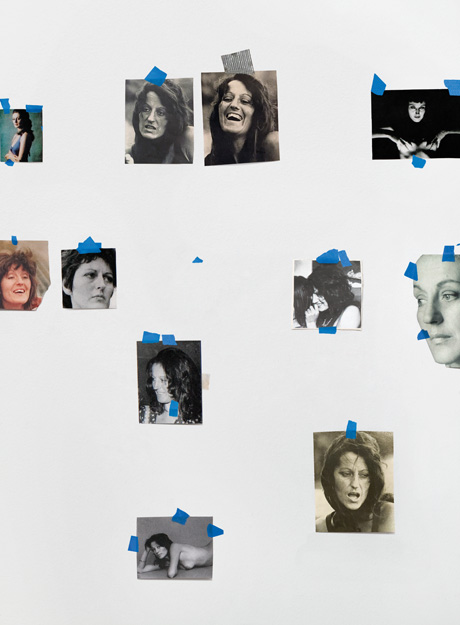 The multifaceted Germaine Greer. Studio collages by Carmen Winant, 2015.
One great thing about the feminist revolution of the 1960s and 1970s was its ability to make a scene. Take the unforgettable “Dialogue on Women’s Liberation,” a panel that took place in New York City in 1971 in which four female delegates were tapped to speak in a discussion moderated by Norman Mailer, who had just published the decidedly un-feminist The Prisoner of Sex. Billed as a dialogue, the result—documented in filmmaker D. A. Pennebaker’s Town Bloody Hall—more closely resembled a riot. The teeming crowd became unruly even before the event had started, with one heckler yelling out above the din, “Women’s lib betrays the poor! Norman Mailer betrays the poor!” The audience, which included Betty Friedan and a soft-spoken Susan Sontag, came to hear about the burgeoning revolution. They came to see Mailer publicly attack, and be attacked by, the women’s libbers about the politics of sex. But most of all, they came to see Germaine Greer.
She was something to be seen: clad in a black fur jacket and a glamorous floor-length sleeveless dress, the thirty-two-year-old Greer was six feet tall, angular verging on bony, and in possession of a thick crown of frizzed-out black hair. Her style on stage was less performance than poised seduction. Despite her languid manner, which noticeably awed the other panelists, Greer’s responses to both Mailer and the audience were so razor sharp it’s hard to believe they were delivered extempore. At one point, Greer chastens a man who inquires what he might expect of sex in the feminist age, what women are “asking for,” by responding without hesitation (and more than a little unkindly), “You might as well relax. Whatever it is they’re asking for, honey, it’s not for you.” Unabashed and wildly charismatic, Greer was the most important feminist in the world. Today, few remember her name.
Cabinet for more