
by A. D. MCKENZIE
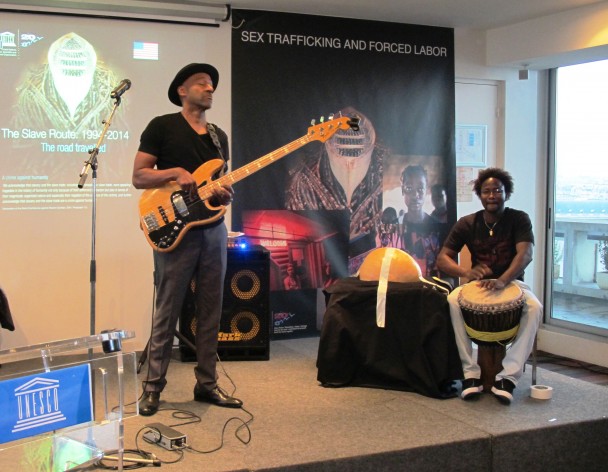 Jazz musician Marcus Miller (left), spokesman for the Slave Route Project, is using music to help educate people about slavery. PHOTO/A.D. McKenzie/IPS
The Oscar-winning film 12 Years a Slave opened many people’s eyes to the barbarity of slavery and fuelled some discussion about that period in world history. But the film is just one of the many initiatives to “break the silence” around the 400 years of the transatlantic slave trade and to “shed light” on its lasting historical consequences.
One of these – the Slave Route Project – which observed its 20th anniversary this month in Paris is pushing for greater education about slavery and the slave trade in schools around the world.
According to Ali Moussa Iye, chief of the History and Memory for Dialogue Section of UNESCO, the United Nations cultural agency, who directs the organisation’s Slave Route Project, “the least the international community can do is to put this history into the textbooks. You can’t deny this history to those who suffered and continue to experience the consequences of slavery.”
The Project is one of the forces behind a permanent memorial to slavery that is being constructed at UN headquarters in New York, scheduled to be completed in March 2015 and meant to honour the millions of victims of the traffic in humans.
UNESCO is also involved in the UN’s International Decade for People of African Descent (2015-2024), which is aimed at recognising people of African descent as a distinct group and at “addressing the historical and continuing violations of their rights”. The Decade will officially be launched in January next year.
Inter Press Service for more