
WORLD SOCIALIST WEB SITE
50 years ago: Kenya gains independence
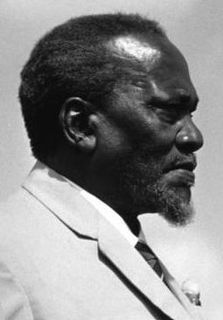 Jomo Kenyatta, Kenya’s first president after it gained independence from Britain.
On December 12, 1963, the independence of Kenya from Great Britain was celebrated in the former colonial capital of Nairobi. One of the prominent figures of the African independence struggle, Jomo Kenyatta, was declared president. It was the final British possession in East Africa to gain independence. Like much of the rest of “independent” Africa, the new nation, roughly the size of Texas and with a population of 8,363,000 people, faced immense challenges for which the bourgeois nationalism of Kenyatta had no solution.
Kenyatta had been imprisoned for seven years, until 1959, for his alleged role in the Mau Mau uprising that had targeted white settlers and colonial authority. In the early 1930s he had flirted with Stalinism, studying at the Peoples of the East University in Moscow. After returning to London he established himself as a prominent figure among a group of radical pan-Africanists led by George Padmore.
But as the new president of his homeland, Kenyatta celebrated independence alongside Prince Philip, husband of Queen Elizabeth, and signed a series of loan agreements with Western powers and banks tightening, not lessening, the dominance of Western imperialism over a nation in which three-quarters of the population still lived in mud huts and 93 percent subsisted outside of the cash economy.
100 years ago: Rebels attack Tampico in Mexican revolution
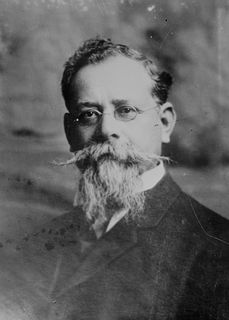 Mexican President Venustiano Carranza (1914-1920)
On December 10, 1913, rebels attacked Tampico in the Huasteca region that includes the southern part of Tamaulipas state and the northern part of Veracruz state. Tampico was besieged by fighting for four days by Constitutionalist forces supporting Venustiano Carranza in opposition to the government of Victoriano Huerta.
Tampico was of particular significance to European, especially British interests. In 1910 British investor Weetman Pearson’s Mexican Eagle Oil Company struck oil near Tampico, with a well that flowed at a rate of 100,000 barrels per day and provided 75 percent of Britain’s oil requirements. In 1913 the company, whose board members included former president Porfirio Diaz’s son and the finance minister, was among the 30 largest in the world. American Edward L. Doheny’s wells in the Huasteca Petroleum Company south of Tampico were also enormously productive.
With the tacit support of Pearson, Huerta had instigated the overthrow of President Madero, whose revolution, according to US ambassador Henry Lane Wilson, had been backed by US oil interests while British oil interests “were behind” Huerta. Madero and his vice-president were murdered on February 1913 on Huerta’s orders.