
by EMILY ACHTENBERG
 CREDIT/World Resources Institute
In Ecuador, an historic environmental initiative to save the Yasuní rainforest and a landmark class action lawsuit against the Chevron Oil Company for environmental damages recently found their fates potentially intertwined.
In early December, the Ecuadoran government announced that its initial $100 million goal for the Yasuní project had been met. Under a novel scheme launched by leftist president Rafael Correa in 2007, the government has pledged to leave close to a billion barrels of crude under the ground indefinitely in this Amazonian paradise, in exchange for receiving $3.6 billion—50% of the oil’s market value—from wealthy nations and corporations. The donated funds, to be held in trust by the United Nations Development Program (UNDP) and fully contributed by 2024, will be earmarked for renewable energy and sustainable development initiatives, as well as social programs in Ecuador’s impoverished Amazon region.
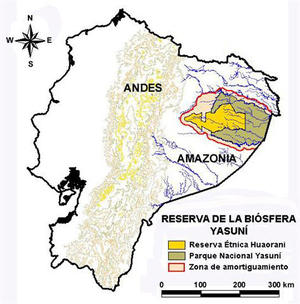
Located at the intersection of the Amazon rainforest, the Andean mountains, and the equator, the 3,800 square mile Yasuní National Park is one of the world’s most biodiverse regions. A designated World Biosphere Reserve, it is also home to two native communities living in voluntary isolation.
In addition to preserving unique flora, fauna, and indigenous cultures, saving Yasuní will prevent the release of some 400 million metric tons of carbon dioxide into the atmosphere. According to the government, the Yasuní initiative represents a “paradigm change towards a post-fossil fuel model of development,” which will help Ecuador transition from an extractive economy based on oil exports to a new strategy based on sustainability.