
by MASOOD LOHAR
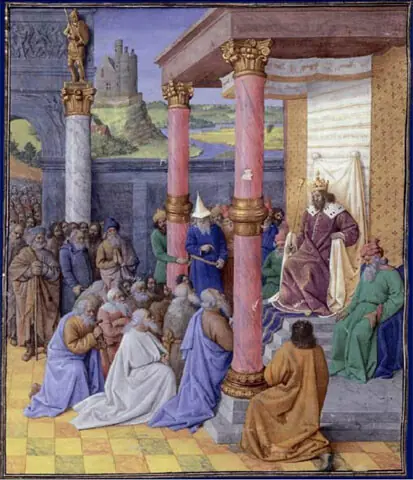
When Babylon fell to the armies of Cyrus the Great in 539 BCE, the world witnessed not just the collapse of an empire but the birth of a new vision of rule.
For the Jews exiled in Babylon, this Persian conqueror was no ordinary king. He was a liberator, remembered in scripture as “the Lord’s anointed” — the only non-Jew ever to be given the title of Messiah in the Hebrew Bible.
This remarkable episode — where a Persian monarch enabled the rebuilding of the Jewish Temple in Jerusalem — remains one of history’s most fascinating encounters between two ancient civilisations. It is a story of exile and return, of empire and faith, and of how tolerance can shape legacies that endure for millennia.
The Exile and the Promise of Return
The Jews had been living under the shadow of Babylonian captivity since 586 BCE, when King Nebuchadnezzar destroyed the First Temple [Solomon’s Temple] in Jerusalem and deported thousands to Babylon. For decades, their identity was tested in foreign lands, their rituals suppressed, their hopes dimmed.
When Cyrus the Great defeated Babylon, he handed the exiled Jews something they had not had in decades…
Then came Cyrus. In a sweeping campaign, he conquered Babylon and issued a decree that allowed displaced peoples — including the Jews — to return to their homelands. For the Jewish community, this was nothing short of miraculous. The Book of Ezra records his edict: “The Lord, the God of heaven, has given me all the kingdoms of the earth… and he has appointed me to build a temple for him at Jerusalem in Judah.”
A King Unlike Others
What made Cyrus different from other conquerors? Unlike rulers who sought to erase local traditions, Cyrus embraced diversity. His empire stretched across vast lands, yet he allowed subject peoples to worship freely and govern themselves in matters of faith.
The famous Cyrus Cylinder, an ancient clay cylinder inscribed in Akkadian cuneiform and discovered in Babylon, describes his policy of restoring temples and returning exiled communities — a vision of rule that resonates with modern ideas of human rights.
For the Jews, Cyrus was not just a political figure but a spiritual saviour. The prophet Isaiah even described him as chosen by God to deliver Israel. This intertwining of Persian statecraft and Jewish theology created a bond that shaped both traditions.
Dawn for more