
by SAHAR KHAN & DAVID VINE
Amid a seeming flood of terrible news, the string of countries that last week refused President Donald Trump’s request to help patrol the Strait of Hormuz is an encouraging sign. For the first three weeks of a war that many experts have characterized as illegal under both U.S. and international law, Spain was initially the rare country to stand up to Trump by refusing to allow the use of U.S. bases it hosts for attacks on Iran. Spanish Prime Minister Pedro Sanchez described the war as “reckless and illegal,” and continues to stand his ground.
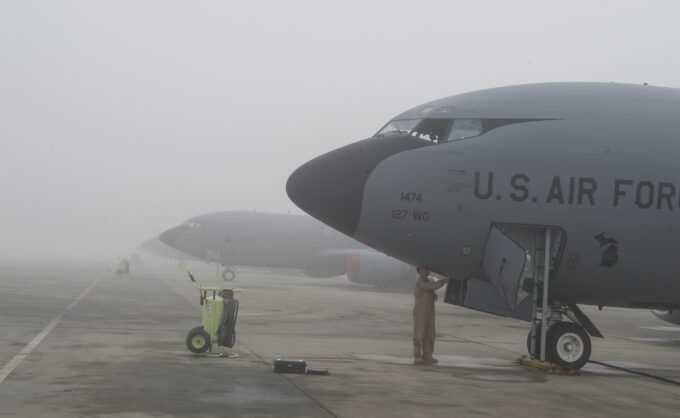
Despite widespread global opposition to the attacks, the U.S. can wage the war in part because of its vast network of military bases in the Middle East, Europe, and beyond. Two U.S./Spanish bases in southern Spain are longstanding logistics hubs that have provided U.S. forces access to the Mediterranean Sea to launch military operations into Africa and the Middle East, including the 2003 U.S.-led war on Iraq. While Spain has said “no” to the U.S. using its bases in a new Middle East war, more than a dozen countries have allowed the use of U.S. installations on their soil as part of the conflict.
Given the role these bases are playing in enabling the fighting, host countries share responsibility for the war, along with the U.S. and Israeli governments. Which means they share some responsibility for the war’s killing and injury, displacement and destruction, for violations of international law, and for any potential war crimes, such as the killing of at least 165 civilians at the Minab girls school.
The Spanish government and others hosting U.S. bases during prior conflicts have shown there is another path by refusing to support war. Countries hosting U.S. bases should be emboldened by governments refusing to assist in patrolling the Strait of Hormuz. They can and must put a stop to the U.S. government using their territory to support any aspect of this war other that any legitimate defense of their citizens. They can go further to pressure President Donald Trump to stop the fighting, which has already caused so much harm and risks spiraling out of control into complete global economic calamity and a regional (or even world) war that could significantly eclipse the damage of past conflicts in the Middle East.
The Infrastructure for War
Military bases, by design, provide infrastructure for war, not peace. The reason the Iranian military has attacked many of its neighbors is that they host U.S. bases, which are launching and supporting the planes and ships bombing Iran, and providing surveillance, communications, and logistical support to sustain the war.
Counterpunch for more