
by TABISH KHAIR
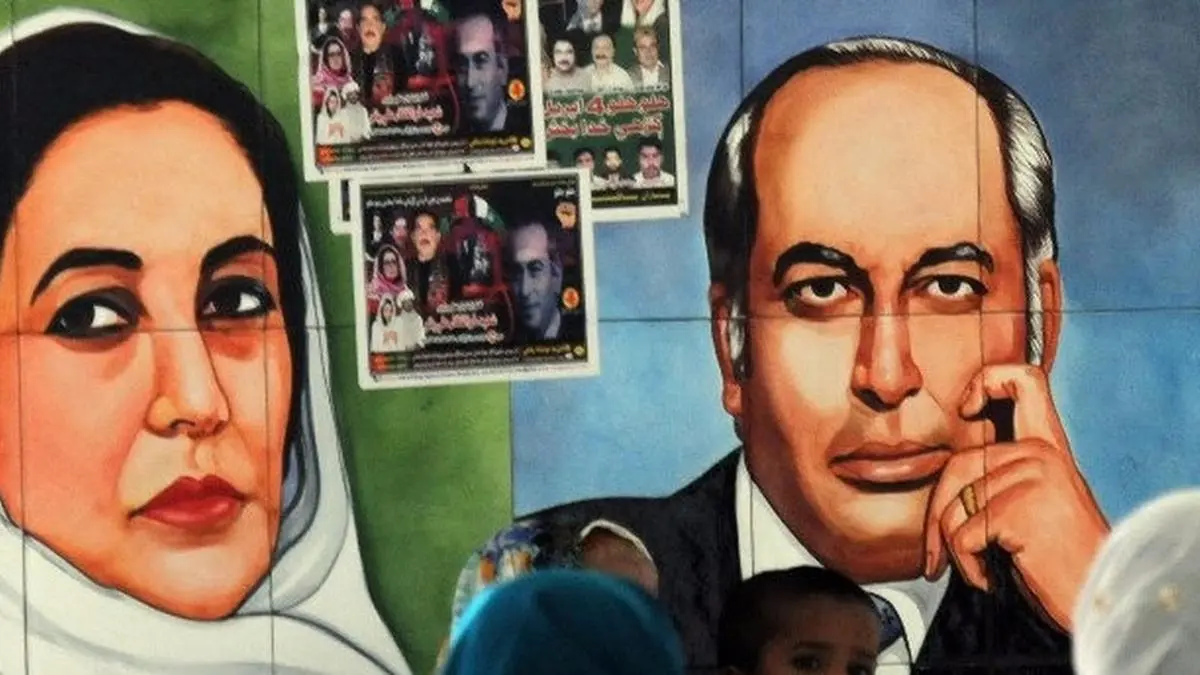
Mohammed Hanif’s hilarious page-turner is a witch’s cauldron of bubbling satire in which no one is spared.
I would call it “westsplaining”, if Putin supporters had not already appropriated that term, but then how else can you describe the tendency among Western critics to bundle Mohammed Hanif together with Salman Rushdie? True, there is this nebulous Pakistani-British connection, and both the novelists tend to be caustic about state power and established religion. But Rushdie belongs in the ranks of magic realism, whether or not he accepts the designation, and Hanif is a satirist whose novels can more accurately be placed within the long lineage that is epitomised by Joseph Heller’s Catch-22.
Essentially, such novels do not present an admixture of the fantastic and the realistic, as magic realism does, but something different: an exaggerated, slightly warped version of realistic characters and historical situations. This enables them to say things about “the world out there” that would be difficult otherwise, and to do so at a brisk and captivating pace of narration. Hanif’s new novel Rebel English Academy is an excellent example of this novelistic tradition. Maybe one should call it warp realism?
The novel starts with the hanging of Pakistan’s first democratically elected Prime Minister, Zulfikar Ali Bhutto, and an intelligence officer, Captain Gul, sent to organise photos of the dead man’s private parts in order to prove that he was not circumcised. Gul’s failure to produce any such evidence gets him banished to OK Town, a provincial outback where the dashing and ambitious officer doesn’t easily get the whiskey and the women he is used to.
In OK Town, we meet the owner of the Rebel English Academy, known as Sir Baghi, a reluctant queer whose old socialist aspirations have transformed—after a brutal encounter with the Bhutto regime—into the infusion of English literature, with its hopefully subversive potential, into local boys and girls competing solely for petty government jobs.
One of his students who has actually made it is the local police officer, A.D. Malang, whose dramatised respect for his ex-tutor would warm the cockles of the hearts of all adherents of the powerful guru-sishya brigade in India as well. Sir Baghi’s “academy”, which is also his living quarters, is situated in a commercial complex built around the local mosque, which is run by his cousin, known to him as Molly. Molly is a devout Muslim; he is also a man who believes that God tempts those he really loves.
Molly’s temptation is Sabiha Banu, the athletic daughter of a trade unionist whose locally renowned photograph with Bhutto has, in these post-Bhutto times, resulted in his incarceration and disappearance. When Sabiha is brought by Molly for refuge in Sir Baghi’s academy, the cauldron is set boiling. Add to it Captain Gul’s affair with his commanding officer’s imperious daughter, who claims pregnancy without having sex with him, and his infatuation with the doughty Sabiha, and a few other believable but often larger-than-life characters, such as the beedi-smoking lawyer-palmist Noor Nabi, throw in the mystery of rumours that Bhutto is alive and coming any day to OK Town, and we have a witch’s cauldron of bubbling, captivating, hilarious satire in which no one, not even Sir Baghi, is finally spared.
The characters of OK Town
Hanif has an eye for situations and characters, and he warps them just a bit to bring out those aspects that defenders of “real life” often want us to overlook: the hypocrisy, the contradictions, the cant, and the injustice of it all. All of it is given to us with a combination of dark humour and occasional slapstick, and in a language that contains various registers but never loses its essentially satiric bite.
Here is one of Captain Gul’s women finally giving him the true report on his much-vaunted prowess as a lover: “What was I supposed to say? You gave me statistics about the Bengal famine to divert attention from the fact that you couldn’t get it up. You called my vagina the Bermuda Triangle and then spent all our time together lecturing me about the mysteries of the Bermuda Triangle. When you did finally get an erection in the morning, you couldn’t find the Bermuda Triangle.” The novel maintains this brisk and slightly risqué pace throughout its 315 pages.
Frontline for more