
The US and Israel struck Iran despite headway in negotiations. What is the endgame here?
by AYESHA MALIK
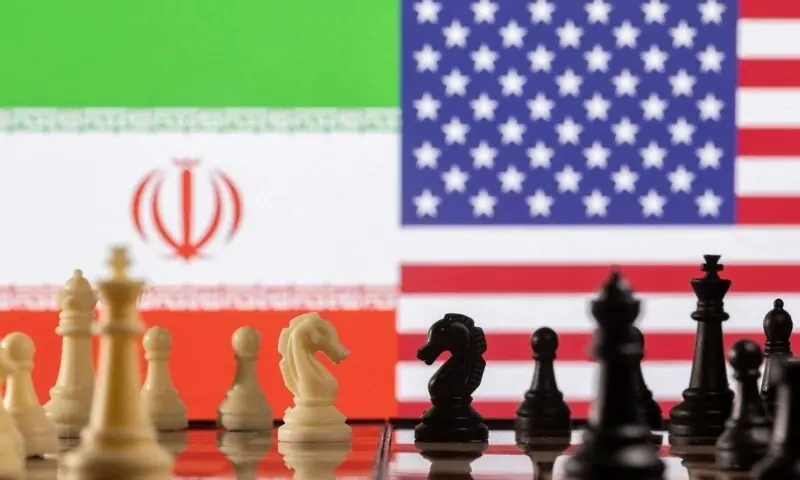
As it is with most asymmetric conflicts, Iran wins if it doesn’t lose, and the US loses if it doesn’t win.
On the international chessboard, no piece can move as freely as the United States. It moves vertically, horizontally and diagonally, across any number of squares. Regime change in Venezuela, blockades on Cuba, strikes on Iran, all within a few months. It can move north, east, south and west.
And Iran? Iran is the opposing king trapped in a corner by not only the king and rook (Israel), but also its own pawns — the many factions inside Iran that the Israelis have been funding to rise up against it. A war against it from abroad and at home.
In refusing to capitulate, the Iranians have decided they would rather die on their feet than be checkmated on their knees in front of their rivals.
The opening gambit
By the day prior to the strikes, the US had at least 50 per cent of its deployable air power around the Middle East poised to attack Iran, including more than 250 combat aircraft. As Professor Pape from the University of Chicago notes, the US had never deployed this much force against a potential enemy and not launched strikes.
All the while, the Iranians were making significant concessions to the US, including importantly that they would even allow American inspectors into the country for verification on their nuclear programme. Trump’s Special Envoy Steve Witkoff remarked that Trump was surprised that the Iranians were not completely capitulating with this much firepower at their doorstep. But Trump had fundamentally misread the Iranian regime’s goal in entering these discussions; which was to prevent their evisceration without subjugation.
At the heart of this, is the Iranian government’s core principle after the revolution of 1979: independence (istiqlal). Iran’s refusal to give up its ballistic missile programme and support for proxies was the country stating that it would rather court war than give up its sovereignty. Consequently, the ambition of Tel Aviv comes up against the defiance of Tehran.
The Omani Foreign Minister went on CBS News the night before the strikes to publicly state how well the negotiations were going, in what seems to be a last ditch effort to avert war. Most importantly, states such as Saudi Arabia, Qatar, Oman and Turkey were against this war. These states have been lobbying behind the scenes against the US attacking. The Saudis’ shift in stance appears to have come after Israel’s attack on Hamas in Qatar last year, and its apparent realisation that there needs to be a counter to Israeli hegemony.
However, the unprecedented compromises made by the proud pragmatists of Iran were not enough for the Israelis and their powerful co-religionists in the US for whom the balkanisation of Iran is the goal. It has now been revealed by an Israeli officer that the day for the strikes was decided weeks ago, regardless of how negotiations were going. It seems that again negotiations were used as a ruse for preparations. This is yet another indication that the Russians are right about the Americans: they are agreement non-capable. Dialogue does not matter, only the clenched fist.
A game played outside the rules
The strikes against Iran are manifestly illegal and a clear violation of Article 2(4) of the United Nations Charter. The Western press has already publicised the incorrect claim that Israel and the US are fighting a war of pre-emptive self-defence against Iran. As Marco Milanovi?, international law scholar points out, the use of force against Iran would be lawful only if “(1) Iran had the intent (i.e. its leadership decided) to attack the US/Israel; (2) it had the capability to do so; (3) and it was necessary to use force today, because today would be the last window of opportunity to prevent this future attack”.
None of these conditions are met and the argument for pre-emptive self-defence (even if an argument for pre-emption is accepted which many states reject) is even weaker considering President Trump said that the US had “obliterated” Iran’s nuclear capability last year.
There is no argument of international law under which these strikes could be lawful given there was no imminent armed attack by Iran which is being thwarted. Iran now has the right to self-defence, under Article 51 of the UN Charter, to respond to these attacks.
The coming moves
Despite President Trump’s fervent belief in the invincibility of the US military, there were a number of leaks from the Pentagon in the days leading up to the war in which officials flagged their concerns about a lengthy conflict.
A long war seems to be Iran’s best bet with the US military being better at ‘one and done’ strikes like the abduction of Venezuela’s Nicolás Maduro and the assassination of Iranian general Qasem Soleimani. Lengthier conflicts, like Iraq and Afghanistan, are much riskier, especially given the current run on the US’ munitions stockpiles and air defence interceptors.
Wargames conducted in 2023 noted that in the event of a war with China, “the United States would likely run out of some munitions — such as long-range, precision-guided munitions — in less than one week.”
However, that is if Iran can last that long. So far it seems that the US has engaged in attacking military targets while Israel has engaged in decapitation strikes, which includes their key target: Iranian Ayatollah Khamenei. They are going after regime officials in an effort to topple it and end the war sooner. However, it may be that regime hardliners come into power and wrest control.
Dawn for more
We are at war, therefore we are
by ORLY NOY

Months after proclaiming a ‘historic victory,’ Israel embarks on another offensive against Iran — and the ritual erasure of political dissent begins anew.
The siren shattered the silence of Saturday morning across Israel. Not to urge civilians to rush to shelters, but rather to announce the outbreak of war itself — almost like a triumphant fanfare. After more than a week of nerve-wracking uncertainty, tossed between tense anticipation of a war we were told repeatedly was unavoidable, and faint hopes that diplomacy might yet prevail, it was finally upon us.
“You can’t step in the same river twice,” goes the saying by the ancient Greek philosopher Heraclitus. But apparently you can destroy an enemy you already proclaimed destroyed. Only eight months ago, following the ceasefire with Iran, Prime Minister Benjamin Netanyahu declared that “in the 12 days of Operation Rising Lion, we achieved a historic victory, which will stand for generations.”
It turns out this “historic victory” did not last even a single year, let alone generations.
This time, the attack came with an added objective: liberating the Iranian people from the oppressive rule of the ayatollahs. For it is well known that one of Israel’s central roles in the Middle East is to rain freedom upon the peoples of the region with fighter jets and bombers.
Suddenly, Iranian lives have become very dear to Israeli hearts; so dear that they are willing to spend long nights in bomb shelters, knowing that they will face heavy casualties on their own side, provided our pilots deliver good news of freedom — or at least the assassination of Iran’s leadership and the destruction of Revolutionary Guard infrastructure and nuclear facilities.
“Our operation will create the conditions for the brave Iranian people to take their fate into their own hands,” Netanyahu tweeted shortly after the attack began. “The time has come for all parts of the people of Iran — the Persians, Kurds, Azeris, Baloch, and Ahwazi — to cast off the yoke of tyranny and bring about a free and peace-seeking Iran.”
The same man who, more than any other in Israel’s history, has worked tirelessly to set citizens against one another, to incite and inflame, to stir unprecedented hatred among them; the man who has an international arrest warrant hanging over his head for crimes against humanity — this man now expresses concern for the unity of the Iranian people and their struggle against tyranny. It might have been comical were so many lives not at stake.
The Iranian people are waging a brave and inspiring struggle for their freedom. The international community has diplomatic and economic tools to assist them without repeated airstrikes that promise little in terms of lasting change. To cheer the Israeli-American assault is to embrace a cannibalistic global order in which strength alone defines morality.
In celebrating the war, Israelis are celebrating that system: a world in which the bully sets the rules. For now, they can be relieved that the bully is on their side.
+972 Magazine for more
Today’s Strikes on Iran Expose the Bipartisan Face of American Primacy – and May Hasten Its Decline
by INDERJEET PARMAR
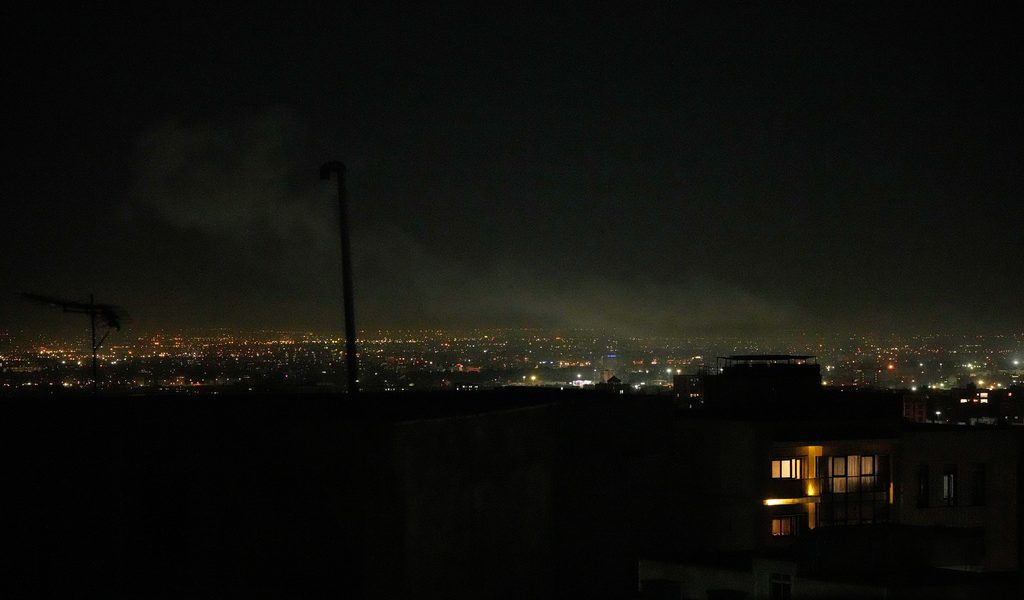
The strikes on Iran today – February 28, 2026 – mark a grim milestone in the unravelling of American imperial legitimacy. In a joint operation codenamed ‘Roaring Lion’ by Israel and ‘Epic Fury’ by the United States, the forces of both countries bombarded targets across Tehran, Isfahan, Qom, Karaj and other sites, aiming to cripple Iran’s nuclear and missile capabilities while openly calling for regime change.
US President Donald Trump, speaking from the White House, declared the launch of ‘major combat operations’ to ‘eliminate imminent threats’ and deliver ‘a safe nation’ – rhetoric eerily reminiscent of the pretexts used for Iraq in 2003, yet delivered with even less pretence of multilateral restraint or diplomatic exhaustion. Trump explicitly urged Iranians to ‘take over your government’, framing the strikes as an opportunity for internal upheaval that could end the regime ‘for generations’.
These attacks came amid ongoing diplomatic channels, however strained, and despite repeated Iranian signals of willingness to negotiate limits on its programme in exchange for sanctions relief. The timing is no accident. It exposes the bipartisan continuity of US primacy politics, now turbocharged under Trumpism. What was sold to the American worker as ‘America First’ restraint – a rejection of liberal elite-driven forever wars in the wake of Iraq and Afghanistan’s catastrophes – has revealed itself as merely a tactical pivot. The ruling class, through its foreign policy establishment, liberal and conservative alike, has long pursued global hegemony.
MAGA was never a genuine break but a populist rebranding designed to rally a disillusioned base behind a slightly more brazen, less veiled version of the same strategy.
This pattern echoes a darker chapter in US history: the repeated negotiation and subsequent violation of treaties with Native American nations. Time and again, the United States entered into solemn agreements recognising tribal sovereignty and land rights – often when Native resistance was strong or settler expansion required temporary pacification – only to break them as military superiority grew or economic imperatives such as land acquisition, resources and railroads demanded.
Treaties such as Fort Laramie (1851 and 1868) promised vast territories to the Sioux and Plains tribes, yet were undermined by gold rushes and military campaigns leading to reservations and massacres such as Wounded Knee. Forced pacts in the Southeast, including the Treaty of New Echota (1835) with the Cherokee, paved the way for the Trail of Tears. These were not aberrations but structural features of settler-colonial logic: negotiate from expediency when weak, renege when strong and justify betrayal as progress towards ‘civilisation’.
Today’s diplomacy with Iran – signals of negotiation overridden by pre-emptive strikes and regime-change calls – mirrors this imperial modus operandi, in which agreements function as leverage points, conditional on total compliance and discarded when primacy requires escalation.
Trump’s second term has stripped away the illusions. The executive order of September 2025 restoring the ‘Department of War’, with Secretary Pete Hegseth embracing the title, was no mere symbolic flourish – it signalled the return of explicit imperial language, discarding the post-Second World War euphemism of ‘defence’ for the blunt honesty of ‘war’. Add to this persistent threats to annex Greenland, military rhetoric towards Mexico and a military budget soaring past a trillion dollars, and the picture is clear: American empire is not in retreat but in aggressive reassertion, led by a bipartisan consensus that lost public legitimacy after endless wars and had to be repackaged through Trumpism to survive.
Yet the US has marshalled broad international support, or at least acquiescence, for these actions, revealing the hollowness of recent proclamations about the death of the liberal international order. Just weeks ago at Davos, Canadian Prime Minister Mark Carney declared that the ‘old world order is not coming back’, describing a ‘rupture’ in the rules-based system amid great-power rivalry and economic coercion. Canada now explicitly backs the strikes, affirming US efforts to prevent Iranian nuclear acquisition and labelling Tehran the ‘principal source of instability and terror’ in the Middle East – exposing the irony of mourning a faded order while endorsing actions widely seen as illegal under international law.
Australia has similarly endorsed the operation, aligning with Washington to counter regional threats. Even the European Union and France, while expressing alarm and calling for de-escalation, maximum restraint and UN Security Council intervention, with French President Emmanuel Macron terming it an ‘outbreak of war’ with serious consequences, have not outright condemned the US-Israeli moves and continue pressuring Iran through sanctions, tacitly prioritising Western non-proliferation goals over strict adherence to multilateral norms.
Gulf states, longstanding foes of the Iranian regime, have offered no serious criticism of the US-Israeli strikes. GCC members eventually condemned these attacks – including Saudi Arabia, the UAE, Qatar, Bahrain and Kuwait – but their positions remain cautious rather than principled. Nor have they invoked Muslim solidarity with Iran. Instead, their more forceful condemnations target Iran’s retaliatory missile strikes on US-linked bases and territories across the region, including the UAE, Bahrain, Qatar and Kuwait, with explosions reported in Saudi Arabia.
Saudi Arabia denounced the Iranian response as ‘brutal aggression’ and a ‘flagrant violation’ of sovereignty, expressing ‘full solidarity’ with targeted states and pledging support. The UAE described it as a ‘cowardly act’ and ‘dangerous escalation’, reserving the right to respond. Qatar and Bahrain similarly framed Iran’s actions as blatant sovereignty violations, activating defences and coordinating with allies. This relative silence regarding the initial strikes, alongside the focus on Iran’s retaliation, reflects deep hostility towards Tehran, viewed as an existential threat via proxies, missiles, nuclear ambitions and regional meddling.
The Wire for more
Trump’s war on Iran: America’s shame, and the world’s failure
by ANDREW O’HEHIR
Trump’s attack on Iran is an act of vanity and desperation, fueled by America’s collective moral blindness
Well, the woke Marxist liberals wouldn’t give him the Nobel Peace Prize, and wouldn’t even let him have Greenland as a treat. So, really, what choice did he have?
The joke isn’t funny, I agree. That’s because it comes too close to the truth. There are various ways to understand the U.S.-Israeli bombing attack on Iran launched on Saturday morning, which has killed several hundred people so far, including the Iranian regime’s senior religious leader, Supreme Ayatollah Ali Khamenei. None of them have anything to do with democratic legitimacy or coherent geopolitical strategy. This pseudo-war is based on false or dubious premises, has little or no popular support and professes unclear or unachievable goals.
This disastrous turn of events should shame America, and shame the world. Indeed, it exposes yet again the disgraceful failures of both American politics and global diplomacy, as well as the unrelenting and apparently incurable moral blindness of U.S. foreign policy. Whether “we,” to use an objectionable term of art, actually learned anything from 20 years of catastrophic and self-destructive war in Iraq and Afghanistan has now been decisively answered in the negative.
Consider this passage from a recent New York Review essay by Ben Rhodes, a former deputy national security adviser under Barack Obama. Rhodes is ostensibly discussing former Defense Secretary Robert McNamara and the Vietnam War, but the contemporary resonance is both obvious and intentional:
What led men like him into rooms where they made decisions regarding a country they knew nothing about? … What innate confidence in our own special character leads the U.S. government to try to control a world that does not want to submit to our will and does not believe in our supremacy?
Rhodes has experienced something of a road-to-Damascus conversion since leaving the White House. He understands all too well that American exceptionalism remains a powerful and dangerous form of hopium, and that a vanishingly small number of Americans in the elite classes are entirely immune to the high. Donald Trump and his inner circle launched this unnecessary and self-destructive war, driven by their aggressively ignorant meme-fueled understanding of global relations, but everyone in the ride-along camp or the “hmm, maybe” contingent must share the blame. It’s been profoundly disorienting to hear mainstream commentators, including some who identify as liberals, flirting once again with the phrase “regime change,” as if they were late-night texting that seductive bad-boy ex they can’t resist.
Anyone who persuaded themselves to vote for Trump based on his supposed peacenik or isolationist philosophy — may Maureen Dowd’s 2016 New York Times column on “Donald the Dove” live on in infamy — was volunteering to get rolled like the proverbial drunken rube at the county fair. We know that much, and we should also know by now that for Trump, the entire drama is about him.
Salon for more
Trump-Netanyahu war aims to entrap Iranians into unconditional submission
by HAMID DABASHI

The offensive intends to cause civil war in Iran on the model of Syria and Libya, with millions forced to flee their country
On Saturday, as President Donald Trump announced that the United States had launched a major attack on Iran, the Israeli military declared that the joint US-Israeli attack had targeted “dozens of military targets” in Iran.
Trump said the operation was intended to devastate Iran’s military, eliminate its nuclear programme and bring about a change in its government.
Meanwhile, massive explosions were reported in Tehran, while residents said they were seeing smoke rising from districts believed to house senior Iranian officials.
As the world wakes up to this news and sits at the receiving end of multiple propaganda outlets trying to spin the news in one way or another, here are the four militant factors at work with the fate of more than 90 million human beings at stake.
The first factor is the unleashed power of the US military with Trump, an unhinged commander-in-chief eager and willing to distract attention from his domestic (Epstein files), regional (adventurism in Venezuela, Cuba and Greenland) and global (China and Russia) fiascos.
He habitually lied when he staged a false negotiation with the Iranians to buy time to have enough military buildup to strike Iran effectively.
In the US, this is a widely unpopular war waged on Iran. The singular task of the corporate media, led by The New York Times and The Wall Street Journal, is now to sell this war as “preemptive”.
They will fool no one.
The second factor is the Islamic Republic itself, which faced nationwide protests in December and early January rooted in the deep economic crisis Iran has experienced for decades.
These economic troubles are due to two complementary factors: internal state corruption and incompetence, and crippling external sanctions imposed by the US.
At stake, however, is the fragile and vulnerable lives of 90 million human beings trapped inside their own homeland.
A devastating battlefield of civil war and ethnic fragmentation of the country is in the offing. The Gulf region and beyond are now the theatre of this vicious and senseless aggression.
Israel: the killing machine
The third factor is Israel, the most lethal killing machine in the region, fresh from its merciless slaughter of tens of thousands of Palestinians, military strikes against Lebanon, Syria, Yemen and Iran back in June 2025.
Israel has multiple interests in this latest round of its relentless warmongering: distract attention from the global condemnation of its genocide and crimes against humanity in Palestine, and expand its garrison state to gobble up the entirety of Palestine and parts of Lebanon and Syria and perhaps farther.
The US ambassador to Israel, Mike Huckabee, has just given it the green light to conquer the entire Middle East.
Equally important on Israel’s agenda is the fragmentation of Iran into ethnic enclaves.
Israel will not be satisfied with the total fragmentation and destruction of Iran. Turkey and Pakistan are also on its targeted radar.
The fourth factor is the delusional fascism of the remnant of the Pahlavi dynasty and their thugs and comprador intellectuals, led by Reza Pahlavi, who dream of reclaiming power almost half a century after Iranians put an end to their corrupt rule.
Middel East Eye for more
Who Gets The ‘Peace Prize’ Now, Mr Trump – The Drones Or The Bombers?
by SYED ZUBAIR AHMAD
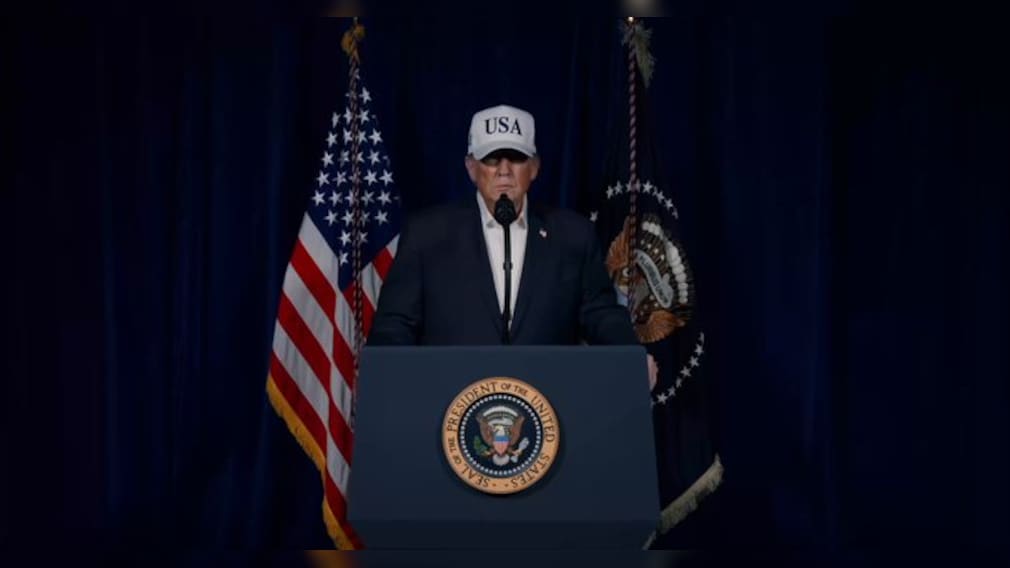
A president who returned to the White House on the promise of ending ‘Forever Wars’ – and wanted a Nobel Peace Prize, no less – now presides over the largest American military build-up in the region since the infamous Iraq war.
First it was Maduro. In complete disregard of international law, the US forces attacked the presidential palace in Caracas and kidnapped the president. And now, Iran’s Supreme Leader, Khamenei. They bombed his house and killed him. This is the modern reality, and this is how America has become what it is under Trump. It’s dadagiri of the highest order, with no accountability.
The entire West Asian region has been pushed into a level of chaos it has not seen in decades. Airports are scenes of panic, port cities are on edge, American bases are on high alert and vulnerable to Iranian retaliation. And hundreds of thousands of Indian workers, who send billions of dollars in remittances back home, are stranded in a war that is not theirs.
To add to the chaos, insurance premiums are rising, shipping lanes are under threat, oil markets are nervous and every government is drawing up evacuation plans.
It’s Iraq 2003 All Over Again
The Trump administration has made clear that a nuclear deal was never the endgame; removing the Islamic Republic was. It is safe to assume that the strikes are designed not to bring Iran to the negotiating table but to create the conditions for internal collapse, economic devastation, political fracturing and popular revolt. It is Iraq 2003 all over again, except this time, the target is far larger, more capable and busily engaged in retaliation.
The assumption in Washington seems to be that sufficient military pressure will either trigger a coup or embolden opposition movements to finish what sanctions and isolation could not. It is quite possible, especially if the supreme leader’s death is confirmed. History suggests otherwise. But then, history has rarely constrained American ambitions in the region.
What makes this especially reckless is that Washington appears to have no coherent plan for what comes after. Regime change is the goal, but the options beyond that are dangerously thin. Will the United States occupy Iran? Partition it? Install a client government and hope it holds? Support exiled opposition groups with no domestic legitimacy? Every one of these paths has failed elsewhere, particularly in Afghanistan, Iraq, Libya. And yet, the same playbook is being deployed again. The real objective may not be stability at all, but prolonged chaos that ensures no regional power can challenge Israeli or American dominance. If that is the strategy, then the human cost is not a failure of planning; it is the plan.
What Does Trump Want, Anyway?
The most disturbing question is no longer why President Trump chose to fight. It is why the United States and Israel chose to strike at the precise moment Omani mediators said the Geneva talks were making real progress.
Wars are launched for a reason. Any military general will testify that wars have to have an objective. They cannot be fought on the basis of the whims and fancies of a Maverik leader. If negotiations were moving forward, then stopping a nuclear programme overnight was not the real objective.
Washington has for weeks, if not months, spoken openly about regime change in Tehran. Israel sees a once-in-a-generation chance to eliminate its last serious regional rival while it is strategically and economically weakened. Strip away the language of security and the convergence is straightforward. The US is reasserting its global hegemony, with the message that it still decides which governments survive, while Israel is seeking undisputed military supremacy in West Asia.
This is unipolarity by force. The world was not consulted. The UN was not convened. Allies were reportedly informed, not asked. The script is familiar. First the threat is constructed in the Western media. Then war is framed as a moral necessity. Dialogue is discarded just when it begins to show results. From Iraq’s imaginary weapons of mass destruction (WMD) to Libya’s “humanitarian intervention” and now to Iran’s collapsing negotiations, the narrative remains unchanged.
The Trump Pattern
NDTV for more
Iran has been attacked by US and Israel when peace was within reach
by BAMO NOURI

US and Iranian negotiators met in Geneva earlier this week in what mediators described as the most serious and constructive talks in years. Oman’s foreign minister, Badr Albusaidi, spoke publicly of “unprecedented openness,” signalling that both sides were exploring creative formulations rather than repeating entrenched positions. Discussions showed flexibility on nuclear limits and sanctions relief, and mediators indicated that a principles agreement could have been reached within days, with detailed verification mechanisms to follow within months.
These were not hollow gestures. Real diplomatic capital was being spent. Iranian officials floated proposals designed to meet US political realities – including potential access to energy sectors and economic cooperation. These were gestures calibrated to allow Donald Trump to present any deal as tougher and more advantageous than the 2015 agreement he withdrew the US from in May 2018. Tehran appeared to understand the optics Washington required, even if contentious issues such as ballistic missiles and regional proxy networks remained outside the immediate framework. Then, in the middle of these talks, the bridge was shattered.
Sensing how close the negotiations were — and how imminent military escalation had become — Oman’s foreign minister, Badr Albusaidi, made an emergency dash to Washington in a last-ditch effort to preserve the diplomatic track.
In an unusually public move for a mediator, he appeared on CBS to outline just how far the talks had progressed. He described a deal that would eliminate Iranian stockpiles of highly enriched uranium, down-blend existing material inside Iran, and allow full verification by the International Atomic Energy Agency (IAEA) — with the possibility of US inspectors participating alongside them. Iran, he suggested, would enrich only for civilian purposes. A principles agreement, he indicated, could be signed within days. It was a remarkable disclosure — effectively revealing the contours of a near-breakthrough in an attempt to prevent imminent war.
But rather than allowing diplomacy to conclude, the US and Israel have launched coordinated strikes across Iran. Explosions were reported in Tehran and other cities. Trump announced “major combat operations,”, framing them as necessary to eliminate nuclear and missile threats while urging Iranians to seize the moment and overthrow their leadership. Iran responded with missile and drone attacks targeting US bases and allied states across the region.
What is most striking is not merely that diplomacy failed, but that it failed amid visible progress. Mediators were openly discussing a viable framework; both sides had demonstrated flexibility – a pathway to constrain nuclear escalation appeared tangible. Choosing military escalation at that moment undermines the premise that negotiation is a genuine alternative to war. It signals that even active diplomacy offers no guarantee of restraint. Peace was not naïve. It was plausible.
The Conversation for more
Escalation of this War Could Shatter Iran into Ethnic Enclaves
by ZOLTAN GROSSMAN
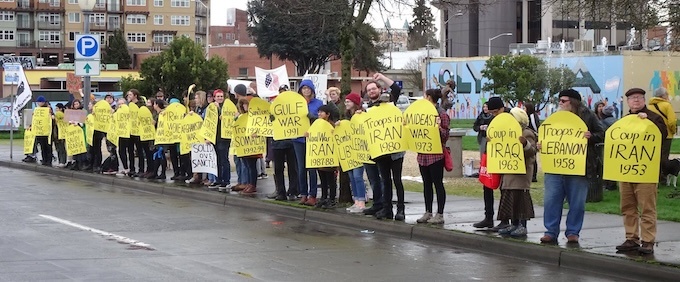
As a political-cultural geographer who has long been an antiwar organizer and studied the history of U.S. military interventions, it’s clear that the war on Iran could set into motion a regional conflagration, the violent break-up of Iran into ethnic enclaves, and a toll that would make the Iraq War look like a warm-up exercise.
The U.S. role in the Mideast began with the 1953 CIA coup that toppled a democratically elected government that had nationalized the oil industry for the benefit of its people, replacing him with the dictatorial monarch Shah Mohammad Reza Pahlavi, whom the U.S. backed with both weapons and nuclear technology. It’s in Iran that the U.S. regional domination began, and where it might confront the hardest obstacles, at home and abroad.
Most Americans concur with the country singer Alan Jackson, who sang in 2002, “I’m not a real political man… I’m not sure I can tell you the difference in Iraq and Iran.” But Iran has always been more geographically pivotal than Iraq, in land area, population, and economics. It was one of the few countries that retained independence through the colonial era, and one of the only Third World societies to keep control of its own resources.
Ever since the 1979 Iranian Revolution and seizure of hostages in the U.S. Embassy, Washington has sought to topple the Shi’a revolutionary government in Tehran. That moment was when the demonization of Muslims replaced anti-Communism as the main selling point for military interventions. I remember seeing U.S. sailors in the Philippines 40 years ago sporting t-shirts that read “I Got My Tan off the Coast of Iran,” and a string of U.S. bases with 40,000 troops has encircled Iran since then, now in Kuwait, Bahrain, Qatar, UAE, Israel, Saudi Arabia, Iraq, Jordan, Syria, Turkey, and Oman (all but the last two are now under Iranian missile retaliation).
The U.S. has already been at war with Iran during the Iran-Iraq War. In 1987-88, the U.S. Navy actively sided with Saddam Hussein in his war with Iran, by escorting tankers carrying Iraqi oil, attacking Iranian boats and oil rigs, and “accidentally” shooting down an Iranian civilian jetliner. This war with Iran is a continuation of a long-simmering conflict.
U.S. and Israeli threats have also encouraged a siege mentality among Iranian leaders, who repeatedly used them as a rationale for cracking down on internal dissent. The hardliners in Washington, Jerusalem, and Tehran have always reinforced and fed off of each other, and to create fear to build their own internal power and legitimacy.
Trump and Netanyahu may have thought the Sunni Gulf States, which have long been at odds with Iran, and the Iranian people would side with their current drive toward regime change. But it has had the exact opposite effect, causing stronger Muslim solidarity and rallying Iranians around the flag, even many who had protested and been imprisoned by the ayatollahs but don’t want a new Shah or other foreign puppet ruler. Much the same happened in Germany in World War II, when Allied fire-bombings that targeted civilian neighborhoods may have prevented internal dissent from growing.
Escalation beyond air war
Counterpunch for more