
What prompted US to abort Iran strikes?
By ANWAR IQBAL
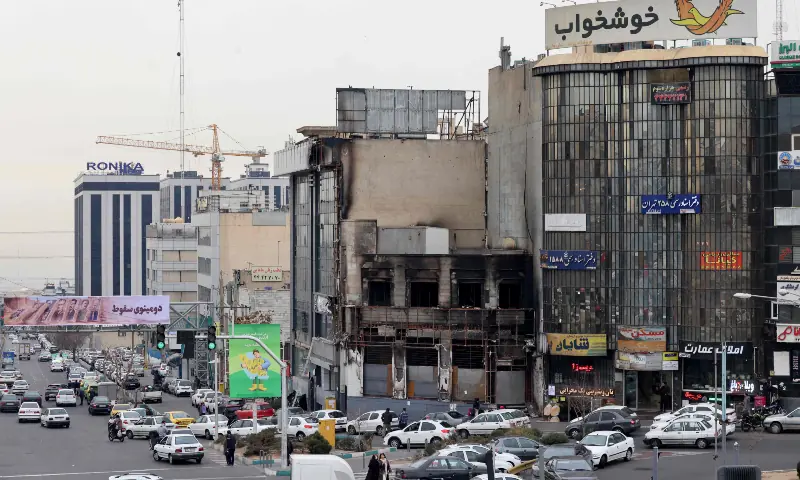
• US, Israel, Gulf allies all were underprepared for retaliation
• Regime remained resilient as security forces stay loyal
• Backchannel pledged to ‘stop the killing’ offered exit ramp
WASHINGTON: The crisis in Iran, driven by economic collapse, soaring inflation and deep public anger, has underscored both the limits of external military intervention and the resilience of Tehran’s clerical regime, analysts and former officials said.
US President Donald Trump publicly encouraged Iranian protesters, warning Tehran that it would face consequences if it “violently kills peaceful protesters”.
But behind the scenes, Washington came close to — and then stepped back from — military action, exposing the operational, political and strategic constraints shaping US policy.
According to a detailed Axios investigation, senior military, political and diplomatic officials across Washington and the Middle East believed US strikes on Iran were imminent.
Preparations were real, officials stressed. US troops began evacuating from Al-Udeid Air Base in Qatar and from the Navy’s Fifth Fleet base in Bahrain, while Iran closed its airspace.
“It wasn’t fake or a ruse,” one US official told Axios. Yet by that afternoon, the moment passed. “It was really close,” another official said. “The military was in a position to do something really fast,but the order didn’t come.”
A central factor for the stand-down was force posture. Axios reported that since the last clash with Iran in June, many US military assets had been redeployed to the Caribbean and East Asia.
“The theatre was not ready,” one source said bluntly. Another added: “We sort of missed the window.”
Limits of military leverage
The lack of readiness shaped not only strike options but also contingency planning for Iranian retaliation, which US officials warned could endanger American forces and allies across the region.
Regional leaders reinforced those concerns. In a call with Trump, Israeli Prime Minister Benjamin Netanyahu warned that Israel was not prepared to defend itself against Iran’s likely missile and drone retaliation.
He also believed the US plan “was not strong enough and wouldn’t be effective”, according to one of his advisers. Saudi Crown Prince Mohammed bin Salman similarly expressed deep concern about regional destabilisation.
A diplomatic backchannel also provided an exit ramp. Axios reported that Iranian Foreign Minister Abbas Araghchi sent messages to Trump’s envoy, Steve Witkoff, committing to halt planned executions of detained protesters and “stop the killing”.
Trump later acknowledged the messages had an impact, though a White House official insisted they were “not the only reason”.
For now, US officials say military action remains “on the table.” However, the near-miss suggests Washington’s restraint reflected not just caution or diplomacy, but the hard limits of military leverage over Iran’s internal struggle and the high costs of getting it wrong.
Even if strikes had been launched, analysts say they would have done little to protect protesters on the ground.
Andrew P. Miller said foreign military intervention is unlikely to create a stable democracy, especially one that benefits the intervening power.
Any action would probably have been restricted to “a single or brief set of strikes”, avoiding ground troops yet risking Iranian retaliation and escalation, Miller added.
Sanam Vakil, of Chatham House, said Trump’s approach relied more on coercive signalling than intervention. The deployment of the USS Abraham Lincoln carrier strike group, she said, was designed to pressure Iran’s leadership rather than shield civilians.
“His references to wanting an agreement and to ‘making Iran great again’ are transactional signals aimed at the leadership rather than Iranian society,” Vakil said. “The strategy is less about engineering internal change in Iran than about forcing its leadership to confront the limits of resistance.”
Regime resilience
Vali Nasr, a prominent Iranian-American scholar in Washington, emphasised the durability of Iran’s security apparatus. For protests to seriously threaten the regime, he said, parts of the state — especially the security forces — would need to defect.
“There is no sign of any defections … or that it has in any way fractured,” Nasr said. “I am not certain the balance of forces necessarily lies with the protesters.”
Dawn for more
Trump balked but war is inevitable: Will Iran attack first?
by SHIVAN MAHENDRARAJAH
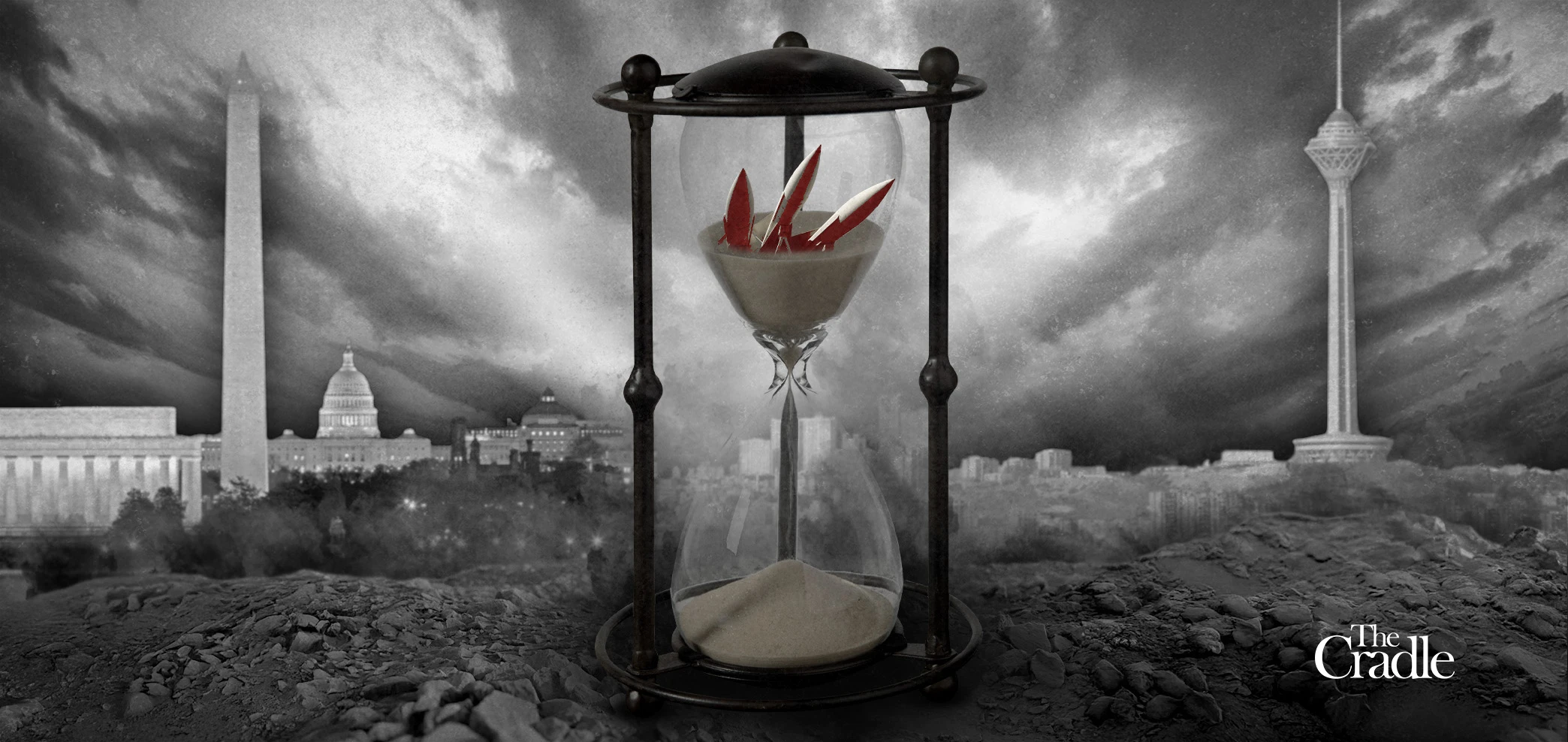
Tel Aviv and Washington are sharpening their knives – but military doctrine favors the first mover, and Tehran may be running out of time.
“When you see a rattlesnake poised to strike, you do not wait until he has struck before you crush him.”— former US president Franklin D. Roosevelt
Rumors swirl around US President Donald Trump’s abrupt cancellation of new air strikes on Iran. What is undeniable is that the US military has few assets in the Persian Gulf. Trump has since ordered reinforcements.
Israel’s attempt to destabilize Iran from within has failed, but new pretexts for war are emerging. Trump’s special envoy Steve Witkoff recently communicated with Iranian Foreign Minister Abbas Araghchi during which he is said to have issued outrageous demands – terminate enrichment, handover enriched uranium, and reduce missile ranges and stockpiles – effectively, a demand for capitulation, which Washington knows Tehran will reject. The US will claim “Iran refuses to negotiate in good faith” as casus belli.
Pre-empt, or be punished
Iran’s military doctrine is fundamentally defensive; Israel’s is not. But that posture may be changing. In August 2025, retired Iranian Islamic Revolutionary Guard Corps (IRGC) General Yahya Safavi, senior advisor to Supreme Leader Ali Khamenei, declared: “We must adopt an offensive strategy.” In a January statement, Iran’s Defense Council said, “within the framework of legitimate defense, the Islamic Republic of Iran does not limit itself to reacting after action and considers objective signs of threat as part of the security equation.”
“Pre-emptive War” is to strike first to seize the initiative when confronting an imminent threat. The textbook study is Israel’s Six-Day War (1967), following the blockade of the Tiran Straits, the mobilization of Arab armies, and the hostile rhetoric.
“Preventive War,” however, is to counter a hazy threat: former US president George W. Bush’s 2003 Iraq War and Israeli Prime Minister Benjamin Netanyahu’s 2025 Iran War are cases in point.
British strategist B.H. Liddell Hart said: “Strategy has not to overcome resistance [opponent’s tactics], except from nature. Its purpose is to diminish the possibility of resistance, and it seeks to fulfill this purpose by exploiting the elements of movement and surprise.”
In 1967, Tel Aviv did just that – obliterating air defenses before they launched and claiming vast swaths of land.
War has already begun
Iran faces an imminent threat. The 12-Day War in June made clear that the US and Israel are acting in tandem. Trump’s own admission confirmed that the Oman “negotiations” were a ruse to sedate Tehran.
The riots were not spontaneous. Israeli and western handlers coordinated operations across provinces, funneling cash, weapons, explosives, and Starlink terminals to operatives. Global media and online platforms amplified fabricated death tolls – 12,000 to 20,000 – to manufacture consent for foreign intervention.
The 12-Day War never ended, as Safavi shrewdly noted. The “riot phase” of the campaign is over, but a new phase is underway. The dilemma for Tehran is binary: should Iran absorb the first blow or strike the first blow?
A bid for survival
The threat is existential. The US and Israel do not seek only regime change, but the dismemberment of Iran along ethno-linguistic lines. Riots were intended to ignite civil war – like Syria and Libya – with Kurdish and Baluch separatists offered autonomous regions. If the Islamic Republic falls, the US will plunder the Iranian people’s oil and gas heritage, like with Venezuela.
For 47 years, Iran has endured sanctions, threats, saboteurs, agitators, and the western-backed Iran–Iraq War. In the past seven months, Iranians experienced war and riots instigated by the west. The anti-Iran media campaign grossly misrepresented the horrific crimes perpetrated against innocent Iranians, while portraying savage mobs as “peaceful protestors.”
The Islamic Republic is called “repressive,” “brutal theocracy,” “illegitimate,” “dictatorship,” and “rogue state.” It has never been treated the way despotic Persian Gulf monarchies, Egypt, and Jordan are treated.
The Iranian nation has never been allowed to function and develop like other nations. Negotiations are pointless. The Joint Comprehensive Plan of Action (JCPOA) was sabotaged by Tel Aviv – with help from former US president Barack Obama, who enticed Iran to sign the nuclear deal. “This nearly five-decades-long ‘horror film’ ends in one of two ways: Iran collapses, or the US-led bloc is defeated.”
Tehran’s turn to move
Israel never negotiates. It demands. It steals. It kills. Iran has negotiated endlessly – and received nothing. Perhaps it is time to act as Tel Aviv would.
Tehran may want to consider what Liddell Hart termed a “strategy of limited aim.” Here, the objective is not the defeat of the enemy – “unconditional surrender” – or capture of territory (Israel in 1967); but a war that coerces the enemy to sit at the negotiating table with Iran and treat the ancient Iranian nation as an equal.
Iran is disrespected by the US and its allies, just as Russia is disdained as a “gas station masquerading as a country.” Russia, despite its formidable military and nuclear arsenal, was never treated as a peer despite President Vladimir Putin’s good faith efforts to integrate with the US and EU economies.
Iran is experiencing the same contempt. Moreover, while Putin was negotiating on Ukraine and acceding to the Minsk Accords, NATO built Ukraine’s war machine. When Putin was asked if he had regrets about the Ukraine War, he replied, “[t]he only thing we can regret is that we did not take intense action earlier.”
After Russia’s Oreshnik retaliation, the same EU/NATO bloc that demanded Moscow’s defeat came crawling for negotiations. Power won them respect. Iran must do the same – humiliate its enemies, force negotiations, and dictate terms.
The Cradle for more