
by MEDEA BENJAMIN & NICOLAS J. S. DAVIES
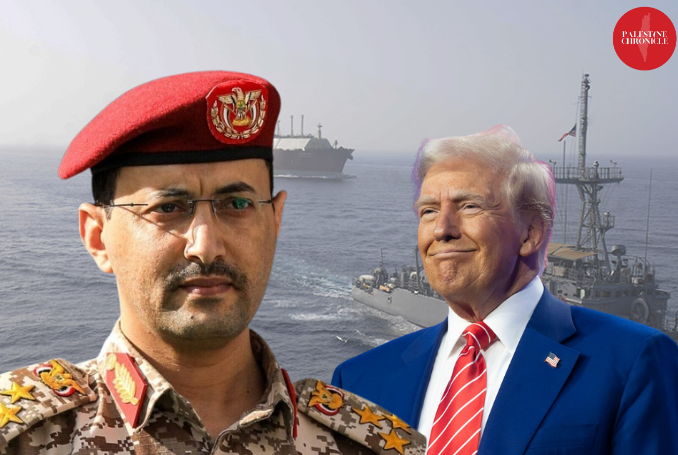
If the United States wants safety at sea, whether in the Caribbean or the Red Sea, it should stop enforcing illegal sanctions by the illegal use of military force.
The United States has now intercepted multiple Venezuelan oil tankers as part of its escalating aggression against Venezuela, while also destroying dozens of small boats in the Caribbean and Pacific under the banner of “drug enforcement,” killing over 100 people whose identities the US has obscured. At the same time, the Trump administration has threatened a naval blockade of Venezuela—a sovereign country with which the United States is not at war.
How can Washington claim the right to seize or blow up vessels, disrupt maritime trade, and kill civilian boaters—while bombing Yemen and condemning its de facto Ansarallah government for intercepting ships in the Red Sea to counter Israel’s genocide in Gaza?
This contrast exposes a stark double standard in US policy. The US government labelled the Ansarallah’s actions as “terrorism”, piracy, and a threat to US national security, even as the Ansarallah government presented plausible legal justifications for its actions based on the laws of war. But Washington has tried to normalize—or even glorify—its own attacks on tankers, pineros (ferries or water-taxis) and fishing boats, which violate the most basic principles of international law.
Beginning in November 2023, Yemen’s Ansarallah movement launched a naval campaign in the Red Sea, Gulf of Aden, and Arabian Sea in response to Israel’s assault on Gaza. The Ansarallah publicly announced their criteria, stating they would target only vessels linked to Israel, bound for Israeli ports, owned by Israeli companies, or connected to states materially supporting Israel’s war.
The United States and its allies immediately denounced these actions as criminal. And there were legitimate grounds for scrutiny. Human rights groups raised concerns about attacks that struck vessels without obvious Israeli connections and about the safety and treatment of civilian crews.
Over the course of the campaign, the Ansarallah targeted more than 100 commercial vessels, damaged dozens, sank several, and seized at least one ship outright—the Galaxy Leader—detaining its multinational crew for more than a year before releasing them in connection with Gaza ceasefire negotiations.
But as a matter of law, the Ansarallah consistently framed their actions as a blockade and interdiction during an armed conflict, justified by Israel’s grave breaches of international humanitarian law. That legal framework exists.
Under the Geneva Conventions and customary international law, parties to an armed conflict have the right—and in cases of grave breaches, the obligation—to interdict shipping that materially supports a belligerent committing mass civilian harm. In the case of Israel’s genocide, the International Court of Justice (ICJ) has found, and the UN General Assembly (UNGA) has affirmed, that all states are obliged to cut off all military and economic support for Israel’s assault on Gaza.
The United States’ response was not to pressure Israel to halt its genocidal assault—an outcome that would have also immediately ended the Ansarallah campaign—but to unleash overwhelming force against Yemen. Beginning in December 2023, Washington organized Operation Prosperity Guardian, a multinational naval deployment backed by extensive US airpower.
Over the following year, the United States and Britain carried out hundreds of airstrikes on Yemen, bombing radar sites, missile launchers, ports, the capital, Sanaa, and other infrastructure. Several hundred Ansarallah fighters were killed, along with scores of civilians. One US strike on the Ras Isa oil terminal killed dozens of African migrants when US bombs hit a detention facility.
But how do the Ansarallah interdictions compare with the Trump administration’s actions toward Venezuela?
On December 10, Donald Trump boasted to reporters, “We have just seized a tanker on the coast of Venezuela — a large tanker, very large, the largest one ever seized actually,” as his administration released video of US Marines rappelling from helicopters onto a civilian oil tanker. This was not a conflict zone. Venezuela is not at war with the United States. There was no UN Security Council authorization, no armed conflict, and no claim of self-defense.
PC for more