
by EITAY MACK
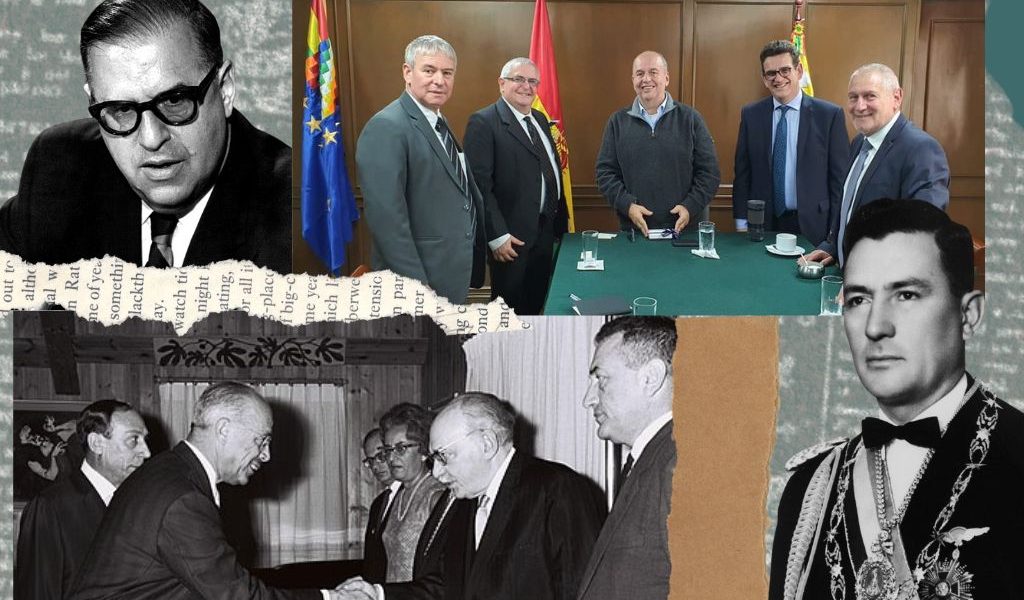
The last thing the Bolivian people need is for the previous “good relations” to be restored, with Israel once again becoming involved in the country’s internal repression.
On October 20, Israel’s foreign minister Gideon Sa’ar announced on X that he had spoken with Bolivia’s president-elect Rodrigo Paz, congratulating him on his “impressive victory” in the elections. Sa’ar highlighted “the history of relations between Israel and the Jewish people with Bolivia” and added, “Now, after two decades of strained relations, it is time to restore our friendship and put the ties back on track.”
In his post, Sa’ar joined previous foreign ministers who had been responsible for glossing over the darker chapters of Israel’s relations with Bolivia, particularly during the years marked by a series of military coups and dictatorships from November 1964 to 1982.
Like a game of musical chairs, members of the juntas and heads of the security apparatus rotated among themselves, but Israel maintained friendly relations and conducted security business with all of them. Some were even trained in Israel or by Israelis in Bolivia before assuming their positions in the new junta. For example, on November 24, 1978, a military coup brought Raul Lopez Leyton to the head of the interior ministry – he had parachuting wings from Israel.
Documents in archives in Israel, the United States (from the CIA and the State Department), and Bolivia indicate that the military regimes purchased aircraft from Israel and regularly acquired communications equipment, mortars and shells, Uzi submachine guns, and ammunition.
According to the documents, neither Israel nor its representatives were concerned that Nazis and neo-Nazis were active within the security forces and militias, that the regimes murdered, tortured, and disappeared opposition leaders and workers, or that they “broke strikes” in mines using machine guns, mortars, tanks, planes, and helicopters against striking workers.
Bolivia was a poor country, and its defence procurement budget from Israel was limited compared with its neighbours Argentina and Chile. However, its importance to Israel was significant, as Bolivia remained one of its loyal allies at the UN and in other international forums, and even maintained an embassy in Jerusalem during some years.
The Wire for more