
by ANTON JAGER
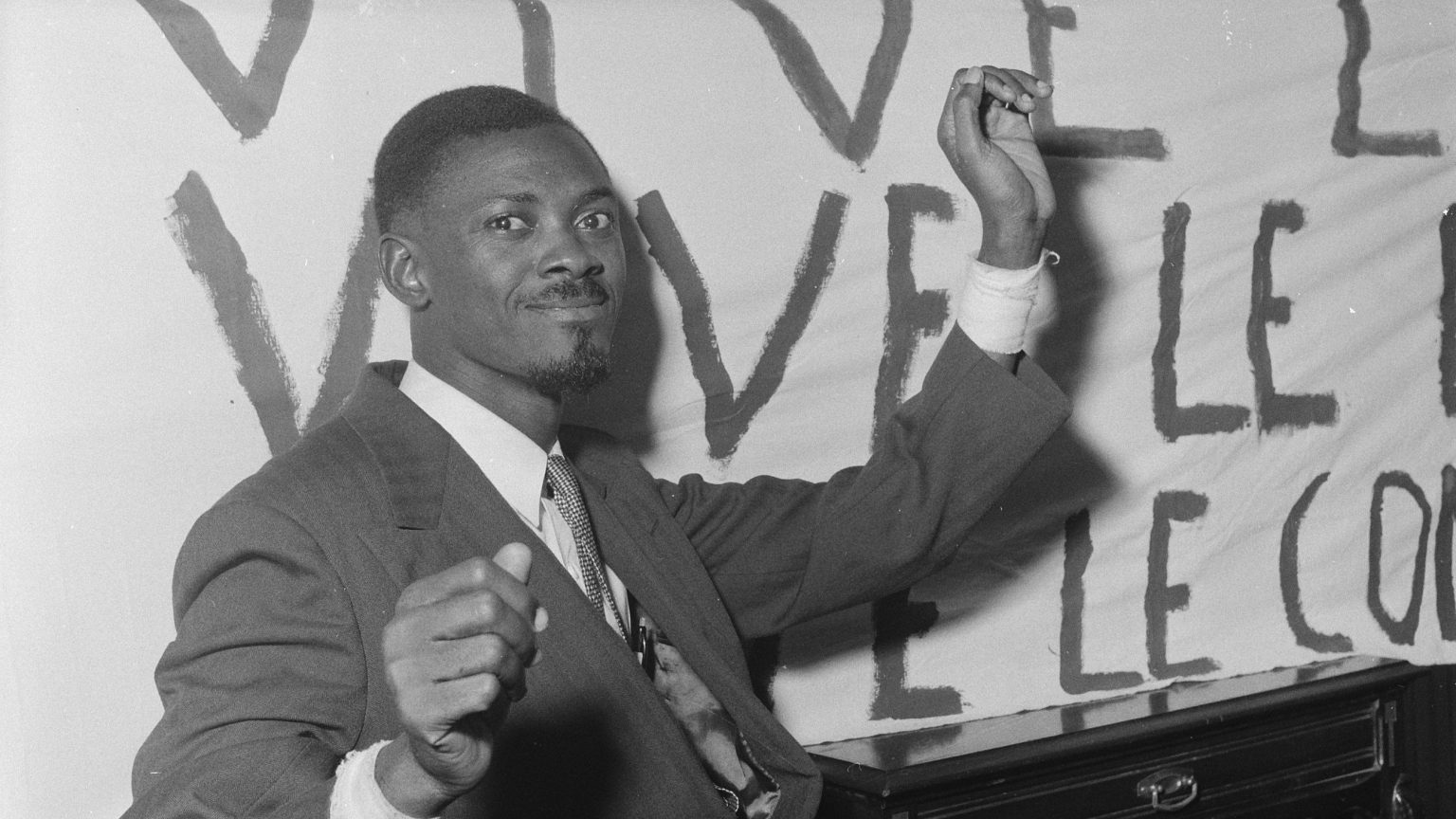
Who killed Patrice Lumumba? More than six decades after the first prime minister of an independent Congolese state was put to death by a nocturnal firing squad, his ghost continues to haunt Belgian politics. Officially, of course, a concise answer has long been available: Lumumba was put to death in January 1961 by a platoon of colonial soldiers and police officers, under the watchful eye of Katangese secessionist Moïse Tshombe, after which a member of the squadron dissolved his body in an acid bath, unveiling his teeth to a Belgian television journalist decades later. The question of who supplied the platoon with its instructions and weaponry, however, cannot be answered with the same concision.
From the outset, fingers in Kinshasa and Brussels were pointed at major players: the Belgian royal family; the upper strata of Belgium’s capitalist class, particularly the Union Minière du Haut-Katanga – a subsidiary of the infamous Socièté Générale, an emblem of European finance capital and predecessor of Umicore mining company – who were anxious to secure their property holdings in the post-colonial age; as well as American security services, concerned about stability in the African mineral belt between the Cold War nodes of Angola and Rhodesia, and then communist infiltration of the new Congolese government. The matter is far from settled. All too often, however, it seems of merely historical interest – another cold case from the tumult of the decolonial era. In recent decades, the residual links maintained between the DRC and Belgium in the Mobutu era have been severed, with both countries increasingly alienated from each other, economically and politically. The disconnect is only increased by the small size of Belgium’s post-colonial diaspora, hardly comparable to that of other ex-empires such as France or the United Kingdom.
NLR for more