
by IQBAL AKHTAR
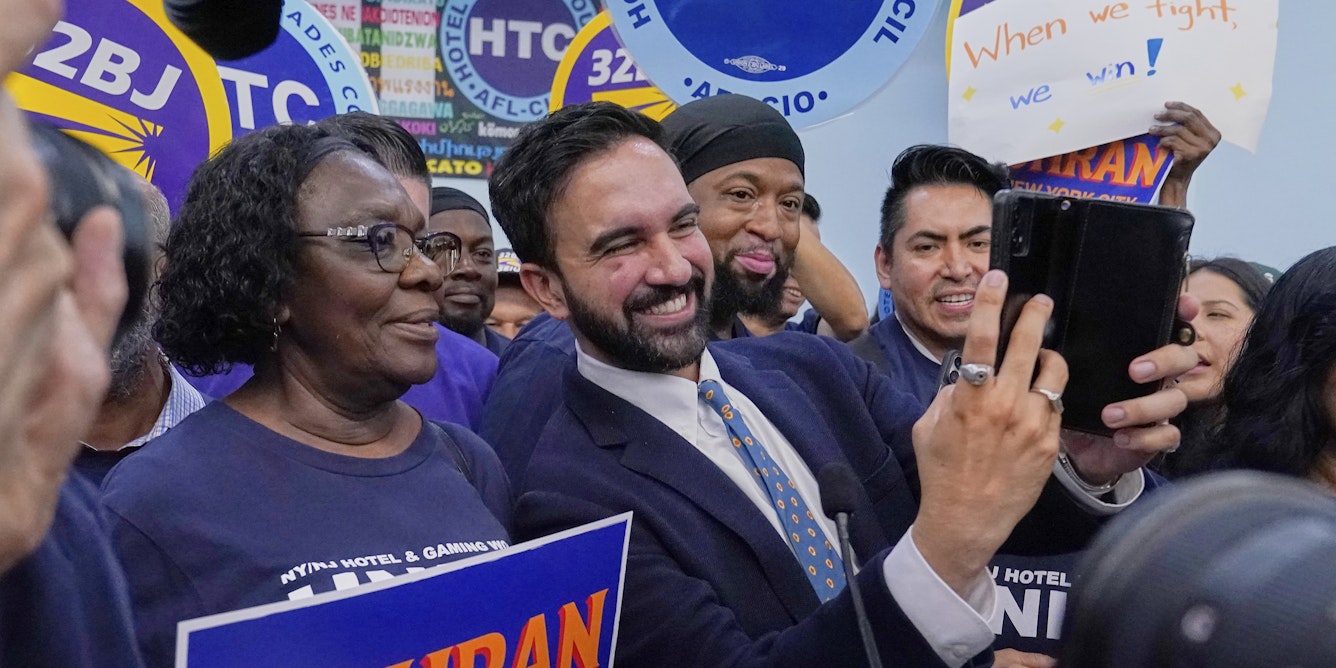
By the time Zohran Mamdani became the next mayor-elect of New York City on Nov. 4, 2025, many Americans were familiar with his progressive platform and legislative record. But understanding the Democratic candidate’s background requires examining the rich cultural tapestry woven into his surname: Mamdani.
He takes the name from his father, Mahmood Mamdani, a prominent academic who was raised in Uganda and whose work focuses on postcolonial Uganda. I studied the history of the Khoja community for my doctoral work and have helped develop Khoja studies as an academic discipline. The Mamdani surname tells a story of migration, resilience and community-building that spans centuries and continents.
The Khoja history
Mamdanis in Uganda belong to the Khoja community, a South Asian Muslim merchant caste, that shaped economic development across the western Indian Ocean for centuries.
The name originates from greater Sindh, a region in South Asia that today includes southeastern Pakistan and Kachchh in western India.
Its etymology is twofold. Mam is an honorific title in Kachchhi and Gujarati languages, meaning kindness, courage and pride. Mamado is a local version of the name Muhammad that often appeared in surnames in Hindu castes that converted to Islam, such as the Memons.
The Khoja were categorized by the British in the early 19th century as “Hindoo Mussalman” because their traditions spanned both religions.
Over time, the Khoja came to be identified only as Muslim and then primarily as Shiite Muslim. Today, the majority of Khoja are Ismaili: a branch of Shiite Islam that follows the Aga Khan as their living imam.
The Mamdani family, however, is part of the Twelver community of Khoja, whose Twelfth Imam is believed to be hidden from the world and only emerges in times of crisis. Twelvers believe he will help usher in an age of peace during end times.
Around the late 18th century, the Khoja helped export textiles, manufactured goods, spices and gems from the Indian subcontinent to Arabia and East Africa. Through this Western Indian Ocean trading network, they imported timber, ivory, minerals and cloves, among other goods.
Khoja family firms were built on kinship networks and trust. They built networks of shops, communal housing and warehouses, and extended credit for thousands of miles, from Zanzibar in Tanzania to Bombay – now Mumbai – on the western coast of India.
Cousins and brothers would send money and goods across the ocean with only a letter. The precarious nature of trade in this period meant that families also served as insurance for each other. In times of wealth, it was shared; in times of disaster, help was available.
Khoja contributions in Africa
The Khoja became instrumental in building the commercial infrastructure of eastern, central and southern Africa. But the Khoja contribution to the development of Africa extended far beyond trade.
In the absence of colonial investment in public infrastructure, they helped build institutions that formed the foundation of the modern nation-states that emerged after colonization. The institutions both facilitated trade and established permanent communities.
For example, the first dispensary and public school in Zanzibar were constructed by a Khoja magnate, Tharia Topan, who made his wealth through the ivory and clove trades. Topan eventually became so prominent that he was knighted by Queen Victoria in 1890 for his service to the British Empire in helping to end slavery in East Africa.
The Khoja community continues to invest in East Africa. The most famous example is the Aga Khan Development Network, whose hospitals and schools operate in 30 countries. In places such as Kenya, Uganda and Tanzania, they are considered the best.
Khoja in Uganda
Like in other parts of Africa, the Khoja settled in Uganda as a liaison business community to develop a market to serve both African and European needs. The linguistic and cultural knowledge, developed over centuries, helped facilitate business despite the challenges of colonization.
The Conversation for more