
by WALDEN BELLO
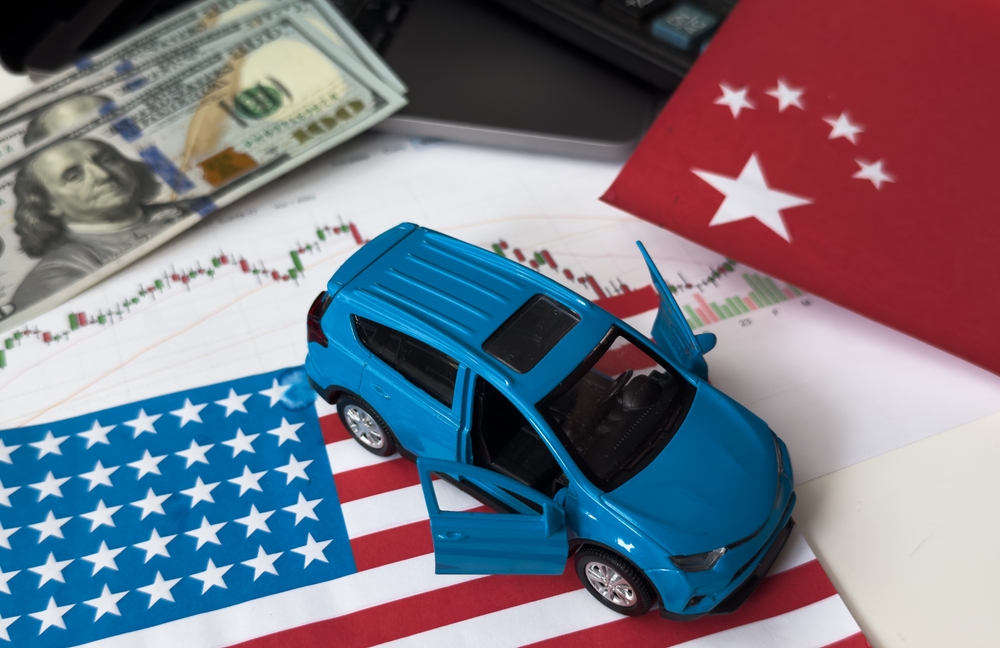
Trump’s grand strategy is America’s reindustrialization.
Last week may well go down as the week of humiliation for us in the Asia Pacific. At the beginning of the week, Trump landed in Kuala Lumpur to attend the ASEAN Leaders’ Summit, where he got a special ceremony to mark his allegedly successful brokering of the peace deal between Thailand and Cambodia, the heavy lifting of which was actually done by Prime Minister Anwar Ibrahim of Malaysia, who gracefully yielded center stage to the egomaniac. Trump did not even bother to wait for the summit to end but flew on to Japan, with Prime Minister Hun Manet’s sweet promise ringing his ears that Cambodia will nominate him for the Nobel Peace Prize.
In Japan, Trump got a royal welcome from Prime Minister Sanae Takaichi, a disciple of the late Shinzo Abe, the reactionary ideologue who was also Trump’s golf buddy. Takaichi, Japan’s first female top leader, thought that a fitting gift for Trump was the club the assassinated Abe used to put the ball into the hole. Trump also notched another promise of a nomination for the Nobel Peace Prize from her.
Takaichi was, however, upstaged by Korea’s president, Lee Jae Myung, who presented Trump with a replica of a golden crown from the Silla dynasty that was discovered in a royal tomb in Gyeongju. I don’t know if this was fake news, but I find entirely consistent with Trump’s personality the report that upon being presented with the crown, he said to Lee, “Thanks, but I prefer the original.”
And what did these leaders get for their brazen displays of vassalage to King Donald? None of the ASEAN governments got any reduction from the punitive tariffs of 19 percent imposed on their exports to the United States imposed by Trump. Nor did Korea and Japan get any relief from the 15 percent levied on their exports. Indeed, in addition to meekly accepting the tariffs, they also had to make commitments to make hundreds of billions of dollars of investment in the United States.
What Trump is up to is the question that has kept the world at the edge of its seat since he began his second term ten months ago. Trump is the epitome of unpredictability, but if you impose the zigzag pattern of his moves on what statisticians call a scatterplot, you will see that there is a trend line that fits the hypothesis of the imposition of a new paradigm in the U.S. relationship to the world. There is a coherence to most of Trump’s ostensibly madcap moves.
Trump’s “Grand Strategy:” A Smoke and Mirrors Act
What are the main elements of Trump’s “grand strategy”?
Trump definitely represents a sharp break from the eight decades-long U.S. imperial strategy of liberal containment, where Washington met perceived challenges to U.S. hegemony wherever they appeared with a combination of military intervention, political alliances, and a multilateral regime that favored its interests. Trump represents that sector of the right that sees the United States as overextended economically, politically, and militarily, and believes that this is one of the key causes of its decline. This isolationism is the dominant one in Trump’s “Make America Great Again” base.
He encourages a perspective of victimhood that sees both enemies and allies as abusing American generosity and regards previous U.S. administrations as being suckers for tolerating this abuse, the consequences of which fell on the American people. Trump sees China as the worst offender when it comes to taking advantage of the United States, but it is not the only one. Punitive tariffs on practically all countries in the world are his way of rectifying what he sees as a fundamental injustice.
He doesn’t care about multilateralism and the institutions that the US erected to legitimize its hegemony, notably the World Trade Organization, World Bank, the International Monetary Fund, and the North Atlantic Treaty Organization. He wants to deal with each country on a bilateral basis, though this is only bilateral in name since the reality is unilateral imposition of Trump’s wishes on the weaker partner in military and economic negotiations. From Trump’s point of view, there are no definitive agreements, only tentative ones that are subject to change in their terms if the other party displeases Trump, a lesson Canada learned the hard way when the government of the province of Ontario aired an ad featuring Ronald Reagan saying tariffs hurt every American. Trump did not like this and said he was adding a 10 percent increase to the 35 percent tariffs he had already imposed on Ottawa!
As for addressing planetary problems like climate change, forget it. The United States has pulled out of the Paris Agreement on Climate Change and will boycott the climate summit in Belem, Brazil, this month, just as it pulled out of the fourth Financing for Development conference in Sevilla, Spain, in late June and early July this year.
FPIF for more