
by BRIAN PAUL BASSANIO
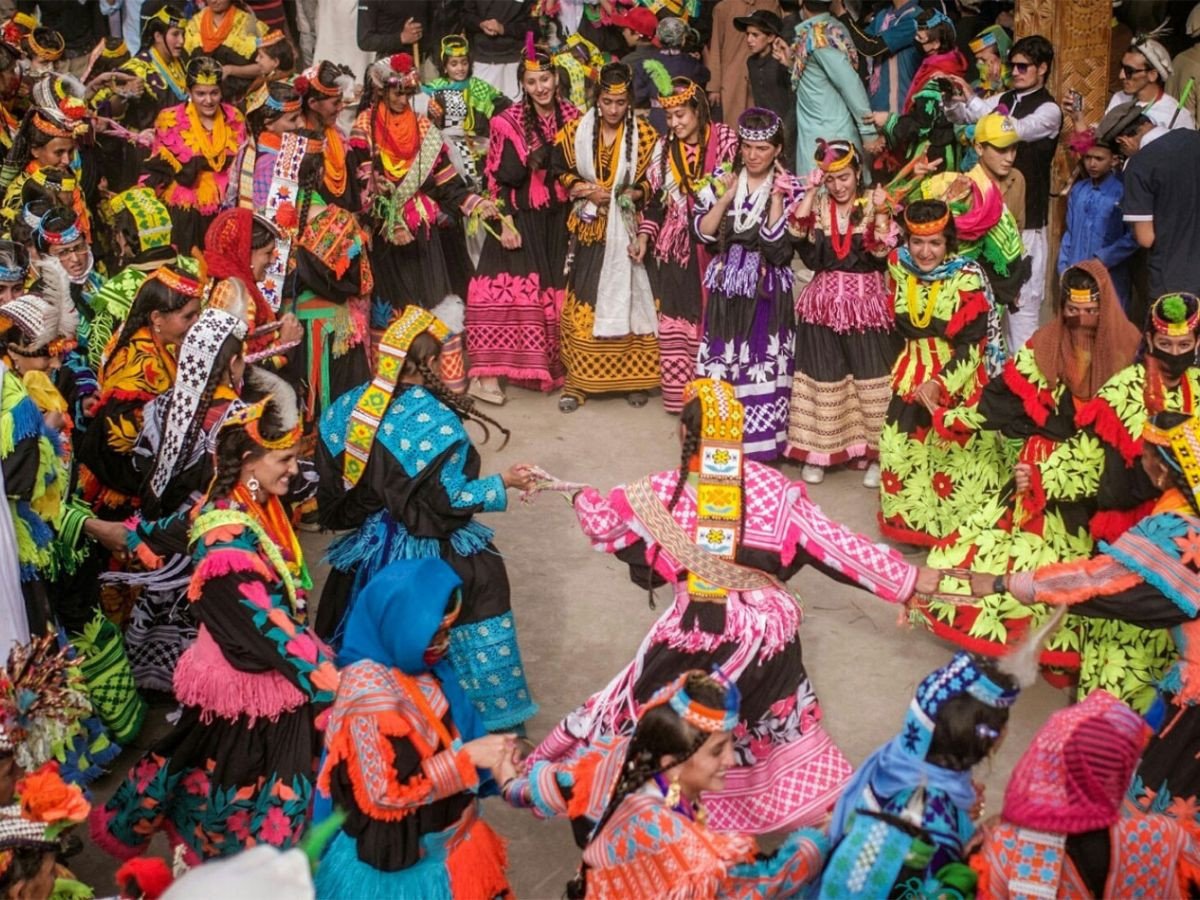
(For more information on Kalasha people, see Wikipedia.)
Kalasha hymns are the living archives. To hear them is to witness a culture resisting disappearance
In the valleys of the Hindu Kush Mountains in northern Pakistan, the Kalasha tribe resides. Music is an indispensable pillar of their identity, serving as the primary repository of their unwritten history, religious beliefs, and social norms. Hymns are not decoration around their prayer; they are prayer. Their melodies are not secular art but a form of spiritual knowledge, with its own liturgy, purity laws, and prohibitions. It is theology in practice, a living liturgy encoded in melody and rhythm rather than in scripture.
I discovered their liturgical traditions at a workshop called Sur Sajday Ke Roop Hazaar. Among the participants was Imran Kabir, a Kalasha polymath, teacher, writer, and heritage bearer. I explored their music, festivals, and rituals in “The Kalasha Audio-Visual Archive” by Elizabeth Mela-Athanasopoulou and during my conversations with Imran.
The text-based liturgical music traditions in South Asia thrived
within major religious civilisations, backed by states and institutions.
Kalasha has no canonised scripture. Their chants are their text. The
people exist at the margins of a modern Islamic nation-state, where
their musical rituals are sometimes tolerated, sometimes commodified,
and often threatened.
A journalistic piece, “The Last of the Kalasha,” highlights the
existential threats to their cultural practices. They are the smallest
minority group in Pakistan, estimated to be in the low thousands. The
community experiences pressures such as converting to Islam, attacks on
cultural sites, damage to altars and monuments, land encroachment, and
socio-political marginalisation. Each passing year, their sound grows
thinner. To understand their music today is to listen closely for both
what is sung and what risks falling silent.
Gayatri Spivak’s theory of subalternity throws light on their musical marginality. Songs are voices without amplification, audible in valleys but mediated, distorted, or silenced in national discourse. Spivak’s concept of epistemic violence explains how theology in hymns is erased when it is classified as “folklore” or a “tourist attraction.” Representation by outsiders becomes silencing.
They live in three remote valleys: Bumboret, Rumbur, and Birir, in Chitral, Khyber Pakhtunkhwa, Pakistan. Their language, Kalashamun, and religious traditions set them apart from the neighbouring populations. It comprises about ten major tribes, each with approximately 90 families. Worshippers sing in the morning and evening to welcome and bid farewell to the Lord.
The tribal priest leads a ritual chant “Achambi” on the seventh day when a child is born. This welcomes the child into the community and invokes blessings. Mourners gather to sing lamentation hymns that express both grief and reverence. One of the famous hymns sung during funerals is “Kanaa Bhum,” which tells the story of how a human called “Kanaa” caused the first human death. At weddings, people sing joyful songs. Some share tales of love, while others celebrate tribal traditions. Songs of victory commemorate triumphs over natural disasters or historic conflicts.
The Express Tribune for more