
by SHUBHANGA PANDEY
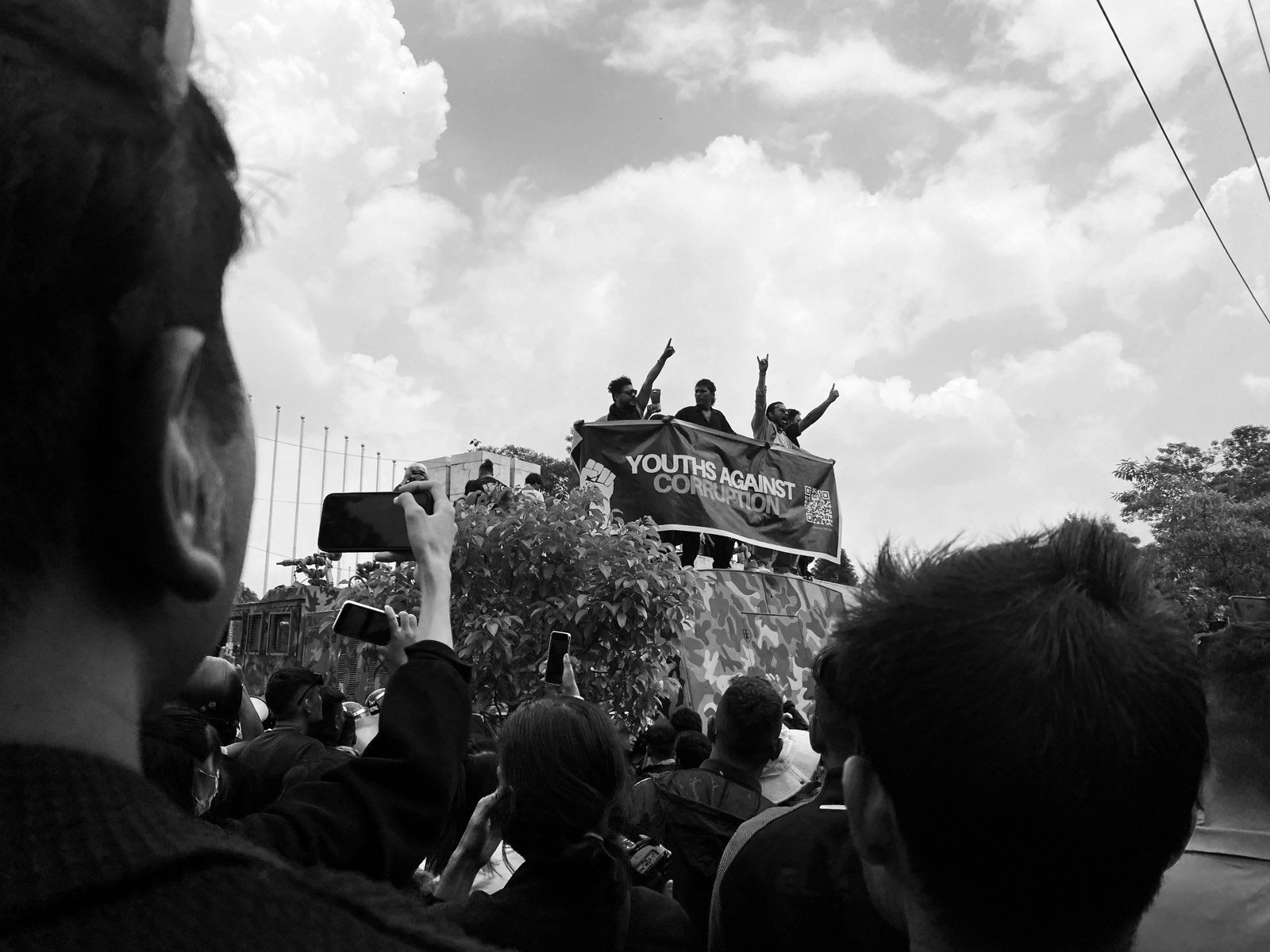
When thousands of Nepalis in their teens and twenties descended on Kathmandu’s government district on 8 September, it was, for most, their first political experience. The immediate trigger for the protests, which had been gathering steam for several days, was a government ban on more than two dozen social-media platforms. But the ‘Gen Z’ demonstrators, as they came to be known, had larger concerns: Nepal’s kleptocratic political elite, whose opulent lifestyles were splashed across their offsprings’ social-media profiles, oblivious of the hardships facing ordinary Nepalis. Events soon took a violent and shocking turn, when the police opened fire on unarmed demonstrators after some breached barricades near the parliament. Nineteen were killed within a few hours and hundreds hospitalized. Rubber bullets and live rounds continued to fly into the evening.
The violence catalysed the biggest urban uprising in Kathmandu’s modern history. On 9 September, enraged crowds set the capital ablaze, torching government ministries, courts, the homes of leading politicians and business magnates, police stations and businesses. Similar scenes unfolded across the country, reducing local symbols of authority to charred ruins. The upheaval drew in many more than those who had come under fire the previous day, including enforcers of political parties, as well as lumpen outfits allied to monarchists and Hindu nationalists. The foreign minister and her husband (himself a former prime minister) were beaten in their home. Prime Minister K. P. Sharma Oli stepped down, taking refuge in an army barracks; the country’s non-executive president was incommunicado. With the exception of the troops patrolling the streets, the state seemed to have melted away. The final death toll exceeded 70, with more than 2,000 injured.
Soon after the government fell, the military – taking an active political role for the first time in the country’s modern history – invited the protest movement to offer a representative to form a government. A retired judge, 73-year-old Sushila Karki, renowned for her professional probity, was selected via a chatroom poll on the instant messaging app Discord. Parliament was dissolved and Karki’s interim government, staffed by technocrats and officials with no party affiliation, and backed by the movement, is charged with holding an election in six months.
These developments mark an unprecedented rupture in Nepal’s politics.
NLR or more