
by TINGS CHAK
In the new era
Despite the punishments
We are grown
We are alert
We are more alive
To rescue each other
In the new era
Despite the dangers
Of brute force
Of the frightening night
We are in the struggle
To survive
So that our hope
Is more than revenge
Is always a path
That is left as an inheritance
—Lyrics from “Um Novo Tempo” (“A New Era”) by Ivan Lins
On April 14, 2023, Brazilian president Lula da Silva arrived at Beijing’s Great Hall of the People to meet with President Xi Jinping on his official state visit, his first since being reelected into the presidency in January 2023. Welcoming him was a band playing a popular Brazilian song released in 1980, called “Um Novo Tempo” (“A New Era”) by Ivan Lins, a song marking the transition out of a twenty-year military dictatorship. “A New Era” also fittingly describes the new stage that Lula’s return signified for China-Brazil relations, which had been strained under former president Jair Bolsonaro.
In 1993, Brazil was the first country to establish a “strategic partnership” with China, a relationship that has deepened and broadened at an impressive rate since. In fact, according to the Brazilian government, since Lula’s first visit to China twenty years ago in 2004, trade between the two countries had increased twenty-one times, with Brazilian exports surpassing the $100 billion barrier for the first time this year. Lula’s visit resulted in fifteen agreements and $10 billion in investments from China, which included expanded collaboration in space, digital economy, the automotive industry, and renewable energy, among others sectors.
This year, Brazil and China celebrate fifty years of official diplomatic relations. In this historic year, there are a few highly anticipated events, including the June meeting of the Sino-Brazilian High-Level Partnership and Cooperation Commission, the main mechanism of bilateral dialogue created during Lula’s first term. The presidents are set to meet during Xi’s November state visit to Brazil, which is hosting the G20 Leaders’ Summit. The importance of the Sino-Brazilian relationship cannot be underestimated in the context of the rise of the Global South, the decline of U.S. hegemony, and the emergence of a New Cold War. With a look back into the history of bilateral relations, how can we understand the importance of these two countries in the current conjuncture in pushing forward changes unseen in a century?
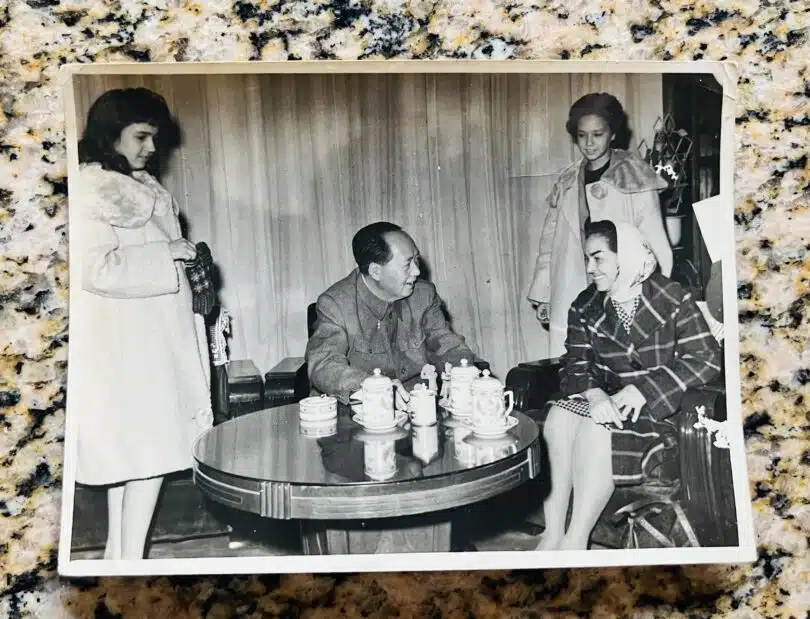
In analyzing the China-Brazil relationship, much contemporary analysis looks at the period after the establishment of diplomatic ties in 1974. The period that followed was marked by several important events including in 1984, when then-president José Figueiredo, the last leader of the military regime, visited China. A year later, Premier Zhao Ziyang visited Brazil. In 1988, Brazilian president José Sarney visited China and met with Deng Xiaoping, and together, they predicted that the twenty-first century would be the “Pacific century and the Latin American Century.” Notably, there is relatively little contemporary scholarly research that focuses on the relationship between the People’s Republic of China (PRC) and Brazil prior to this period, particularly the 1950s and ‘60s.
Monthly Review Online for more